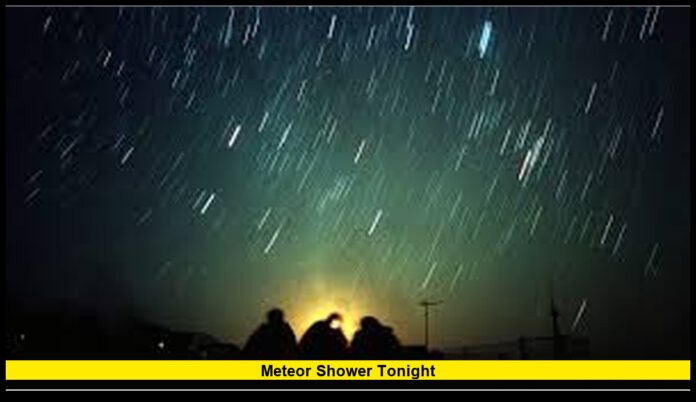
Meteor shower tonight is set to dazzle skywatchers across the United States as the Geminid meteor shower reaches its 2025 peak. Known as one of the brightest and most reliable meteor displays of the year, this celestial event will light up the night sky with up to 120 meteors per hour under ideal viewing conditions.
As of Saturday, December 13, 2025, the Geminids will be visible across most of the continental U.S., with the best viewing hours expected between 10 p.m. and 2 a.m. local time. Weather forecasts suggest mostly clear skies across large parts of the country, setting the stage for a breathtaking show for stargazers and astronomy enthusiasts alike.
Table of Contents
What Is Happening During the Meteor Shower Tonight?
The Geminid meteor shower occurs every December when Earth passes through a trail of debris left by the asteroid 3200 Phaethon. As these tiny particles enter Earth’s atmosphere at speeds of around 78,000 miles per hour, they burn up and create bright streaks of light — what we know as meteors or “shooting stars.”
Unlike most meteor showers that come from comets, the Geminids originate from an asteroid, making their debris denser and slower-moving. This allows them to produce bright, colorful meteors that can easily be seen even in suburban skies.
When to Watch the Meteor Shower
The peak night for the Geminid meteor shower is Saturday night, December 13, into early Sunday morning, December 14, 2025.
Here’s a breakdown of the best viewing times:
| Region | Best Time to Watch |
|---|---|
| East Coast (ET) | 10 p.m. – 2 a.m. |
| Central U.S. (CT) | 9 p.m. – 1 a.m. |
| Mountain U.S. (MT) | 8 p.m. – 12 a.m. |
| West Coast (PT) | 9 p.m. – 2 a.m. |
The shower will remain visible until dawn, but the highest meteor activity typically occurs after midnight when the constellation Gemini rises higher in the sky.
Where to Look in the Sky
The Geminids appear to radiate from the constellation Gemini, which rises in the eastern sky around 9 p.m. local time. You don’t need a telescope or binoculars to see the meteors — just a dark location away from city lights.
To find the radiant point:
- Face east after sunset.
- Locate the constellation Orion (look for Orion’s Belt — three stars in a short, straight line).
- Look slightly above and to the left of Orion — that’s where Gemini is located.
Although the meteors appear to come from Gemini, they can streak across any part of the sky. The darker your surroundings, the more you’ll see.
Viewing Conditions Across the U.S.
Weather can make or break a meteor shower experience. As of the latest updates, much of the Midwest, South, and Western U.S. are expected to have clear to partly cloudy skies on Saturday night.
Here’s a regional overview:
- Northeast: Some scattered clouds, especially around coastal areas, but inland visibility should improve after midnight.
- Midwest: Excellent viewing conditions with clear skies forecast for most states.
- South: Mostly clear and mild temperatures — ideal for outdoor viewing.
- West Coast: Clear skies in California, Nevada, and Arizona, though northern regions may see patchy fog.
- Pacific Northwest: Limited visibility due to expected cloud cover.
For the best experience, check local forecasts closer to nightfall and head to a location with minimal light pollution.
How to Watch the Meteor Shower Tonight
You don’t need special equipment to enjoy the show. Follow these simple tips for the best viewing experience:
- Find a Dark Spot: Choose a location far from streetlights or city glow — national parks and rural areas are ideal.
- Let Your Eyes Adjust: Spend 15–20 minutes in darkness before looking for meteors. Avoid checking your phone or using flashlights.
- Bring Essentials: A blanket, reclining chair, and warm clothing will help you stay comfortable during the cold December night.
- Look Up and Be Patient: Meteors often appear in bursts, so give yourself at least an hour to watch.
For photographers, using a wide-angle lens with long exposure settings can capture the beauty of multiple meteors streaking across the sky.
What Makes the Geminids So Special
The Geminid meteor shower is often called the “King of Meteor Showers” because of its brightness, consistency, and long duration. It’s one of the few meteor showers that regularly produce 100 or more visible meteors per hour.
Several factors make it stand out:
- High Meteor Rate: Up to 120 meteors per hour under dark skies.
- Bright and Colorful Meteors: Many appear white, yellow, or even green due to their composition.
- Slow Movement: Geminid meteors move slower than others, making them easier to spot.
- Long Peak Period: The shower remains strong for several nights around the official peak.
The combination of visibility, color, and activity makes this event one of the best celestial displays for casual observers and seasoned astronomers alike.
Safety and Light Pollution Tips
While watching the meteor shower tonight, avoid areas with heavy vehicle traffic or artificial lights. If you live in a city, consider driving out at least 30–50 miles to escape light pollution.
Apps like Dark Sky Finder or Light Pollution Map can help identify nearby dark-sky locations.
If you can’t leave the city, look for open areas such as:
- Beaches or lakeshores
- Public parks after dark (where permitted)
- Rooftops with clear views of the horizon
The darker your surroundings, the more meteors you’ll see.
Other Meteor Showers Still to Come in 2025
If clouds interfere with your view tonight, don’t worry — the Geminids aren’t the last major meteor event of the year.
Here’s what’s still ahead for stargazers in 2025:
| Meteor Shower | Peak Date | Meteors per Hour |
|---|---|---|
| Ursids | December 22 | Up to 10 |
| Quadrantids | January 3–4, 2026 | Up to 110 |
The Ursid meteor shower follows closely after the Geminids, though with fewer meteors per hour. The Quadrantids in early January 2026 will mark the next big celestial event for North American viewers.
Why You Shouldn’t Miss the Meteor Shower Tonight
This year’s Geminids promise to be one of the best meteor showers of the decade due to perfect timing and favorable moon conditions. The moon will be in a waxing crescent phase, setting early in the evening and leaving dark skies ideal for meteor watching.
With clear weather across much of the country and low light interference, tonight’s display is expected to produce some of the most brilliant shooting stars of 2025.
Whether you’re a seasoned skywatcher or simply looking to enjoy a peaceful moment under the stars, this event offers a rare opportunity to connect with the wonders of the universe.
If you step outside tonight, take a few minutes to look up — the Geminid meteor shower will remind you why the night sky never fails to amaze.

