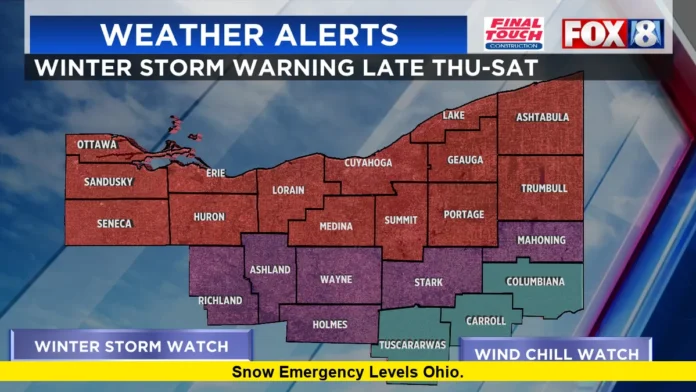
Ohio is facing widespread winter weather impacts as county officials activate snow emergency levels Ohio across large portions of the state. Heavy snowfall, icy roads, and dangerously cold temperatures have led local authorities to issue emergency declarations designed to protect public safety and limit travel risks. These alerts directly affect daily commuting, work schedules, school operations, and emergency response efforts.
As of today, multiple Ohio counties remain under snow emergency declarations ranging from advisory warnings to full roadway emergencies. Conditions vary by region, but officials statewide are urging residents to stay informed and avoid unnecessary travel as winter storms continue to disrupt normal activity.
Table of Contents
Understanding Snow Emergency Levels in Ohio
Ohio follows a standardized three-level snow emergency system used by county sheriffs to communicate road safety conditions. While each county makes its own determination based on local weather and road conditions, the definitions of each level remain consistent statewide.
These levels help residents understand when travel is merely risky and when it becomes unsafe or restricted.
Snow Emergency Level Definitions
Level 1: Hazardous Driving Conditions
A Level 1 snow emergency means roadways are hazardous due to snow accumulation, drifting, or ice. Visibility may be reduced, and slick spots are common.
Drivers are permitted to travel but are strongly advised to use caution, slow down, and allow extra stopping distance. Many accidents occur during Level 1 conditions because drivers underestimate the risks.
Level 2: Travel Strongly Discouraged
A Level 2 snow emergency indicates worsening conditions. Roads are dangerous, and travel should be avoided unless absolutely necessary.
Residents are encouraged to:
- Delay non-essential trips
- Contact employers before commuting
- Use extreme caution if travel cannot be avoided
Emergency crews continue plowing and treating roads, but conditions may remain unstable for extended periods.
Level 3: Roadways Closed to Non-Emergency Travel
A Level 3 snow emergency is the highest alert. At this level, all non-essential travel is restricted. Only emergency responders, essential workers, and those facing urgent situations should be on the roads.
In some counties, violating a Level 3 emergency can result in penalties or arrest. These declarations are issued only when conditions pose a serious risk to life and property.
Current Snow Emergency Status Across Ohio
Central and Eastern Ohio
Large sections of Central and Eastern Ohio are currently under Level 1 or Level 2 snow emergencies, reflecting ongoing snow accumulation and icy roadways.
Several counties have escalated to Level 2 due to:
- Persistent snowfall
- Freezing temperatures preventing road melting
- Increased traffic incidents
A small number of counties have issued Level 3 emergencies, temporarily closing roads to non-essential travel as conditions became too dangerous for normal traffic.
Southwest Ohio and the Cincinnati Region
Southwest Ohio has also been impacted, with counties issuing both Level 1 and Level 2 emergencies. Snowfall combined with freezing rain has created slick conditions on highways and secondary roads.
Officials in this region are urging residents to:
- Avoid late-night and early-morning travel
- Keep emergency supplies in vehicles
- Allow extra time for essential trips
Road crews continue working around the clock, but fluctuating temperatures make conditions unpredictable.
Northeast Ohio
In Northeast Ohio, counties including major metro areas have declared Level 2 snow emergencies. Ongoing snowfall and ice buildup have led to reduced traction and slower emergency response times.
Authorities are emphasizing reduced travel to help crews focus on clearing main routes and responding to weather-related emergencies.
Why Snow Emergency Levels Matter
Snow emergency declarations are not symbolic. They are practical tools that help protect lives and keep emergency services functioning.
Impact on Travel
When emergency levels rise, accident risks increase sharply. Limiting travel reduces congestion, lowers crash rates, and allows plows and salt trucks to operate more effectively.
Work and School Decisions
While snow emergencies do not automatically close businesses or schools, many employers and districts use them to guide decisions. Level 2 and Level 3 emergencies often lead to delays, remote work options, or closures.
Emergency Response
Fewer vehicles on the road allow police, fire crews, and medical responders to reach emergencies faster. During severe storms, every minute matters.
How Ohio Residents Can Stay Safe
Residents are urged to take proactive steps during snow emergencies:
Stay Informed
Monitor local emergency alerts and county updates for changes in emergency levels.
Limit Travel
Avoid unnecessary trips, especially during Level 2 and Level 3 emergencies.
Prepare Your Vehicle
If travel is unavoidable, keep a winter emergency kit that includes:
- Blankets
- Water and snacks
- Flashlight
- Phone charger
- Ice scraper and traction aids
Check on Vulnerable Neighbors
Elderly residents and those with mobility challenges may need assistance during extreme weather.
What to Expect Next
Winter weather patterns remain active, and snow emergency levels may change quickly depending on storm movement and temperature shifts. Counties can escalate or reduce emergency levels at any time as conditions improve or worsen.
Residents should be prepared for extended disruptions, including slower travel times and limited services in some areas.
Have you experienced difficult road conditions or changes in your area? Share your thoughts below and stay alert for the latest winter updates.

