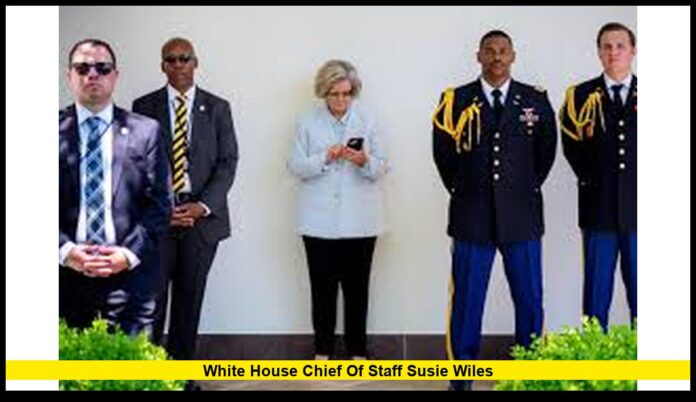
White House Chief of Staff Susie Wiles has become one of the most influential figures in Washington, marking a historic shift in the structure and tone of the modern White House. Known for her deep experience in campaign strategy and her long-standing connection with Donald Trump, Wiles now stands at the center of national political operations—coordinating policy, communication, and administration in the country’s most powerful office.
Table of Contents
A Defining Appointment in American Politics
Susie Wiles’ appointment as White House Chief of Staff represents a major milestone in U.S. political history. Wiles, a veteran Republican strategist, previously played a critical role in Donald Trump’s successful 2016 presidential campaign and later led his 2024 campaign comeback. Her elevation to Chief of Staff signals not only Trump’s trust in her judgment but also his emphasis on loyalty and operational efficiency within his administration.
As of December 2025, Wiles continues to manage one of the most complex jobs in government—balancing political relationships, guiding legislative agendas, and ensuring that executive priorities are implemented across multiple federal departments. Her reputation for discipline and results has defined the tone of the current White House.
Early Life and Professional Background
Susie Wiles’ rise to national prominence began long before her White House tenure. Born into a politically engaged family, she developed an early interest in government and communications. Over the years, Wiles worked in both public and private sectors, serving as a senior adviser in several high-profile political campaigns.
Before joining national politics, Wiles was known for her influence in Florida’s political scene. She helped shape key gubernatorial victories, including those of Rick Scott and Ron DeSantis, before later aligning more closely with Donald Trump. Her Florida experience provided a foundation in grassroots organizing, messaging, and coalition-building—skills that later became central to her success on the national stage.
Her strategic abilities became widely recognized after she helped secure Trump’s 2016 win in Florida, a critical battleground state. Later, during the 2024 election cycle, Wiles was instrumental in reestablishing campaign discipline and improving outreach, contributing to Trump’s path back to the White House.
Role as White House Chief of Staff
Since assuming the role of White House Chief of Staff, Susie Wiles has focused on creating a more structured administrative framework within the West Wing. Her management style emphasizes communication clarity, tight scheduling, and coordination among key advisors. She is known for prioritizing direct access between the President and department heads, reducing bureaucratic delays.
Her primary responsibilities include:
- Overseeing daily operations and staff coordination across the White House.
- Managing communication between the Oval Office and federal agencies.
- Implementing the administration’s legislative and policy priorities.
- Serving as a central advisor to the President on political strategy and personnel.
- Maintaining relationships with Congress and state governors.
Wiles’ calm and disciplined demeanor contrasts with the often chaotic image of past administrations. Insiders describe her as both “steady and strategic”—a professional who commands respect across political and administrative lines.
Leadership Style and Influence
Susie Wiles brings a pragmatic, results-oriented leadership style that combines political savvy with operational precision. Her management philosophy centers on loyalty, accountability, and message discipline—qualities that have helped stabilize the administration’s internal structure.
Colleagues and observers note several defining characteristics of her leadership:
- Consistency: Wiles maintains clear expectations for communication and performance.
- Confidentiality: She protects the President’s decision-making process from unnecessary leaks.
- Delegation: She empowers department heads to make decisions while maintaining oversight.
- Focus on Results: Every initiative is measured by its political and policy outcomes.
Her ability to navigate complex personalities within the administration while maintaining the President’s trust has been one of her greatest assets. This balance has earned her recognition as one of the most capable Chiefs of Staff in recent political memory.
Policy Coordination and National Agenda
As White House Chief of Staff, Susie Wiles plays a central role in advancing the administration’s national agenda. Under her coordination, the White House has pursued initiatives focused on:
- Economic growth and manufacturing revitalization across key states.
- Border security and immigration reform, emphasizing enforcement and infrastructure.
- Energy independence, with renewed investment in domestic production.
- Veterans’ services and healthcare reform, particularly through streamlined federal programs.
- Foreign policy realignment, prioritizing national interests and trade negotiations.
Wiles ensures that each policy directive moves efficiently from planning to execution. Her disciplined approach helps synchronize the administration’s political and operational arms, maintaining consistency between campaign promises and governing outcomes.
Relationship with Political and Media Circles
Susie Wiles’ relationship with Washington’s political and media communities is complex. While she keeps a low public profile, she commands significant behind-the-scenes influence. Her approach to media is cautious but deliberate—preferring direct communication through official channels rather than public commentary.
Her background in campaign communications has shaped the administration’s modern media strategy. She has emphasized message consistency and disciplined use of social platforms to communicate directly with American voters. This strategic approach reflects her belief that public messaging should align with measurable policy results.
Within the political world, Wiles maintains strong ties to Republican leadership while remaining open to dialogue with select moderates. Her network extends beyond Washington, encompassing state-level officials, donors, and strategists who value her experience and discretion.
Challenges and Achievements
Holding the position of White House Chief of Staff comes with extraordinary challenges. Wiles has faced pressure to balance competing political priorities, manage internal differences, and respond swiftly to global developments. Yet, her tenure has been marked by several key accomplishments:
- Streamlining executive operations to improve decision-making efficiency.
- Enhancing coordination between the White House and congressional Republicans.
- Reinforcing discipline within the communications team.
- Guiding the President’s policy rollout on major domestic and international initiatives.
Her ability to keep the administration focused on core priorities amid political turbulence has earned her bipartisan acknowledgment for professionalism, even among critics.
The Symbolism of Her Appointment
Susie Wiles’ role also carries symbolic importance. As one of the few women to serve as White House Chief of Staff, her appointment reflects the evolving face of political leadership in the United States. It underscores the growing recognition of experienced female strategists who have historically operated behind the scenes in national politics.
Her presence in this powerful position highlights a broader shift in American governance—one that values strategic expertise and administrative discipline over traditional political showmanship.
Public Perception and Future Outlook
Public perception of Susie Wiles has remained largely positive among conservative voters and neutral among moderates. Her reputation as a competent administrator has helped stabilize the administration’s image and maintain confidence among party leaders.
Looking forward, Wiles’ continued tenure as Chief of Staff will likely shape both policy direction and political tone heading into the latter half of the presidential term. Observers expect her to remain a key architect of the administration’s legislative strategy heading into the 2026 midterms.
Her long-term influence could also extend beyond the current administration. Given her track record, Wiles may become a defining figure in the next generation of Republican leadership—someone whose methods and results set a new standard for political management.
Personal Values and Legacy
Though largely private about her personal life, Susie Wiles is known for her strong work ethic and commitment to public service. Colleagues describe her as grounded, pragmatic, and respectful—a leader who listens before she acts.
Her legacy as White House Chief of Staff is already being shaped by her ability to combine campaign acumen with government discipline. Whether managing policy rollouts or responding to crises, Wiles consistently demonstrates composure and control.
Conclusion: A New Model for Executive Leadership
The story of White House Chief of Staff Susie Wiles is one of strategic evolution, resilience, and quiet influence. Her leadership has redefined what it means to run the modern West Wing—focused, efficient, and guided by a clear sense of purpose.
As Washington continues to evolve, Susie Wiles stands as a reminder that effective governance depends not just on politics, but on the people who understand how to make systems work. Her tenure is shaping both the tone and trajectory of American government in this new era.
Stay tuned to see how Susie Wiles continues to shape the direction of the White House and national policy in the months ahead.

