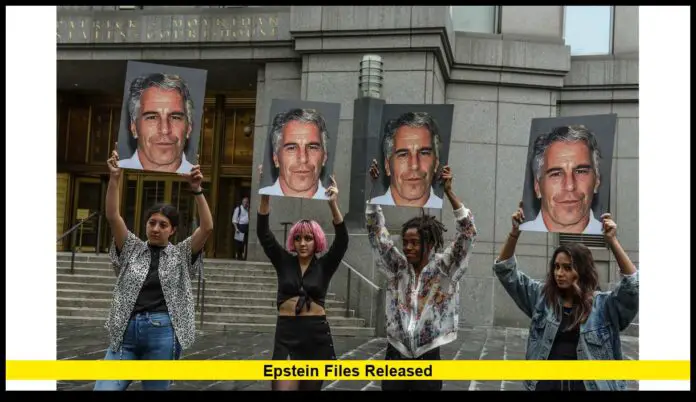
December 23, 2025 | Washington, D.C. — The long-awaited Epstein files released this week have shed new light on the criminal network of Jeffrey Epstein, uncovering names, financial records, and personal communications that had been sealed for years. The documents, unsealed by a federal court, mark the most significant public disclosure since Epstein’s arrest and subsequent death in 2019.
Federal officials confirmed that the files — part of civil litigation linked to Epstein associate Ghislaine Maxwell and survivor Virginia Giuffre — were made public on December 21, 2025. The release includes hundreds of pages of depositions, flight logs, financial transactions, and email exchanges that paint a broader picture of Epstein’s operations and the high-profile individuals connected to him.
This release comes after years of legal efforts by journalists and victims’ lawyers demanding transparency in one of the most notorious criminal cases of the past decade.
Table of Contents
What the Epstein Files Reveal
The newly unsealed Epstein files include thousands of pages of evidence that had been redacted or withheld from the public. They contain:
- Deposition transcripts from former employees, victims, and witnesses.
- Flight manifests from Epstein’s private jets, covering more than two decades of travel.
- Email and phone records linking Epstein to business and political figures.
- Financial documents detailing large cash transfers and offshore accounts.
- Internal notes describing meetings, schedules, and personal arrangements.
While many of these details reinforce what was already known about Epstein’s trafficking network, the newly released information helps clarify the scale of his connections — both in the U.S. and internationally.
High-Profile Figures Mentioned
The documents include the names of dozens of public figures who had interactions with Epstein over the years. Some were already known to have ties to him, while others are being revealed for the first time.
Those mentioned include Prince Andrew, Bill Clinton, and Donald Trump, among others. However, the court made clear that inclusion in the files does not imply criminal involvement. Many of the names appear in travel records, event invitations, or business correspondence unrelated to illegal activity.
Still, the unsealed materials have reignited public interest in the full extent of Epstein’s influence and raised questions about how he maintained access to powerful individuals for so long.
Read Also:- When Will the Epstein Files Be Released? Key Details Point to December 19, 2025 Deadline
Timeline: How the Epstein Files Were Released
The public release of the Epstein files is the result of a long and complex legal journey that spanned several years, involving media organizations, survivors, and federal courts. Every stage of the process was marked by intense debate over privacy, justice, and transparency.
After Epstein’s arrest in 2019 and his death shortly thereafter, calls for full disclosure of evidence grew louder. Survivors demanded that the courts unseal the records to expose the depth of Epstein’s network, while journalists filed repeated petitions arguing that the public had a right to know the truth.
These pressures, combined with multiple civil lawsuits against Epstein’s estate, led to one of the most significant document releases in modern U.S. legal history.
Major Milestones
| Year | Event |
|---|---|
| 2019 | Jeffrey Epstein is arrested on federal sex trafficking charges in New York, accused of operating a global network that exploited underage girls. Just one month later, he is found dead in his Manhattan jail cell, sparking national outrage and global conspiracy theories. |
| 2021 | Ghislaine Maxwell, Epstein’s longtime associate, is convicted on multiple counts for recruiting and grooming victims. Her conviction marks the first major step toward justice for Epstein’s survivors. |
| 2024 | Federal courts order the gradual unsealing of key documents from Giuffre v. Maxwell, a civil case that contained detailed evidence, depositions, and communication records. This decision lays the groundwork for public access to Epstein’s hidden files. |
| December 2025 | After years of legal battles, hundreds of pages of Epstein-related documents are officially released. The unsealed files reveal new names, financial transactions, and communications that were previously hidden from public view. |
A Long Road to Transparency
Each milestone represented a major victory for transparency. When the 2024 court order was issued, legal teams spent months reviewing the documents to determine which portions could be safely released without compromising ongoing investigations or exposing the identities of survivors.
By late 2025, those efforts culminated in the official unsealing of thousands of pages of Epstein’s records. This release was not a single event but part of a broader initiative by the courts to restore public trust and ensure that powerful figures connected to Epstein’s crimes could no longer hide behind sealed legal files.
The Push From Survivors and the Public
Survivors like Virginia Giuffre and advocacy groups played a vital role in keeping the case in the public spotlight. They consistently pushed for transparency, arguing that the documents contained crucial evidence about how Epstein’s network operated and who may have helped him.
Their persistence, combined with widespread public interest and investigative reporting, ultimately convinced the courts that the release of these documents served the greater good.
Why the 2025 Release Matters
The December 2025 release is more than just a legal milestone — it represents a cultural turning point. For the first time, the public can read unfiltered details from witness statements, financial ledgers, and flight records that had been locked away for years.
This unsealing also underscores a shift in how the justice system handles high-profile cases involving the rich and powerful. By making these documents available, the courts signaled that accountability and truth take precedence over reputation and secrecy.
The process has given survivors validation, strengthened ongoing investigations, and reminded the world that justice, though delayed, can still prevail when persistence meets transparency.
In essence, the release of the Epstein files in 2025 stands as the result of relentless public pressure, courageous survivor advocacy, and a growing demand for accountability — ensuring that the truth about Jeffrey Epstein’s crimes can no longer remain hidden behind courtroom walls.
Key Discoveries and Insights
The newly unsealed Epstein files provide a deeper and more complete understanding of Jeffrey Epstein’s operations, his network of influence, and how his crimes persisted for decades without exposure. Each revelation paints a clearer picture of a man who operated with global reach and the support of powerful circles that shielded him from scrutiny.
Below are the most significant discoveries that have come to light from the released documents — findings that shed new perspective on the scale and sophistication of Epstein’s empire.
1. A Vast and Complex Financial Web
The unsealed records reveal a detailed look into Epstein’s elaborate financial system, one that was designed to conceal, manipulate, and move immense sums of money across international borders.
Epstein used offshore accounts, shell corporations, and charitable foundations to funnel millions of dollars between the United States, Europe, and the Caribbean. His network of entities — some registered under anonymous trusts — helped disguise the true purpose of the transactions.
Financial documents show that the money financed every aspect of his life:
- Private jet operations used for international travel.
- Luxury properties across multiple continents, including the U.S. Virgin Islands, Paris, and Palm Beach.
- Payments to assistants, recruiters, and associates who maintained his day-to-day schedule and facilitated introductions to influential figures.
What’s most alarming is how seamlessly Epstein’s operations merged legitimate investments with illicit activities. Several transactions labeled as “consulting fees,” “grants,” or “philanthropic donations” appear connected to individuals now confirmed as part of his inner circle.
Experts analyzing the files say Epstein’s financial network was structured to maintain power and silence, rewarding those who cooperated while isolating those who questioned his methods.
2. A Longer Timeline of Criminal Activity
One of the most significant findings from the unsealed files is the revelation that Epstein’s trafficking activities continued far later than previously known.
While earlier reports suggested his network slowed down after his 2008 conviction, the new documents indicate that illegal operations extended until at least 2017, just two years before his final arrest.
The files include testimony and travel logs showing that Epstein maintained regular flights, hosted private gatherings, and communicated with key contacts during this period. These activities reportedly took place even as public scrutiny over his past crimes grew.
This extended timeline challenges the assumption that Epstein’s earlier conviction curtailed his behavior. Instead, it reveals how wealth and connections allowed him to continue operating in plain sight, often under the guise of “business meetings” or “charity events.”
The late-stage continuation of his network raises serious questions about how Epstein avoided detection for so long — and whether law enforcement agencies had sufficient oversight of his activities after his release.
3. New Associates Named in Depositions
Perhaps the most eye-opening element of the unsealed documents is the emergence of previously unnamed individuals tied to Epstein’s operations.
Depositions and statements identify new figures, including pilots, household staff, personal assistants, and business associates, who played supporting roles in his daily logistics. Some coordinated Epstein’s travel, while others managed finances, scheduled meetings, or handled recruitment.
While not all newly named individuals are accused of wrongdoing, their inclusion offers investigators valuable leads for understanding the full scope of Epstein’s network.
Many of these associates operated quietly in the background, maintaining plausible deniability while ensuring Epstein’s schedule and private affairs ran smoothly. The files also show that some former employees came forward after Epstein’s death, providing crucial details that helped reconstruct the inner workings of his operation.
These revelations have renewed calls for accountability — not only for those who directly participated in Epstein’s crimes but also for those who enabled them by remaining silent.
4. Global Reach and International Ties
The documents confirm what many investigators had long suspected: Jeffrey Epstein’s influence extended far beyond U.S. borders.
The unsealed communications include emails and contact logs with foreign diplomats, financiers, academics, and media executives from across Europe, Asia, and the Middle East.
These interactions often revolved around business ventures, scientific research funding, and philanthropic collaborations. However, the context of many exchanges suggests that these relationships also provided Epstein with social leverage — granting him credibility and access to global power brokers.
Epstein’s international travel records show consistent visits to London, Paris, and Geneva, as well as extended stays in the Caribbean and Asia. Some documents reference meetings with high-profile individuals tied to politics, academia, and entertainment abroad.
This global scope highlights how Epstein’s criminal enterprise was not confined to one country. His ability to blend into elite circles worldwide protected him from immediate suspicion and allowed his activities to continue under the radar for years.
5. Manipulating the Media and Controlling Public Image
The unsealed emails and correspondence reveal a calculated effort by Epstein to manage how he was portrayed in the public eye.
He frequently reached out to journalists, lawyers, and public relations advisors in attempts to shape narratives about his wealth, intelligence, and philanthropy. In several instances, he offered financial support or access to exclusive events in exchange for favorable coverage.
The records suggest Epstein viewed the media as both a threat and a tool. He cultivated relationships with reporters, providing selective information to portray himself as a misunderstood financier rather than a convicted predator.
There are also indications that he tried to discredit victims and critics who spoke against him. Some emails show coordination with legal teams to suppress damaging stories or pressure editors into softening coverage.
This manipulation of public perception reflects a pattern of control that extended far beyond his victims — one that reached into journalism, law, and politics. It underscores how Epstein weaponized influence to maintain his public image while privately continuing his abuses.
A Pattern of Power and Protection
Taken together, these findings expose a consistent theme throughout the unsealed Epstein files: a man who thrived by exploiting systems of privilege, wealth, and silence.
His financial empire acted as both armor and weapon. His social connections insulated him from consequences. His manipulation of public opinion kept scrutiny at bay.
Every document now released helps fill in the gaps of how Epstein’s world functioned — a carefully built empire sustained by money, secrecy, and complicity at every level.
While investigators continue to review the new information, one fact is undeniable: the release of these files marks a pivotal step in understanding how Epstein operated — and how so many powerful individuals and institutions failed to stop him.
These revelations from the unsealed Epstein files not only deepen the understanding of his crimes but also highlight the urgent need for accountability, transparency, and systemic reform to prevent such abuses of power from ever happening again.
Victims’ Response to the Release
For Epstein’s survivors, the unsealing of the files represents a moment of vindication after years of legal battles and public scrutiny.
Virginia Giuffre, one of the most well-known survivors, welcomed the release and urged continued transparency.
“This is about truth and accountability,” she said. “For years, we were told to be silent. Now the world can finally see the evidence that was hidden for so long.”
Victims’ advocates say the documents validate the accounts of survivors who endured years of doubt and skepticism. Many hope the files will lead to new legal action against Epstein’s enablers who remain uncharged.
Federal and State Investigations
Federal and state authorities are once again turning their attention to the Epstein case, driven by the wealth of information contained in the newly released court documents. Both the U.S. Attorney’s Office for the Southern District of New York (SDNY) and the Department of Justice (DOJ) are conducting detailed reviews of the evidence to determine whether new charges or investigations are warranted.
Officials are focusing heavily on financial documents, email records, and communication logs that may point to individuals who helped Epstein build or conceal his criminal network. These records include money transfers to offshore accounts, coded communications, and business transactions that appear to have no legitimate purpose.
Investigators believe that key pieces of evidence hidden in Epstein’s financial dealings could expose a network of accomplices, facilitators, and enablers who played roles behind the scenes. That includes individuals who may have helped arrange travel for victims, manage his properties, or launder funds connected to illegal activity.
Federal Coordination and Renewed Focus
The SDNY, which previously prosecuted Epstein in 2019, is working closely with several federal partners, including the FBI, Internal Revenue Service (IRS) Criminal Division, and Homeland Security Investigations (HSI). Together, these agencies are reviewing thousands of newly unsealed records for potential criminal leads.
Investigators are also re-examining Epstein’s network of corporations and trusts, which spanned multiple countries. Federal officials suspect that many of these entities were established to obscure the true origins of Epstein’s wealth and protect those who profited from it.
A senior federal official described the renewed investigation as “methodical and far-reaching,” emphasizing that every transaction and contact listed in the files will be reviewed for possible criminal connections.
Congressional Oversight and Calls for Transparency
In Washington, the Epstein case has reignited bipartisan concern over how a high-profile detainee could die while in federal custody. Congressional committees are pressing the Department of Justice for more information on the Bureau of Prisons’ handling of Epstein’s detention, including multiple security lapses at the Metropolitan Correctional Center (MCC) in New York, where he was found dead in August 2019.
Lawmakers are demanding full transparency regarding:
- The breakdown of prison surveillance systems the night of Epstein’s death.
- Failures in staff monitoring and communication.
- The integrity of evidence collected during and after his death.
Several senators have publicly urged the DOJ to release a comprehensive report detailing how Epstein was able to evade justice for so long, and how systemic flaws allowed critical evidence to go unprotected.
Representative committees are also calling for reforms to ensure that no future high-profile case suffers from similar oversight failures. Proposed measures include:
- Enhanced monitoring of inmates involved in sensitive federal cases.
- Independent audits of prison security procedures.
- Mandatory video preservation policies for detainees under suicide watch.
State-Level Involvement and Coordination
While federal agencies lead the main review, state prosecutors in Florida and New York are also reassessing open leads connected to Epstein’s earlier offenses. The Palm Beach County State Attorney’s Office, which handled Epstein’s original 2008 plea deal, is reexamining whether any local officials or law enforcement officers acted improperly during that period.
State investigators are particularly interested in whether financial or political pressure influenced decisions that allowed Epstein to receive lenient treatment in prior cases.
In New York, the Attorney General’s Office is conducting its own review of property and tax records tied to Epstein’s Manhattan residence, which played a central role in the federal sex trafficking charges. The goal is to identify potential financial crimes — including fraud, tax evasion, or money laundering — that may have been overlooked during earlier investigations.
A Push for Accountability at Every Level
The renewed momentum around these investigations highlights the government’s determination to bring closure to one of the most controversial criminal cases in modern history. Officials are under public pressure to ensure that anyone who aided, enabled, or benefited from Epstein’s actions faces consequences.
Legal analysts note that while Epstein’s death closed his criminal case, the law still allows prosecutors to pursue charges against others who may have participated in or covered up his crimes. That includes financial managers, recruiters, and business partners who were instrumental in maintaining his operations.
Attorney General Merrick Garland recently reaffirmed the DOJ’s commitment to uncovering the full truth, stating that the department “remains fully engaged in pursuing justice for the victims and holding accountable every person who played a part in this network.”
Looking Ahead: The Road to Reform
Beyond the ongoing investigations, the Epstein case has sparked broader discussions about federal reform. Lawmakers are considering new measures to improve oversight of inmates in high-profile cases, strengthen protections for trafficking victims, and increase penalties for those who obstruct or conceal evidence of sexual exploitation.
There is also growing support for legislation that would allow greater public access to case materials involving systemic abuse and trafficking, ensuring that no similar cover-ups occur in the future.
The Epstein files have not only reopened legal inquiries — they have reignited a national conversation about power, privilege, and accountability. The unfolding investigations now aim to deliver what survivors have sought for years: full transparency and long-overdue justice.
Ghislaine Maxwell’s Role Highlighted Again
The newly unsealed Epstein files have once again thrust Ghislaine Maxwell into the spotlight, offering a deeper and more detailed look into her central role in Jeffrey Epstein’s criminal network. Maxwell, now serving a 20-year federal prison sentence, is portrayed throughout the documents as Epstein’s most trusted ally — a woman who managed his world with precision, control, and an unsettling degree of loyalty.
The files contain emails, handwritten notes, and witness depositions that collectively paint a picture of Maxwell as the architect behind Epstein’s social and logistical empire. Far from a passive associate, the records show she coordinated nearly every aspect of his daily life — from managing his household staff and arranging travel to recruiting and grooming young women under false pretenses.
Epstein’s “Right Hand” in Every Sense
Multiple witnesses describe Maxwell as Epstein’s “right hand,” the person who made his operations possible. She acted as his gatekeeper, determining who gained access to him and who did not. In deposition transcripts, former staff members recount how Maxwell’s approval was necessary for scheduling meetings, hosting social gatherings, and handling the young women Epstein lured into his orbit.
The files detail how she coordinated Epstein’s travel across properties in New York, Palm Beach, Paris, and the U.S. Virgin Islands, ensuring privacy and discretion. She reportedly managed his contact lists, arranged introductions with high-profile figures, and maintained the appearance of legitimacy that shielded their crimes for years.
Recruitment and Manipulation
One of the most disturbing revelations within the unsealed files is the extent of Maxwell’s role in the recruitment of victims. Several testimonies describe how she approached young women under the guise of offering career opportunities, scholarships, or mentorships.
Survivors recall how Maxwell used her charm and social status to gain their trust. Once lured in, the women found themselves trapped in Epstein’s web of abuse. Some depositions even describe Maxwell as “maternal” toward victims, making her betrayal feel even more manipulative and calculated.
The unsealed evidence also includes phone records and email exchanges that show Maxwell managing appointments and logistics for Epstein’s “massages” — a euphemism frequently used to describe encounters with victims.
The Manager of Epstein’s Inner Circle
Beyond her direct role in trafficking, Maxwell played a crucial part in maintaining Epstein’s image as a respected businessman and philanthropist. The files include multiple references to her handling media inquiries, public appearances, and donor meetings, carefully crafting the illusion of a powerful, sophisticated couple with global influence.
She was the link between Epstein and a vast network of politicians, academics, and celebrities. Flight logs and schedules show Maxwell frequently accompanied Epstein on his private jet, ensuring that his travels and social engagements ran seamlessly.
Her involvement was not limited to logistics. Witness statements describe Maxwell as emotionally and financially dependent on Epstein, often referring to him as her partner despite the imbalance of power between them.
A Complex Relationship Built on Power and Control
The Epstein files shed light on the complex and often toxic relationship between Epstein and Maxwell. Correspondence in the documents reveals moments of tension and control — Epstein issuing instructions and Maxwell responding with loyalty and compliance.
Investigators believe Epstein’s wealth and influence allowed him to manipulate Maxwell as much as she manipulated others. Despite this, the files make it clear that she was not merely a bystander; she was a key participant in maintaining the infrastructure of his exploitation network.
Legal Defense and Ongoing Claims of Unfair Treatment
Maxwell’s legal team continues to insist that she was unfairly targeted by prosecutors and the media following Epstein’s death in 2019. Her attorneys argue that she has been scapegoated as a substitute for Epstein, who was never held accountable in court.
In recent statements from her prison facility in Tallahassee, Florida, Maxwell has maintained her innocence and described her conviction as a “miscarriage of justice.” Her lawyers claim that public pressure and the outrage following Epstein’s death created a demand for punishment, and Maxwell became the focus of that anger.
However, the unsealed files complicate this narrative. The detailed communications and testimony strongly indicate that Maxwell was deeply involved in every aspect of Epstein’s operation — far beyond what could be considered incidental or coerced participation.
A Legacy of Complicity
For many observers, the Epstein files reaffirm that Maxwell was far more than a bystander. She was the operational backbone of Epstein’s trafficking enterprise — the person who made his crimes sustainable, organized, and insulated from exposure.
Victims have expressed a mix of relief and frustration at seeing these new documents made public. Relief that the truth about Maxwell’s involvement is clearer than ever, and frustration that her conviction may be the closest form of justice they will ever see.
One survivor’s statement included in the files captures that sentiment:
“She wasn’t just helping him — she was him. Every door that opened, every girl that walked in, every lie that was told — Ghislaine made it happen.”
As new details continue to emerge, Maxwell’s legacy remains one of deep betrayal and enduring controversy. The Epstein files confirm that her influence extended far beyond the role of an assistant or companion; she was the architect of deception who ensured that Epstein’s abuse could continue unchecked for years.
Even from prison, her name remains inseparable from his — a reminder of how privilege, loyalty, and power can collide to produce some of the darkest crimes in modern history.
Reaction From Legal Experts
Legal experts say the release of the Epstein files could have far-reaching implications. While no new criminal charges have been announced, the documents provide a clearer roadmap for ongoing civil cases and potential investigations into Epstein’s financial activities.
Former federal prosecutor Lisa Martinez explained that the release could influence future prosecutions:
“These files don’t close the case — they reopen questions about who enabled Epstein and how he operated for so long. Prosecutors now have more evidence to trace connections that weren’t visible before.”
Public and Political Reaction
The unsealed documents have quickly become one of the most discussed topics in U.S. media. On social platforms, hashtags like #EpsteinFiles and #EpsteinDocuments are trending as users share excerpts and speculate on the significance of the revelations.
Public reaction has been a mix of outrage and frustration. Many Americans have expressed disbelief that so many powerful figures escaped accountability. Others see the release as a long-overdue step toward transparency.
Political leaders from both parties have echoed calls for justice, emphasizing that the truth about Epstein’s network must be fully exposed, regardless of who is implicated.
Impact on Ongoing Civil Cases
The release of the newly unsealed Epstein files is already influencing the ongoing wave of civil lawsuits connected to the late financier’s estate and his vast network of associates. While Jeffrey Epstein’s criminal case ended with his death in 2019, dozens of civil cases remain active — each one representing survivors seeking justice, closure, and compensation for the years of abuse they endured.
The Epstein Victims’ Compensation Program, established by the estate after his death, has so far distributed more than $120 million to survivors. This program was designed to provide an alternative to prolonged litigation, giving victims a chance to receive compensation without having to endure further trauma in court. However, many survivors chose to continue their legal battles, determined to expose the individuals and institutions that allegedly enabled Epstein’s crimes.
With the release of thousands of pages of new evidence, those ongoing lawsuits may gain significant momentum. The documents — which include financial records, internal communications, and witness statements — could help lawyers establish clearer links between Epstein’s operations and individuals who worked with him or benefited from his wealth.
Potential Legal Shifts After the Document Release
Legal experts believe the new evidence could reshape multiple civil cases in three key ways:
- Stronger Evidence Against Financial Associates
The unsealed financial records provide clearer insight into how Epstein managed his money, revealing patterns of payments and transfers to former employees, recruiters, and business partners. Lawyers representing survivors are reviewing these transactions to determine whether certain financial managers knowingly helped conceal or facilitate Epstein’s crimes. - Renewed Focus on Corporate Accountability
Several lawsuits target banks, investment firms, and corporate entities accused of turning a blind eye to Epstein’s activities. The unsealed files contain internal communications that may show whether these institutions ignored suspicious transactions or failed to report potential misconduct. If such evidence is confirmed, survivors’ attorneys could pursue new claims of negligence or complicity. - Expansion of Victim Testimony
The newly released witness statements could help attorneys identify additional survivors who have not yet come forward. Legal teams expect that more victims may now feel empowered to tell their stories, especially as they see their experiences validated by newly unsealed court records.
The Estate’s Legal Position
Trustees overseeing Epstein’s $600 million estate have declined to comment publicly on the unsealed materials, maintaining that they are continuing to cooperate with ongoing litigation and settlements. Their role includes managing asset liquidation, processing claims through the compensation program, and handling court-ordered distributions to survivors.
However, with the new documents shedding light on Epstein’s extensive financial web, pressure is mounting on the estate to disclose more details about where Epstein’s money came from — and where it went. Attorneys are now examining whether third-party entities or business partners played an active role in helping Epstein move or hide funds.
New Legal Actions Expected in 2026
Legal observers predict that the latest document release will spark a new wave of lawsuits in 2026, targeting individuals and organizations newly identified in the unsealed files. These could include:
- Former employees who coordinated Epstein’s travel and private meetings.
- Business associates involved in managing his offshore accounts.
- Charitable foundations that received significant donations from Epstein-linked entities.
- Institutions accused of ignoring red flags to protect financial or reputational interests.
For survivors, these new cases represent more than financial restitution — they are an opportunity to hold every participant in Epstein’s network accountable. Many victims have expressed that the goal is not only justice for themselves, but also ensuring that such systemic failures never happen again.
Broader Implications for Victims’ Rights
The Epstein civil cases have already changed the legal landscape for survivors of sexual exploitation. The transparency brought about by the unsealing of these documents could lead to reforms in how courts handle evidence in high-profile abuse cases.
Legal experts note that the public release of these materials underscores the importance of access to information in empowering survivors. For years, much of the evidence was sealed under confidentiality orders, making it difficult for victims to build their cases. Now, with much of that evidence out in the open, survivors have stronger tools to demand accountability.
A Turning Point for Justice
For the attorneys and advocates representing victims, this moment feels like a turning point. Every new page of unsealed evidence is a reminder of how deep Epstein’s network ran — and how many people ignored or enabled his crimes.
While no amount of financial compensation can erase the harm done, the ongoing civil cases offer survivors a measure of justice that Epstein’s death denied them. The release of the files may also prompt courts to revisit previous settlements or reconsider claims that were once dismissed for lack of evidence.
As more information emerges, the Epstein civil litigation is expected to expand well into 2026 and beyond, ensuring that every piece of hidden evidence is brought to light and every participant in his network faces the consequences of their involvement.
Global Attention and Diplomatic Repercussions
International interest in the Epstein case remains high. Governments in Europe and the United Kingdom are reviewing the unsealed materials to determine whether their citizens or officials appear in the files.
While many international connections appear to be social or business-related, the revelations have sparked renewed scrutiny of how Epstein leveraged his wealth and influence abroad.
In the U.S., lawmakers are using the moment to push for stronger protections against sex trafficking, improved support for survivors, and greater oversight of the justice system’s handling of high-profile offenders.
What Happens Next
Court officials confirmed that additional Epstein-related materials are under review and may be released in stages throughout 2026. Each release undergoes redaction to protect the identities of minors and survivors.
Legal analysts predict that the files will continue to fuel investigations, both criminal and civil, for years to come. While Epstein himself is gone, his network remains under a microscope as new names and details come to light.
The Epstein files released this week provide the clearest picture yet of Jeffrey Epstein’s crimes, his connections, and the powerful system that shielded him for decades. The unsealed documents may not end the controversy, but they represent a critical step toward justice, transparency, and accountability.

