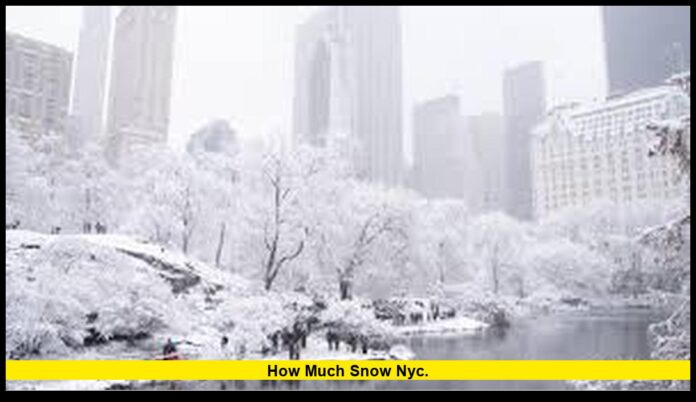
How much snow NYC received in the December 26–27, 2025 winter storm has been a top search question as millions tracked this powerful post-Christmas weather event. New York City recorded measurable accumulations from a fast-moving but impactful storm that brought its highest snowfall in nearly four years, reshaping travel, public services, and holiday plans across the region.
This article provides the most up-to-date, confirmed snowfall totals for New York City, analysis of how those totals compared to forecasts, a breakdown by borough and neighborhood, the wider regional context, impacts of the snow on daily life and travel, and reflections on how this event fits into recent winter weather patterns.
Table of Contents
Storm Background: Timing and Development
A strong winter storm developed in the central United States before sweeping northeastward toward the Northeast corridor just after Christmas 2025. The system began producing snow in the Midwest and then intensified as it tracked toward the Atlantic coast.
Snow reached New York City late on Friday, December 26, and continued through early Saturday morning, with the heaviest bands falling late into Friday night. Snowfall rates at times reached an inch or more per hour during peak storm intensity, driven by cold air at the surface combined with ample moisture and dynamic lift in the storm system.
By Saturday, December 27 in the morning, the bulk of the snowfall had tapered off in New York City, though some flurries and lingering precipitation continued before skies began to clear. The timing of the storm — right in the middle of post-holiday travel and cold temperatures — made it a particularly notable winter event for the region.
Confirmed Snow Totals for New York City: How Much Snow NYC Got
The verified snowfall totals from the National Weather Service and official weather reporting offices show that New York City saw measurable accumulations across all five boroughs. These figures represent the best actual measurements available from trained spotters and automated observers through Saturday morning.
Here’s the most accurate breakdown of how much snow NYC received from this storm:
Central and Manhattan Reporting Sites
- Central Park: 4.3 inches — the most snow in a single storm since January 2022.
- Manhattan overall: Generally in the 4- to 5-inch range in most neighborhoods.
Borough-by-Borough Snow Totals
- Bronx: Around 4.3 inches in areas like Fordham.
- Brooklyn: About 4.3 inches in Williamsburg.
- Queens: Measurements varied from 2 to 4.6 inches depending on neighborhood.
- Staten Island: Snow amounts ranged around 3–4 inches in many spots.
- Manhattan: Central Park remained the key reporting station at 4.3 inches.
Within those general ranges, some neighborhoods reported slightly higher localized totals where snow persisted longer without mixing with sleet or freezing rain.
Airport and Transit Observations
Airport weather stations also recorded snow:
- JFK and LaGuardia Airports: Snowfall measurements were generally around 4+ inches at these locations, indicating that even travel hubs saw measurable accumulation.
Collectively, these figures show that New York City received a notable snow event, though totals were somewhat lower than earlier forecasts that had anticipated up to 6–8 inches or more in some areas. This reduction occurred because sleet and freezing rain mixed in with snow at times, especially in lower elevations closer to the coast, suppressing total snow build-up.
Comparing Forecasts and Actual Snowfall
In the days leading up to the storm, forecasts projected a range of possible snowfall totals for the New York City area. These included predictions of between 4 and 8 inches, with some meteorologists noting that certain storm tracks might even push totals above 8 inches in parts of the metro area.
However, as the storm approached and the precipitation began, warmer air aloft mixed with snow in layers of the atmosphere. This caused sleet and freezing rain to fall at times in the city, which suppressed pure snowfall totals. As a result, the storm delivered about 4.3 inches of snow in Central Park and roughly similar amounts in many neighborhoods — slightly less than the highest early forecasts but still significant for late December.
The final totals reflect these mixed precipitation effects, where snow did fall heavily at times, but sleet and ice accumulated in between, lowering the pure snow measurement. Despite this, the snow that did accumulate stuck quickly because ground temperatures were below freezing across the region.
Snow Trends Across New York State and the Tri-State Area
While the focus here is on how much snow NYC received, nearby regions experienced even higher totals during the same storm:
- Long Island: Many communities saw up to 7–8+ inches, with some localized areas reporting totals close to 9 inches.
- Connecticut: Snowfall accumulations were higher still, with places like Fairfield and Meriden reporting near 9–10 inches of snow.
- Hudson Valley: Communities north of New York City frequently picked up 5–7+ inches.
- Upstate NY: Some locations received even more significant snow totals as the storm’s core tracked through those areas.
These higher totals reflect how the storm’s strongest snow bands bypassed parts of New York City and instead dropped heavier snow to the north and east.
Historical Context: How This Snowstorm Compares
Snow in New York City varies widely from year to year. Looking at recent history:
- The 4.3-inch snowfall from this storm is the largest single storm accumulation in New York City since early 2022, when a late-season snowstorm dropped similar totals.
- Prior winters saw wide variation, with some seasons barely crossing double-digit annual snowfall totals, while others reached or exceeded 20 inches.
This December storm, therefore, stands out as a significant midwinter snow event for the city, even if it fell short of the more extreme totals seen in historical record storms.
Impact on Travel and Transportation
The question of how much snow NYC got also influenced travel conditions throughout the region:
Air Travel Disruptions
- Major airports including JFK, LaGuardia, and Newark Liberty International experienced widespread delays and cancellations as the snow and mixed precipitation hit during peak travel times.
- Hundreds of flights were delayed or canceled, with some carriers adjusting schedules or offering waivers for passenger changes.
Road Conditions
- Snow-covered roads, slick bridges, and freezing rain patches created hazardous driving conditions across New York City and the broader metropolitan area.
- Alternate side parking rules were suspended to facilitate snow removal and plowing operations on city streets.
- Street crews worked through the night with plows and salt spreaders to clear major roads and secondary streets.
Transit and Commuting
- Subway and bus services continued operating but experienced delays in some corridors due to weather-related slowdowns and street conditions.
- Commuters were advised to allow extra time for travel and, where possible, use public transportation to avoid slick roadways.
Pedestrian Safety
- Sidewalks and pedestrian areas were quickly coated with snow that packed and froze, creating slippery conditions for walkers.
- Property owners and businesses were urged to clear snow and ice to prevent slips and falls.
Public Preparation and Government Response
In anticipation of this storm, city and state officials took several steps to minimize the impact of snowfall:
- Winter weather alerts and warnings were issued for all five boroughs and neighboring counties.
- Code Blue conditions were implemented to shelter vulnerable populations during sustained cold temperatures.
- Snow removal teams, emergency responders, and transportation crews were placed on high alert as snow began to fall.
- Officials encouraged residents to stay off roads during the height of the snowfall and to prepare emergency kits and contingency plans.
These pre-storm preparations helped ensure a coordinated response once snow began accumulating across the region.
Living with Snow: What Residents Experienced
For many New Yorkers, the snowfall brought both challenges and seasonal charm. Scenes of snow-coated streets, park benches buried in white, and holiday lights reflecting off the fresh snow created a classic winter backdrop. At the same time:
- Families adjusted weekend travel plans.
- Outdoor workers and transit riders adapted to slick conditions.
- Schools and workplaces monitored conditions to ensure safety the next day.
Despite these disruptions, the storm offered a welcome snowy scene for many in a region that has seen relatively modest snowfall in recent years.
What This Means for the Rest of Winter
With this December storm behind us and New York City having recorded 4.3 inches of snow, weather watchers will be watching for what comes next this winter. Seasonal climate patterns vary year to year, and while this storm delivered above-average snow for a single event, it does not guarantee how the rest of the season will unfold.
Meteorologists continue to monitor larger weather patterns, including:
- The potential for additional coastal storms later in winter.
- Arctic air intrusions that could bring colder temperatures and additional snow.
- Trends in precipitation that could influence whether the city sees another significant snowfall this season.
While it’s only early winter, this recent event suggests that New York City can still experience meaningful snowstorms that affect travel, daily life, and the rhythm of city living.
Bold Closing Line:
Let us know in the comments how the snow impacted your plans in NYC and stay tuned for future weather updates!

