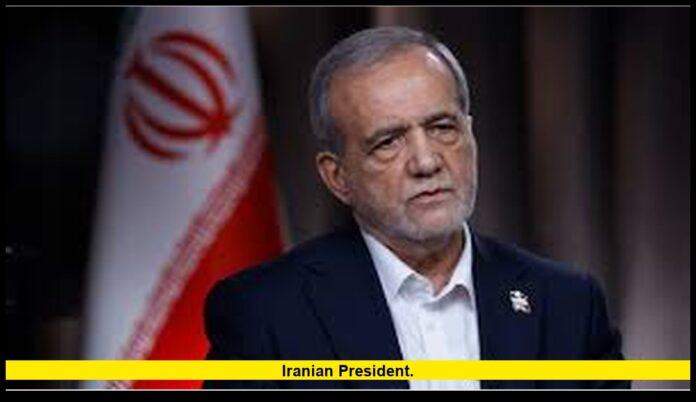
The Iranian president is facing one of the most consequential periods in modern Iranian politics as President Masoud Pezeshkian navigates rising regional tensions, sustained economic pressure, and strained relations with the United States, Israel, and Europe. In late December 2025, Pezeshkian made international headlines after declaring that Iran is confronting what he described as a full-scale confrontation with Western powers, signaling a sharp escalation in rhetoric amid an already volatile geopolitical climate.
As Iran approaches the end of 2025, the Iranian president’s statements, policy decisions, and domestic challenges are shaping the country’s direction and influencing U.S. foreign policy considerations. This article provides a detailed, factual, and up-to-date examination of President Pezeshkian’s leadership, focusing exclusively on developments tied directly to the Iranian presidency.
Table of Contents
Who Is the Iranian President in 2025
Masoud Pezeshkian became Iran’s president in July 2024 after winning the national election and receiving formal approval from the country’s supreme leadership. He now leads Iran’s 14th government at a time marked by economic strain, regional conflict, and heightened international scrutiny.
Pezeshkian entered office with a reputation as a pragmatic political figure, but his presidency has unfolded during a period of mounting pressure that has forced a firmer public posture. By late 2025, his leadership style reflects a blend of domestic crisis management and outward-facing resistance to Western influence.
Iranian President’s “Full-Scale War” Statements
Escalating Rhetoric Toward the West
In December 2025, the Iranian president stated publicly that Iran is engaged in what he described as a full-scale war with the United States, Israel, and Europe. He framed this confrontation as political, economic, security-based, and cultural rather than a traditional declared military conflict.
Pezeshkian emphasized that Iran faces coordinated pressure designed to weaken its economy, disrupt governance, and challenge its regional influence. He argued that this form of conflict is more complex than past wars because it operates across multiple dimensions simultaneously.
While no formal declaration of war has been issued, the president’s language represents one of the strongest rhetorical positions taken by an Iranian leader in recent years.
Comparison to Historical Conflicts
The Iranian president has stated that the current situation surpasses earlier conflicts in complexity and scope. He pointed to sanctions, cyber operations, intelligence activities, and diplomatic isolation as evidence that Iran is confronting a sustained campaign rather than isolated disputes.
This framing serves both domestic and international purposes, reinforcing national unity at home while signaling resistance to external pressure abroad.
June 2025 Conflict and Its Lasting Impact
Background of the Mid-Year Escalation
The Iranian president’s December remarks follow a brief but intense conflict earlier in 2025 involving Iran, Israel, and the United States. That confrontation included airstrikes, missile exchanges, and heightened military readiness across the region.
Although active hostilities subsided, the aftermath continues to shape Iranian policy. Infrastructure damage, loss of personnel, and renewed sanctions contributed to a climate of confrontation that persists into the final weeks of the year.
Pezeshkian has referenced this conflict when explaining Iran’s current posture, describing it as a turning point in Tehran’s strategic outlook.
Domestic Economic Crisis Under the Iranian President
Inflation and Cost of Living Pressures
Iran’s economy remains under severe strain in late 2025. Inflation remains above 40 percent, with essential goods, food, housing, and medical expenses continuing to rise. The national currency has weakened significantly, eroding purchasing power for millions of Iranians.
The Iranian president has acknowledged these difficulties openly, stating that economic pressure is one of the most serious challenges facing his administration.
Budget Constraints and Wage Policy
Pezeshkian has told lawmakers that the government lacks the financial capacity to raise wages at the same pace as inflation. The administration’s proposed budget includes moderate wage increases and tax relief measures but falls short of matching real-world living costs.
Key budget priorities outlined by the Iranian president include:
- Controlling inflation without expanding the deficit
- Maintaining essential subsidies
- Preventing further currency instability
- Supporting low-income households through tax exemptions
Despite these measures, public dissatisfaction remains widespread, placing additional political pressure on the presidency.
Public Unrest and Social Tensions
Labor Actions and Protests
Throughout 2025, Iran has seen recurring protests by workers, shopkeepers, truck drivers, and healthcare professionals. These actions reflect frustration over wages, inflation, fuel prices, and working conditions.
While protests have varied in scale, they demonstrate the depth of economic stress confronting the Iranian president. The administration has responded with a mix of negotiations, policy adjustments, and security measures.
Sanctions and Nuclear Tensions
Renewed International Pressure
Iran continues to face extensive international sanctions related to its nuclear activities and regional behavior. In 2025, additional sanctions were reinstated following concerns over uranium enrichment levels and inspection access.
The Iranian president maintains that Iran’s nuclear program is peaceful and conducted within its sovereign rights. However, nuclear tensions remain one of the central drivers of Iran’s strained relationship with Western governments.
Effect on Presidential Policy
Sanctions have limited Iran’s access to global markets, foreign investment, and financial systems. This has directly influenced the Iranian president’s economic options, forcing a focus on domestic production, regional trade, and strategic partnerships outside the Western sphere.
Foreign Relations Under Masoud Pezeshkian
Relations With the United States
U.S.–Iran relations remain deeply adversarial in late 2025. The Iranian president has accused Washington of seeking to prevent Iran from achieving economic independence and regional stability.
Diplomatic communication remains limited, and no comprehensive negotiations are underway. The relationship is defined largely by deterrence, sanctions, and indirect engagement through regional intermediaries.
Tensions With Israel
Israel remains a central focus of Iranian rhetoric. Pezeshkian has accused Israel of conducting hostile actions against Iranian interests and has warned of firm responses to future attacks.
While direct conflict is not ongoing, tensions remain high, and the possibility of escalation continues to influence regional security calculations.
Europe’s Role
Relations between Iran and European countries have deteriorated further in 2025. European governments have aligned more closely with U.S. positions on sanctions and nuclear oversight, prompting criticism from Tehran.
The Iranian president has described Europe as participating in pressure campaigns that undermine diplomacy and economic recovery.
Strategic Partnership With Russia
Long-Term Cooperation
Iran and Russia have expanded cooperation across multiple sectors, including energy, defense, transportation, and finance. A long-term strategic agreement signed earlier in 2025 came into effect later in the year, reinforcing bilateral ties.
This partnership provides Iran with alternative economic channels and political backing amid Western isolation.
Military and Security Signals
Missile and Defense Messaging
Iranian military activity in 2025 has been marked by deliberate ambiguity. Reports of missile tests and air defense readiness have sent mixed signals, contributing to uncertainty among regional rivals.
The Iranian president has emphasized deterrence rather than provocation, stating that Iran seeks to prevent war while remaining fully prepared to defend itself.
Maritime Actions and the Strait of Hormuz
Tanker Seizure Incident
In late December 2025, Iranian naval forces seized a foreign oil tanker in the Strait of Hormuz, citing violations of maritime regulations. The incident highlights Iran’s continued assertiveness in one of the world’s most strategically important waterways.
The Iranian president defended Iran’s actions as lawful and necessary to protect national interests.
Why the Iranian President Matters to U.S. Audiences
For readers in the United States, developments involving the Iranian president carry significant implications:
- Global Security: Iran’s posture influences Middle East stability and U.S. military planning
- Energy Markets: Tensions in the Strait of Hormuz affect global oil prices
- Nuclear Policy: Iran remains central to nonproliferation debates
- Diplomatic Strategy: Washington must balance pressure, deterrence, and potential engagement
Understanding the Iranian president’s actions helps explain broader U.S. foreign policy decisions and regional dynamics.
Leadership Style and Political Positioning
Masoud Pezeshkian’s presidency reflects the constraints of Iran’s political system while highlighting the influence of external pressure on leadership tone. His approach combines economic realism with strong nationalist messaging, especially when addressing foreign threats, and this has become more pronounced amid continued sanctions and regional tensions. Pezeshkian has emphasized Iran’s resilience and independence, framing economic hardship as a consequence of external pressure rather than domestic policy failure, while cautiously pursuing limited economic reforms to manage rising costs of living. His public addresses balance a firm stance on security with repeated calls for national unity, signaling a leadership style that prioritizes survival and strategic autonomy over rapid change. This balance, shaped by both internal demands and international dynamics, is likely to define the remainder of his term.
This balance is likely to define the remainder of his term.
Outlook for 2026
As 2025 ends, the Iranian president faces unresolved economic challenges, ongoing sanctions, and fragile regional stability. His statements suggest continued resistance to Western pressure, paired with efforts to stabilize the domestic economy through cautious budget policies and targeted relief measures. Into 2026, Iran is expected to sustain its strategic alignment with non-Western partners while managing internal demands for higher wages and price relief. Regional security will remain volatile, with sporadic tensions in the Gulf and diplomatic engagements shaping Tehran’s foreign policy choices. Future developments will depend on global diplomatic dynamics, changes in nuclear negotiations, regional security events, and Iran’s ability to slow inflation and restore public confidence.
How do you view the Iranian president’s leadership amid rising global tensions? Share your perspective and stay tuned for ongoing updates.

