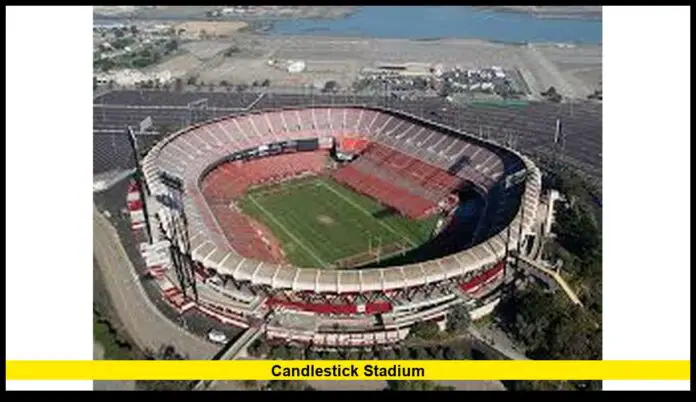
Candlestick Stadium continues to shape conversations in San Francisco more than a decade after its final event, as the former stadium site moves through a complex and closely watched redevelopment process. Once home to some of the most iconic moments in American sports history, Candlestick Stadium today represents both the weight of legacy and the challenge of transforming a massive, historically significant waterfront site into a modern, livable community.
Table of Contents
A Landmark That Defined an Era
Candlestick Stadium, originally known as Candlestick Park, opened in 1960 on San Francisco’s southeastern shoreline. Built along the edge of San Francisco Bay, the stadium was designed to host large-scale professional sports and major public events at a time when the city was expanding its national cultural influence.
For more than five decades, the venue served as a shared home for Major League Baseball and the National Football League. The San Francisco Giants played at the stadium from its opening until 1999, while the San Francisco 49ers called it home from 1971 until the end of the 2013 NFL season. Over the years, Candlestick Stadium became synonymous with intense weather conditions, dramatic playoff games, championship runs, and unforgettable fan experiences.
The stadium hosted World Series games, NFC Championship clashes, playoff moments that defined careers, and concerts featuring some of the biggest artists in music history. These events cemented Candlestick Stadium’s reputation as one of the most recognizable sports venues in the United States.
Despite its iconic status, the stadium also faced ongoing criticism. Its exposed location made it infamous for swirling winds, cold temperatures, and fog. Over time, the facility struggled to meet modern standards for fan comfort, premium seating, and revenue generation. These factors eventually pushed both the Giants and the 49ers to seek newer venues better aligned with evolving league expectations.
The End of Stadium Operations
The departure of professional teams marked the beginning of the end for Candlestick Stadium as an active venue. The San Francisco Giants moved to a new waterfront ballpark in 2000, leaving the stadium solely occupied by the 49ers for more than a decade.
In 2014, the 49ers officially relocated to a new stadium in Santa Clara, bringing professional sports at Candlestick Stadium to a close. The final event held at the venue took place in August 2014, ending 54 years of continuous use.
Following its closure, the stadium remained vacant for several months while the city prepared for demolition. In early 2015, demolition work began, and by the end of that year, Candlestick Stadium was fully dismantled. The removal of the structure marked a symbolic turning point for San Francisco, closing a major chapter in the city’s sports and entertainment history.
What Replaced Candlestick Stadium?
Unlike many former stadium sites that quickly transform into commercial developments, the Candlestick Stadium site entered a prolonged planning phase. The property became part of a much larger redevelopment area known as Candlestick Point, which includes adjacent land parcels stretching toward the Hunters Point Shipyard.
The vision for the area has always been ambitious. City leaders and planners envisioned a mixed-use waterfront district that could deliver housing, jobs, parks, and public amenities while reconnecting a historically isolated part of the city to the rest of San Francisco.
However, the scale of the site, combined with environmental, economic, and political complexities, meant progress unfolded slowly. Years passed with little visible change beyond grading, fencing, and planning approvals.
Current Status of the Candlestick Stadium Site in 2026
As of early 2026, the former Candlestick Stadium site remains under active redevelopment planning and early-stage infrastructure preparation. While no residential or commercial towers currently stand where the stadium once rose, the project has moved beyond concept drawings and into preparatory execution.
Infrastructure work has become the primary focus. This includes underground utilities, road alignments, drainage systems, and environmental remediation. These foundational steps are essential before any large-scale buildings can be constructed.
City approvals for updated redevelopment plans were finalized in 2025, allowing revised layouts for housing, commercial space, public parks, and transportation connections. These updates reflect current market conditions and evolving housing needs, particularly the city’s push to balance market-rate development with significant affordable housing commitments.
Although vertical construction has not yet begun, the site is no longer dormant. The groundwork being laid in 2026 is intended to support long-term development over the next decade.
The Vision for a New Neighborhood
The long-term plan for the former Candlestick Stadium site centers on creating a complete neighborhood rather than a single-purpose development. Planners have emphasized the importance of integrating residential, commercial, and public spaces to ensure the area functions as a living community.
Key elements of the vision include:
- Thousands of new housing units, including a substantial share designated as affordable housing
- Retail and neighborhood-serving businesses designed to support daily life
- Office and innovation spaces intended to attract employers and create local jobs
- Parks, waterfront access, and open space connecting residents to the bay
- Improved transit links and pedestrian-friendly street layouts
The goal is to transform what was once a seasonal, event-driven destination into a year-round, livable district that supports families, workers, and small businesses.
Housing at the Center of Redevelopment
Housing remains the most closely watched component of the Candlestick Stadium redevelopment. San Francisco continues to face a persistent housing shortage, and large-scale projects like this are seen as critical to easing long-term supply constraints.
The approved plans preserve thousands of housing units across multiple phases. These units are intended to include a mix of ownership and rental options, with affordability levels ranging from deeply subsidized to market-rate.
City officials and community advocates have emphasized that affordable housing delivery will be a key benchmark for measuring the project’s success. Phased construction requirements are designed to ensure affordable units are built alongside market-rate development rather than postponed indefinitely.
Economic Impact and Job Creation
Beyond housing, redevelopment of the Candlestick Stadium site is expected to generate significant economic activity over time. Construction alone is projected to support thousands of jobs across trades, engineering, project management, and related services.
Once built out, the area’s commercial and office components could host a wide range of employers. These may include technology firms, life sciences companies, professional services, and local retailers. The inclusion of office space reflects efforts to create a balanced neighborhood where residents can live and work within the same district.
Local hiring goals and workforce development programs have been built into redevelopment agreements. These initiatives aim to ensure that residents from surrounding neighborhoods have access to training and employment opportunities tied to the project.
Environmental Considerations and Site Safety
Environmental cleanup and long-term site safety have been central to redevelopment planning. Portions of the Candlestick Point area were previously used for industrial purposes, and nearby parcels have required extensive environmental testing.
Before residential construction can proceed, soil conditions must meet strict safety standards. Environmental monitoring and remediation work continue as part of the infrastructure phase.
In addition, the site’s waterfront location requires careful planning around sea level rise, storm surge protection, and climate resilience. Updated designs incorporate flood protection measures and sustainable building strategies intended to ensure long-term viability.
Transportation and Connectivity
Improving access to the former Candlestick Stadium site has long been a priority. Historically, the area was isolated from the rest of San Francisco, with limited transit options and few direct connections to major commercial corridors.
Redevelopment plans include new road networks, improved public transit access, bike infrastructure, and pedestrian pathways. These changes aim to reduce car dependency while making the neighborhood easier to reach for residents and visitors.
Enhanced connectivity is also expected to support economic development by linking the site more effectively to downtown San Francisco and other employment centers.
Community Involvement and Oversight
Community engagement has played a significant role in shaping redevelopment plans. Residents of nearby Bayview-Hunters Point have long advocated for equitable development that delivers tangible benefits without displacing existing communities.
Public meetings, advisory committees, and negotiated agreements have influenced decisions related to housing affordability, job access, environmental protections, and public amenities. While opinions on the project vary, community input continues to shape implementation priorities.
City agencies remain responsible for oversight, ensuring that developers meet their obligations and adhere to approved timelines and standards.
Preserving the Legacy of Candlestick Stadium
Although the physical structure no longer exists, Candlestick Stadium’s legacy remains deeply embedded in San Francisco’s identity. Redevelopment plans acknowledge this history through proposed public art, commemorative markers, and street names that reference the stadium’s past.
These elements aim to honor the generations of fans, athletes, and performers who passed through the gates while allowing the site to evolve for future generations.
The balance between honoring history and embracing change has become a defining theme of the project.
Why Candlestick Stadium Still Matters
Candlestick Stadium matters not just because of what it was, but because of what its site represents today. It reflects the broader challenges facing American cities as they seek to repurpose large, aging infrastructure assets in ways that align with modern needs.
The redevelopment effort highlights key issues such as housing supply, affordability, environmental responsibility, and community equity. Decisions made at this site will influence how similar projects unfold across the country.
For many San Franciscans, Candlestick Stadium symbolizes resilience, reinvention, and the ongoing effort to balance growth with preservation.
What Comes Next
While the transformation of the Candlestick Stadium site has taken longer than many expected, 2026 marks a period of renewed forward motion. Infrastructure work is laying the foundation for future construction, and updated plans provide clearer direction than in previous years.
The coming phases will determine whether long-standing promises translate into visible progress. Housing delivery, job creation, and community integration will remain key measures of success.
What does the future of Candlestick Stadium’s former site mean to you? Join the conversation and stay engaged as this historic transformation continues to unfold.

