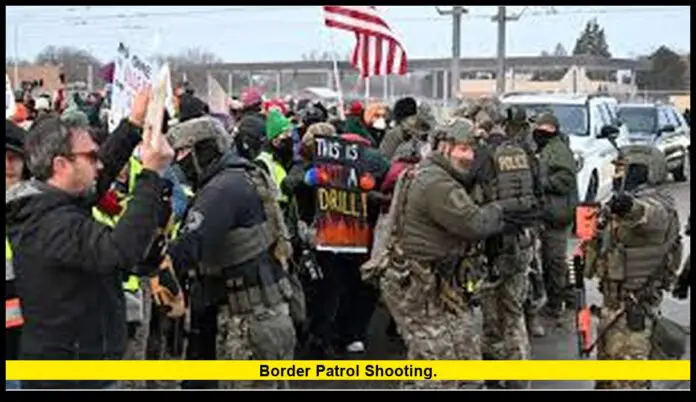
The border patrol shooting incidents occurring in Portland, Oregon, and Minneapolis, Minnesota, represent some of the most consequential federal use-of-force events in the U.S. in years. These back-to-back shootings — one leaving two people wounded and another resulting in a fatality — are now under intense federal investigation and have sparked nationwide protests, political clashes over jurisdiction, and growing public scrutiny of federal immigration law enforcement practices.
Table of Contents
Updated Breaking Overview of Border Patrol Shooting Cases
In early January 2026, U.S. Customs and Border Protection (CBP) and Immigration and Customs Enforcement (ICE) agents were involved in two high-profile use-of-force events in major U.S. cities.
In Portland on January 8, two people were shot and wounded by Border Patrol agents. Shortly before that, on January 7 in Minneapolis, an ICE agent fatally shot 37-year-old Renee Nicole Good during an enforcement operation.
Both shootings remain active and controversial, with federal authorities leading investigations and local leaders and residents demanding transparency and accountability.
Portland Border Patrol Shooting: Updated Incident Details
On the afternoon of January 8, 2026, two people — a man and a woman — were shot and wounded by federal agents in southeast Portland. The incident occurred around 2:15-2:20 p.m. in an area near East Burnside and Main Street.
Portland police responded and confirmed that federal agents were the ones who discharged their weapons. These agents were identified as part of U.S. Customs and Border Protection and were operating in the city when the shooting occurred.
Victim Conditions and Scene Details
- Both individuals were transported to nearby hospitals with gunshot wounds.
- As of the latest updates, their exact medical conditions have not been publicly released.
- Police secured two separate scenes connected to the events.
- Chief law enforcement officials have urged the community to remain calm while the investigation proceeds.
Federal Investigation Underway
The FBI is leading the investigation into the shooting, which remains active and ongoing. Portland police are assisting by maintaining scene security, but federal authorities are controlling the inquiry.
This shooting marks a rare instance of federal immigration agents firing their weapons in an urban non-border city and has amplified questions about when and where Border Patrol deployments should occur.
Portland Leadership Responds
Portland’s mayor has condemned the shooting as deeply troubling and has called for a halt to immigration enforcement operations in the city until a complete investigation is finished. City leaders argue that federal enforcement actions are undermining local safety and civil liberties.
Community organizers are also calling for full transparency, including the release of any body camera or agent footage related to the shooting.
Minneapolis ICE Shooting: Updated Facts and Fallout
The Minneapolis shooting on January 7, 2026, resulted in the fatal border patrol shooting of Renee Nicole Good, a 37-year-old U.S. citizen and mother of three.
Federal authorities reported that the ICE agent fired in response to what they described as a vehicle threat. However, available video evidence and multiple eyewitness accounts contradict that claim, showing Good’s vehicle turning away from officers before shots were fired.
Identity of the ICE Agent
Law enforcement records now publicly confirm that the ICE agent involved in the Minneapolis shooting is Jonathan E. Ross, a veteran federal officer.
Jurisdictional Clash Over Investigation
In a significant escalation, the FBI has taken exclusive control of the Minneapolis investigation. This decision has blocked Minnesota state investigators from accessing evidence or participating in the case review.
Local officials, including Minnesota’s governor and attorney general, have criticized the federal move, saying it limits transparency and public trust. They argue that excluding state authorities undermines accountability in a case involving the death of a local resident.
Public Reaction and Leadership Statements
- Minneapolis leaders have condemned both the shooting and the federal investigation approach.
- City officials demanded that ICE leave the city in the wake of the fatal encounter.
- Local protests continue, drawing comparisons to earlier high-profile police shootings and fueling debate about federal enforcement tactics.
Expanded Patterns in Federal Enforcement Shootings
The Minneapolis and Portland shootings are part of a broader trend in which federal immigration agents have used force in domestic operations. Investigative reporting shows several shootings involving CBP and ICE agents over the past several months, including incidents in Chicago and Texas, with some resulting in deaths and others in non-fatal injuries.
Federal homeland security leaders continue to defend such actions, saying agents face dangerous situations and must act to protect themselves and others. Yet authorities across multiple cities have disputed those portrayals based on video evidence and eyewitness testimony collected at various crime scenes.
National Protests Follow Border Patrol Shooting Incidents
The border patrol shooting cases have not remained local news. Protests have spread to multiple cities, including:
- Minneapolis
- Portland
- New York City
- Boston
- Philadelphia
- New Orleans
Demonstrators are demanding:
- Release of all related footage
- Independent and transparent investigations
- Limits on federal immigration law enforcement presence in residential neighborhoods
While most demonstrations have been peaceful, heightened tensions have led law enforcement to increase security around courts, city halls, and federal buildings.
School and Public Safety Impacts
Following the Minneapolis shooting and continued federal presence, Minneapolis public schools temporarily closed classes due to safety concerns related to unfolding events and protests.
City officials cited:
- Potential risk to students and staff
- High federal law enforcement activity near school zones
- Ongoing demonstrations
These closures reflect the extent to which border patrol shooting events have strained civic and community infrastructure.
Federal Deployment of Additional Agents
In response to unrest after the Minnesota shooting, the federal government is temporarily sending additional U.S. Customs and Border Protection agents to Minneapolis. These agents have been deployed from other regions to assist with public safety operations.
Authorities have indicated this assignment will be re-evaluated as conditions evolve.
Federal Versus State Authority Debates Intensify
The Minneapolis case, especially, has ignited debate over whether federal agencies should operate independently of state oversight when use of force is involved.
State officials argue that local investigators and law enforcement should have access to all evidence in serious use-of-force incidents. Federal officials contend that agents acting within the scope of their duties may be federally shielded.
This conflict raises broader questions about federal authority, the Supremacy Clause of the U.S. Constitution, and whether new policies are needed to govern federal agent accountability.
Expert Opinions on Use of Force
National experts in policing, constitutional law, and use-of-force policy have closely examined the Minneapolis shooting and raised serious concerns about how lethal force was applied. Many experts emphasize that firing at a moving vehicle is generally considered a last resort under widely accepted law-enforcement standards. Such action is typically justified only when there is a clear, immediate, and unavoidable threat to life, and when no other reasonable options exist.
Use-of-force specialists note that modern policing guidelines discourage officers from shooting at vehicles because of the high risk to bystanders, the unpredictability of bullet trajectories, and the likelihood of escalating a situation rather than neutralizing it. In urban residential settings, these risks are magnified due to proximity to homes, pedestrians, and other vehicles.
Critics have also highlighted discrepancies between official federal statements and visual evidence circulating publicly. Video recordings appear to show the ICE agent positioned outside the direct path of the vehicle at the moment shots were fired. Experts argue that this detail is central to determining whether the legal threshold for deadly force was met. If an officer is not directly in harm’s way, many policies state that lethal force may not be justified.
Legal analysts further stress that the determination of “imminent danger” must be based on objective evidence, not assumptions made in high-stress moments. They argue that independent review is essential to assess whether de-escalation tactics, repositioning, or withdrawal were viable alternatives before shots were fired.
These expert critiques have strengthened calls for independent investigation, transparent evidence review, and clearer federal use-of-force standards. Many experts contend that without accountability and policy reform, similar incidents involving federal immigration agents are likely to continue, further eroding public trust and intensifying nationwide debate over law enforcement authority and civilian protections.
Looking Ahead: What the Public Should Expect
Portland
- FBI investigation ongoing
- No charges or official report released yet
- Local leaders demanding transparency
Minneapolis
- Federal control of evidence continues
- State officials seeking access and oversight
- Public demonstrations and policy debates ongoing
Both border patrol shooting cases are likely to influence national discussions about immigration enforcement, federal law enforcement transparency, and community safety.
Why These Border Patrol Shooting Events Matter Nationwide
The Portland and Minneapolis border patrol shooting cases are not isolated incidents. Together, they reflect a turning point in how federal immigration enforcement is operating within U.S. cities and how the public is responding to that presence.
Federal Law Enforcement Authority in Urban Communities
These shootings have intensified debate over the expanding role of federal immigration agencies in major metropolitan areas far from the southern border. Border Patrol and Immigration and Customs Enforcement agents are increasingly conducting operations in dense residential neighborhoods, near schools, hospitals, and workplaces. Local leaders in multiple cities have raised concerns that these deployments are occurring with little coordination or advance notice, creating confusion over jurisdiction and responsibility when force is used. Critics argue that aggressive federal enforcement in urban settings risks escalating routine encounters into life-threatening situations.
Public Trust in Police and Immigration Enforcement
Public confidence has been deeply shaken, particularly following the fatal Minneapolis shooting involving a U.S. citizen. Protests and vigils have spread nationwide, driven not only by the loss of life but also by perceived inconsistencies between official federal statements and eyewitness accounts. Tensions have grown as federal authorities assumed exclusive control of investigations, limiting access by state and local officials. Community leaders say this lack of shared oversight undermines transparency and erodes trust at a time when public confidence in law enforcement is already strained.
The Balance Between Officer Safety and Civilian Rights
Federal agencies have emphasized the dangers faced by agents during enforcement operations, citing increased hostility and threats. At the same time, civil rights advocates and policing experts argue that officer safety must be balanced against the rights of civilians, especially in non-border cities where residents do not expect heavily armed immigration agents in everyday spaces. Critics warn that expanded enforcement powers and militarized tactics increase the risk of unnecessary harm to bystanders and civilians who are not involved in criminal activity.
Nationwide Impact and Policy Implications
The ripple effects of these border patrol shooting events are being felt across the country. City governments are reevaluating cooperation with federal immigration agencies. School districts have adjusted operations in response to safety concerns. Lawmakers at both the state and federal levels are calling for reviews of use-of-force policies, clearer rules governing federal operations in cities, and stronger accountability measures when deadly force is used.
As investigations continue, Americans nationwide are watching how federal, state, and local leaders respond to demands for accountability, transparency, and reform. These cases have become a defining moment in the national conversation about immigration enforcement, public safety, and civil liberties.
These border patrol shooting developments reflect a pivotal moment in U.S. law enforcement and civil rights — share your perspective below and stay tuned for verified updates as this story evolves.

