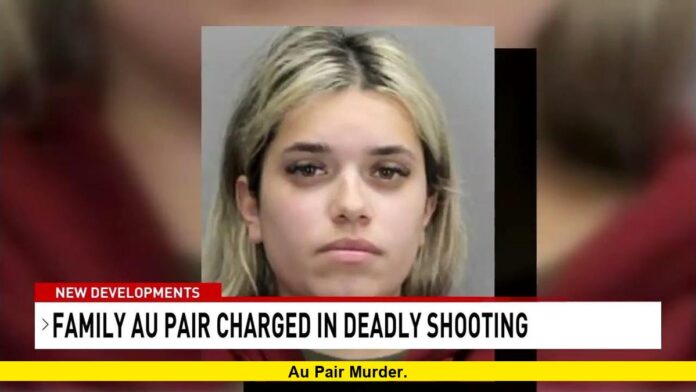
In a quiet, affluent suburb of Northern Virginia, a trial that has captured national attention this week centers on one of the most shocking and complex criminal cases in recent U.S. history — a case now widely referred to as the au pair murder trial. What began as a tragic double homicide in February 2023 has evolved into a sprawling courtroom battle involving allegations of deception, intricate online luring tactics, romantic betrayal, and conflicting narratives about what actually happened in a suburban family home. The spotlight now shines on the small Fairfax County courtroom where opening statements are underway and the nation watches as the truth is laid bare.
Jury Selection and Trial Commencement in Fairfax County
On Monday, a panel of 12 jurors and four alternates was seated in Fairfax County, Virginia, to preside over the high-stakes trial of Brendan Banfield, a 40-year-old former federal agent. The jury selection process drew intense public and media interest, with prosecutors and defense attorneys both carefully vetting potential jurors for their ability to remain impartial in a case that involves sensational elements such as an alleged extramarital affair with the family’s au pair and the deaths of two individuals. Opening statements were scheduled to begin on Tuesday after jurors were chosen to hear evidence and testimony over the coming weeks.
Banfield stands accused of orchestrating the killings of his wife, Christine Banfield, 37, and Joseph Ryan, 39, at the couple’s Herndon home on February 24, 2023. He has pleaded not guilty to multiple charges, including aggravated murder and child abuse, and faces the possibility of life in prison if convicted.
Prosecutors’ Case: Alleged Plot and Digital Deception
Prosecutors in the au pair murder trial argue that Banfield conspired with the family’s Brazilian au pair, Juliana Peres Magalhães, with whom he allegedly had a romantic affair, to lure Ryan to the home under false pretenses and then stage the scene to make the homicides appear to be an act of self-defense. The alleged plot, according to prosecutors, involved creating a fake online profile on a fetish-oriented social media platform in the name of Christine Banfield. Court records indicate that messages sent from this account drew Ryan to the Banfield home on the morning of the killings by suggesting a planned sexual encounter involving a knife.
Once Ryan arrived, prosecutors say, Banfield and Magalhães shot him, and Banfield stabbed his wife to death. The initial narrative presented by Banfield and Magalhães to authorities was that a stranger had entered the home and stabbed Christine before they shot the intruder in self-defense. Prosecutors now contend that this account was fabricated to conceal a calculated plot that unfolded behind the scenes.
Central to the prosecution’s case is the testimony and cooperation of Magalhães. She was initially arrested and charged in connection with the crime but later entered a plea of guilty to a reduced charge of manslaughter in exchange for her cooperation with prosecutors. Her plea deal included agreeing to testify in the trial of Banfield, and her statements are expected to play a significant role in laying out the alleged conspiracy.
Defense Strategy: Disputing the Narrative
Banfield’s defense has challenged key aspects of the prosecution’s version of events. Defense attorneys argue that the investigation was marked by missteps, bias, and a rush to judgment by law enforcement. They dispute claims that Banfield and Magalhães created a fake online persona to lure Ryan and instead point to alternative digital forensic evidence suggesting that Christine Banfield may have had independent contact with Ryan prior to her death.
A former digital forensic examiner with the Fairfax County Police Department testified that his analysis of electronic devices indicated that Christine herself had connected with Ryan on the platform prosecutors describe. This interpretation of digital evidence introduces a starkly different theory about the lead-up to the killings and has become a point of contention between the defense and prosecution.
The defense has also emphasized Banfield’s denial of wrongdoing. Banfield maintains his innocence, asserting that what happened in the Banfield home that February morning was not part of a premeditated plot. Instead, he claims the events were chaotic and that his initial statements to authorities were based on confusion and shock. Defense counsel have also raised questions about law enforcement’s handling of evidence and decisions made early in the investigation.
Child Abuse and Cruelty Charges
In addition to murder charges, Banfield faces separate counts of child abuse and felony child cruelty because his 4-year-old daughter was present in the home during the killings. These charges add a poignant and distressing dimension to the proceedings, underscoring the far-reaching impact of the alleged crimes on the Banfield family. Prosecutors contend that exposing a young child to the horrors of a double homicide constitutes a serious offense in its own right. The presence of child-related charges also means that jurors will need to consider not only the facts surrounding the deaths of Christine Banfield and Ryan but also the implications of the defendant’s conduct with respect to his child.
Public and Media Interest
The au pair murder trial has drawn significant attention both locally and nationally. The dramatic elements of the case — including an alleged affair, online deception, intricate digital evidence, and accusations involving an au pair — have made it a focal point for true-crime coverage and public discussion. Fairfax County permitted cameras in the courtroom for portions of the proceedings, allowing members of the public to witness segments of the trial firsthand. This transparency has fueled discussion and speculation across social media and news circles, though the court maintains strict guidelines on what evidence is public.
Observers note that the case has broader implications for how digital communications and online personas can play a role in criminal investigations and prosecutions. As technology continues to evolve, so does the importance of accurately interpreting digital evidence, a point underscored by the conflicting forensic interpretations at the heart of this trial.
What Happens Next in the Trial
With opening statements now underway, the prosecution and defense will begin presenting their narratives to the jury. Witness testimony, including expected statements from Magalhães, will likely form the backbone of the evidentiary phase. Investigators, forensic experts, law enforcement personnel, and perhaps additional witnesses connected to the case are anticipated to take the stand. Over the course of several weeks, jurors will hear testimony, examine physical and digital evidence, and receive instructions from the judge regarding the legal standards they must apply.
Closing arguments and jury deliberations will follow after the presentation of evidence. The outcome of the trial — whether a conviction or acquittal — will hinge on how effectively each side persuades jurors of its interpretation of the facts and the credibility of competing narratives.
The au pair murder case remains one of the most closely watched trials of the year, not only for its shocking allegations but also for its complex interplay of digital forensics, personal relationships, and courtroom strategy. As the trial continues, many will be watching closely to see how the story unfolds and what verdict the jury ultimately returns.
We welcome your thoughts on this case — share what you think will come next in the comments below.

