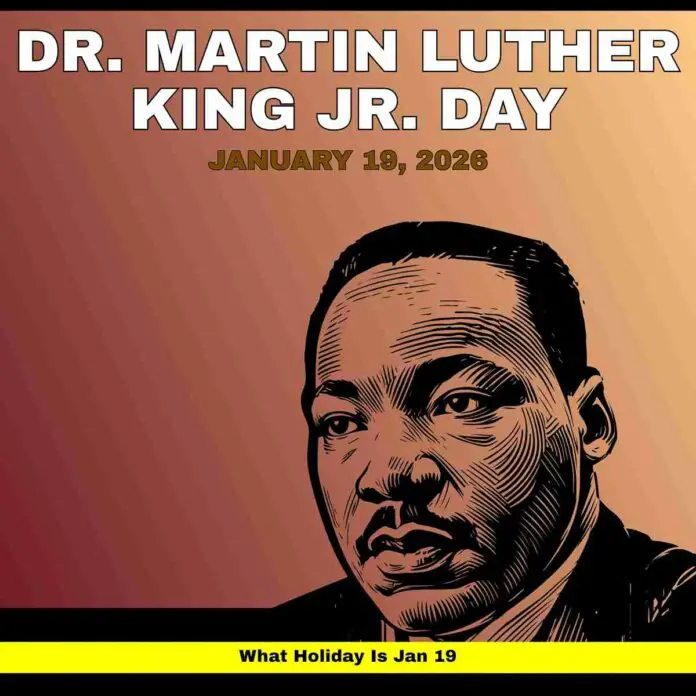
What holiday is Jan 19 in 2026 is a question many Americans and international readers are asking as the date approaches. This date holds significant meaning, especially in the United States, where it marks a major federal holiday honoring one of the most influential figures in American history. In addition to this prominent observance, January 19 is associated with a wide range of cultural celebrations, national days, and local observances around the world.
This article explains everything readers need to know about what January 19 represents in 2026 — from federal closures and community events to lesser‑known days recognized for creativity, culture, and linguistic heritage. Understanding the full scope of what this date signifies provides insight into how different communities honor history, service, identity, and joy.
Table of Contents
Martin Luther King Jr. Day: The Key Holiday in the United States
In 2026, January 19 falls on a Monday that is legally recognized as Martin Luther King Jr. Day, a federal holiday in the United States. This day honors the life and legacy of Dr. Martin Luther King Jr., a central leader in the American civil rights movement whose work toward equality, justice, and nonviolence transformed the nation’s social and political landscape.
Dr. King’s birthday is January 15, but his national holiday is observed each year on the third Monday of January. In 2026, that date is January 19. On this day, federal government offices are closed. The U.S. Postal Service suspends mail delivery, and courts and other governmental institutions do not operate. Major financial institutions such as Bank of America, Wells Fargo, and Chase also close branches for the holiday, though electronic account access remains available. Stock markets, including the New York Stock Exchange and Nasdaq, also pause trading in observance of this national holiday.
For many Americans, Martin Luther King Jr. Day is more than just a day off work or school. It’s a day dedicated to service, remembrance, and reflection on civil rights principles that continue to influence the country. Schools, community groups, and organizations often host marches, educational programs, volunteer activities, and cultural events — especially during the weekend leading up to the holiday. In cities from coast to coast, commemorative events blend celebratory and reflective tones as communities honor King’s vision of a more inclusive society.
The Legacy of Martin Luther King Jr. and Its Modern Importance
Dr. King’s leadership in the 1950s and 1960s reshaped the United States in profound ways. His advocacy for nonviolent protest, most famously expressed during the 1963 March on Washington where he delivered his “I Have a Dream” speech, helped bring national attention to racial injustice and inequality.
Martin Luther King Jr. Day stands as a symbol of these efforts. It is a moment for public discourse on civil rights challenges past and present, for community service projects aimed at improving neighborhoods, and for learning about the historical struggles and achievements that shaped modern American society.
Across the country, individuals and organizations use this holiday to discuss educational equity, voting rights, economic justice, and pathways toward reconciliation across communities with diverse backgrounds. The focus on service encourages Americans not only to honor King’s legacy in words but also through actions that benefit others.
Federal and State Observances on January 19
In 2026, the primary holiday recognized nationwide on January 19 remains Martin Luther King Jr. Day. However, other state‑level observances often coincide with this date as well:
- In Idaho, January 19 is observed as Idaho Human Rights Day, which highlights the importance of civil rights and equality within the state.
- Some states like Arizona and New Hampshire observe Civil Rights Day on January 19, connecting local consciousness to the broader national theme of civil rights advocacy represented by the Martin Luther King Jr. holiday.
- In Texas, Confederate Heroes’ Day is recognized on January 19, a state holiday that honors historical military figures associated with the Confederacy. While this observance differs significantly in intent from the federal holiday honoring Dr. King, it remains part of the complex tapestry of historical remembrance that occurs on this date in certain regions.
These overlapping observances reflect how different communities — federal, state, and local — approach historical memory and civic identity in distinct ways on the same calendar day.
Annual Cultural and Fun Observances on January 19
Beyond official proclamations and federal closures, January 19 is home to a variety of cultural celebrations and informal observances that bring creativity, joy, and awareness to niche topics. Although these days are not official federal holidays, they are recognized and enjoyed by communities and enthusiasts across social platforms, schools, and grassroots events.
One of the newer observances in the cultural calendar is National Imagination Day, celebrated on January 19. This day encourages people of all ages to use and cultivate their creativity. Imagination plays a central role in education, problem‑solving, mental flexibility, and artistic expression. On this day, families, educators, and creative communities highlight activities like storytelling, art projects, and brainstorming exercises that stretch the boundaries of thought and inspire innovative thinking.
Many people also mark January 19 with thematic celebrations such as Brew a Potion Day, Good Memory Day, National Popcorn Day, Tenderness Toward Existence Day, and World Snow Day — each of which shines a light on whimsical, contemplative, or seasonal themes that encourage reflection and joy. Whether it’s enjoying a favorite snack, celebrating snowfall with outdoor play, or simply acknowledging the value of remembering moments and people, these days add texture and community participation to January 19.
In educational settings, Elementary School Teacher Day often aligns with the third Monday of January to recognize teachers’ contributions to student learning and development.
International and Local Observances on January 19
Outside the United States, January 19 carries significance for several observances rooted in cultural heritage, language preservation, and community celebration. Around the world, different regions honor identities and histories that give unique meaning to this date.
For example, in the Indian state of Tripura, January 19 is observed as Kokborok Day, a celebration dedicated to promoting the Kokborok language and preserving its literary and cultural heritage. Kokborok is one of the major indigenous languages of northeastern India, and this day highlights efforts to sustain linguistic diversity and support educational initiatives in mother‑tongue communities.
In Iceland, Husband’s Day is celebrated on January 19 as a lighthearted tradition where spouses recognize and appreciate the role of husbands in family life through gestures of affection such as small gifts or shared activities.
In Eastern Africa, regions such as Ethiopia and Eritrea celebrate Timkat, the commemoration of Epiphany in the Ethiopian calendar. Falling on January 19 in regular years, Timkat marks a deeply spiritual moment in the Christian tradition with vibrant processions, water blessings, and cultural gatherings.
In Belarus, Rescuer’s Day on January 19 honors individuals who serve in emergency and rescue operations, recognizing the dedication of professionals who protect communities from disaster and danger.
These international and local observances illustrate the rich diversity of what January 19 signifies across cultural, historical, and social contexts around the globe.
How January 19 Is Observed in Everyday Life
With a combination of major federal holidays, state observances, cultural celebrations, and niche fun days, January 19 can look very different depending on where people live and what communities they are part of.
In the United States, many businesses and institutions that typically close for Martin Luther King Jr. Day also pause regular services, such as banks, government offices, and trading markets. While online services for banking and essential digital operations usually continue, physical branches and postal services stop for the holiday.
Schools often host special assemblies, lesson plans, and discussions about civil rights history on or around January 19. Students may attend community service events or participate in writing or art projects focused on themes of equality, justice, and historical reflection.
Community centers, nonprofit organizations, and civic groups frequently organize volunteer opportunities that align with the national emphasis on service, such as food bank drives, neighborhood cleanups, mentoring programs, and public dialogues about equity and inclusion. These activities reflect the spirit of the holiday and emphasize active civic participation.
Media coverage, public discourse, and special exhibits at museums and cultural institutions also increase around this date, offering historical perspectives and educational programming that amplifies understanding of civil rights movements and ongoing efforts toward social justice.
Economic and Institutional Impacts of January 19 Holiday
Because January 19 is recognized as a federal holiday in the United States under the Martin Luther King Jr. Day observance, it has tangible effects on economic and institutional operations.
Government employees, including federal and many state workers, receive the day off, affecting public services like administrative offices and courthouses. Postal delivery is suspended, and various administrative deadlines may adjust accordingly. Stock markets and major financial exchanges close, which traders and investors factor into planning for the week ahead.
Although many private‑sector businesses remain open, employees working in sectors tied closely to public infrastructure sometimes receive holiday pay or alternate work schedules. School closures and adjustments in childcare schedules are common, requiring families to plan for childcare and community activities.
Other services such as transportation, retail, and hospitality often remain operational on January 19. Retailers may tailor promotions or thematic events around the date — particularly those focusing on Martin Luther King Jr. Day weekends — while essential public transit tends to operate on modified holiday schedules.
Significance of Observances That Coincide with January 19
The convergence of official holidays, cultural observances, and fun thematic days on January 19 creates a unique blend of remembrance, civic engagement, and community spirit.
At its core, Martin Luther King Jr. Day represents a collective moment of reflection on America’s continued pursuit of equality, justice, and nonviolent social change. It offers schools, workplaces, and individuals a chance to engage thoughtfully with the history of civil rights, recognize progress made, and consider ongoing challenges.
Simultaneously, unofficial observances such as National Imagination Day and World Snow Day provide lighter, accessible ways for people to celebrate creativity, play, and wonder. These observances reflect the human desire to find meaning and joy in everyday life while honoring tradition and culture.
International observances like Kokborok Day and Timkat remind us that dates on the calendar connect people across the globe in diverse ways. Each observance gives insight into local customs, cultural values, and historical narratives that expand our understanding of what a specific date can represent.
Why January 19 Matters to You
Whether you are a U.S. resident preparing for a federal holiday or a global citizen curious about cultural observances around the world, January 19 holds layered meaning and significance.
For some, it’s a day to pause and think deeply about civil rights and the legacy of leaders who have shaped modern societies. For others, it’s a chance to engage in creative expression, community service, or cultural celebration. The combination of serious reflection and joyful observance makes January 19 a compelling date each year.
Recognizing what holiday Jan 19 represents allows individuals, families, schools, and organizations to make the most of the day — whether through meaningful dialogue, community involvement, honoring history, celebrating cultural identity, or simply spending time with loved ones.
Share how you observe January 19 and join the conversation about the traditions and meanings that make this date meaningful to you.

