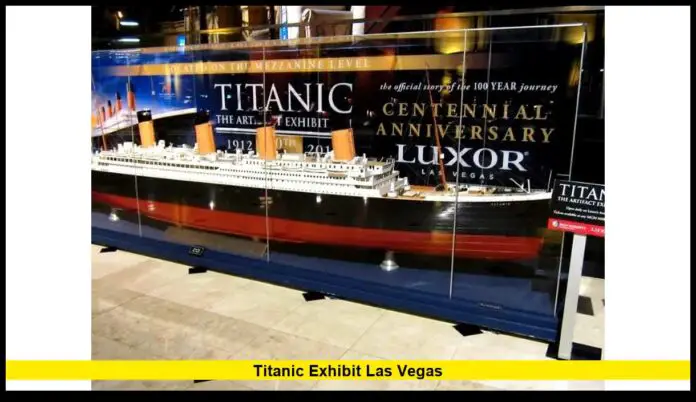
Titanic exhibit Las Vegas continues to draw steady crowds in 2026 as the long-running, permanent attraction at Luxor remains one of the city’s most visited historical exhibits.
The exhibit, officially titled Titanic: The Artifact Exhibition, is currently open to the public at Luxor Las Vegas and features authentic artifacts recovered from the wreck site of the RMS Titanic, along with full-scale room recreations and immersive storytelling. The experience remains fully operational as of today, with no announced closure date.
Table of Contents
Where the Titanic Exhibit Is Located in Las Vegas
The Titanic exhibit is housed inside Luxor Las Vegas, located on the southern end of the Las Vegas Strip.
Key location details:
- Venue: Luxor Hotel and Casino
- Address: 3900 S. Las Vegas Blvd., Las Vegas, Nevada
- Setting: Indoor, climate-controlled exhibition space
The exhibit is accessible to both hotel guests and the general public, with no requirement to stay at the resort.
What Is Titanic: The Artifact Exhibition?
Titanic: The Artifact Exhibition is a museum-style historical experience focused entirely on the real 1912 voyage of the RMS Titanic.
The exhibit is known for:
- Authentic artifacts recovered from the ocean floor
- Carefully recreated ship interiors
- Personal stories of actual passengers and crew
Unlike temporary traveling shows, the Las Vegas installation is permanent and regularly updated for preservation and educational accuracy.
Authentic Artifacts Recovered From the Wreck
One of the main reasons visitors attend the exhibit is the collection of genuine Titanic artifacts.
These items were recovered from the wreck site in the North Atlantic and preserved under strict conservation standards.
Notable artifacts include:
- China and tableware used in first-class dining
- Personal belongings such as jewelry and luggage items
- Navigation tools and ship components
Each artifact is displayed with contextual information explaining its use and historical significance.
The “Big Piece” Hull Section
The most famous artifact on display is known as the Big Piece.
This item is:
- A 15-ton section of Titanic’s steel hull
- One of the largest artifacts ever recovered from the wreck
- Displayed vertically for close viewing
The Big Piece provides visitors with a rare opportunity to see the scale and construction of the ship up close.
Full-Scale Room Recreations
The exhibit goes beyond display cases by recreating several areas of the ship.
Visitors walk through:
- A first-class stateroom
- A grand staircase recreation
- A third-class corridor
Materials, lighting, and design elements were chosen to reflect historical records as closely as possible.
The Boarding Pass Experience
At the beginning of the exhibit, each visitor receives a replica boarding pass.
The boarding pass:
- Represents a real Titanic passenger or crew member
- Includes basic biographical details
- Reveals survival status at the end of the exhibit
This feature personalizes the experience and connects visitors to real individuals from the voyage.
Passenger Stories and Human Focus
The exhibit places strong emphasis on the people aboard Titanic.
Throughout the galleries, visitors learn about:
- Families traveling together
- Crew members performing daily duties
- Immigrants seeking new lives in America
These stories are drawn from verified passenger records and historical documentation.
The Iceberg and Sinking Section
One section of the exhibit focuses on the events of April 14–15, 1912.
This area includes:
- Temperature displays simulating ocean conditions
- Explanations of how the iceberg damaged the hull
- Timelines tracking the sinking
The presentation remains factual and avoids dramatization.
Why the Exhibit Remains Relevant Today
Interest in Titanic has not faded, even more than a century later.
The exhibit remains popular due to:
- Continued public fascination with the disaster
- Educational value for students and families
- Renewed interest driven by films and documentaries
Las Vegas provides a year-round destination for visitors who may not have access to maritime museums elsewhere.
Current Hours and Ticket Information
As of today, Titanic: The Artifact Exhibition operates on a daily schedule, though hours may vary by season.
General details:
- Open seven days a week
- Tickets sold for timed entry
- Discounts often available for children and Nevada residents
Exact pricing and hours can change, so visitors typically check same-day availability before arrival.
Accessibility and Visitor Experience
The exhibit is designed to be accessible to a wide audience.
Accessibility features include:
- Wheelchair-accessible pathways
- Climate-controlled indoor environment
- Staff available to assist guests
Photography is allowed in many areas, though flash use is restricted to protect artifacts.
How Long the Experience Takes
Most visitors spend 60 to 90 minutes inside the exhibit.
Time spent depends on:
- Interest level in historical details
- Time spent reading passenger stories
- Crowd size during peak hours
Self-guided pacing allows visitors to move at their own speed.
Educational Value for Schools and Families
The exhibit serves as an educational resource for:
- School field trips
- History-focused family visits
- Students studying early 20th-century history
The exhibit aligns with topics such as immigration, industrialization, and maritime safety.
How the Artifacts Are Preserved
Preservation is a key focus of the exhibit.
Artifacts are:
- Maintained under controlled temperature and humidity
- Rotated when necessary to prevent deterioration
- Monitored by conservation specialists
This ensures long-term protection of historically significant items.
How This Exhibit Differs From Movie-Based Displays
While many visitors associate Titanic with film portrayals, this exhibit remains strictly historical.
Key differences:
- No fictional characters or scenes
- Focus on real passengers and crew
- Emphasis on verified artifacts
The exhibit avoids dramatization and prioritizes education.
Why Las Vegas Is a Permanent Home
Las Vegas was chosen due to:
- High visitor traffic year-round
- Central location for U.S. travelers
- Controlled indoor environment ideal for preservation
The Luxor partnership allows consistent public access without traveling exhibits.
Visitor Demographics
The exhibit attracts:
- Domestic tourists from across the U.S.
- International visitors
- Families, students, and history enthusiasts
It remains one of the most visited non-gaming attractions on the Strip.
What Has Stayed Consistent Over Time
Despite minor layout updates, core elements remain unchanged:
- Authentic artifacts
- The Big Piece display
- Passenger-focused storytelling
This consistency helps maintain historical integrity.
Why the Titanic Exhibit Continues to Matter
The exhibit preserves the memory of:
- Over 1,500 lives lost
- Lessons learned about safety and design
- Human stories behind a global tragedy
It provides a respectful space for reflection and learning.
Planning a Visit
Visitors often pair the exhibit with:
- Other Luxor attractions
- Strip sightseeing
- Educational trips
Because it is indoors, it remains a popular option during extreme summer heat.
A Lasting Attraction on the Strip
The titanic exhibit las vegas remains a standout historical experience, offering authentic artifacts, personal stories, and immersive displays that continue to educate and move visitors more than a century after the disaster.
If you’ve visited the Titanic exhibit or plan to see it soon, share your thoughts and stay tuned as interest in this remarkable historical experience continues.

