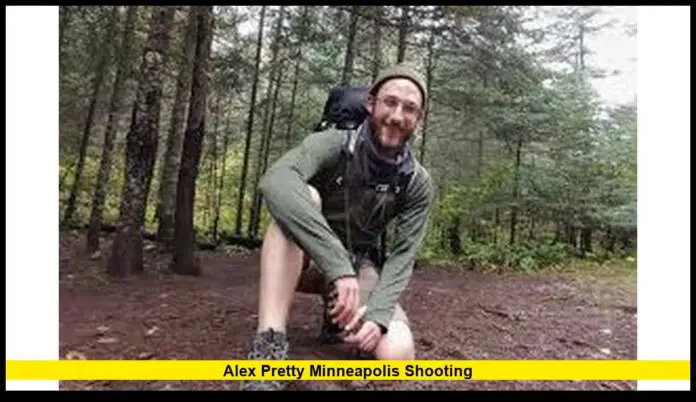
The alex pretty minneapolis shooting has become one of the most closely watched law-enforcement cases in the United States this year, after a respected intensive care nurse was killed during a federal immigration operation in south Minneapolis, triggering protests, political fallout, and a sweeping investigation into the use of deadly force.
Alex Jeffrey Pretty, 37, was a U.S. citizen and an ICU nurse who worked with critically ill patients, including military veterans. His death during a morning enforcement action involving federal agents sent shockwaves through Minnesota’s medical community, civil-rights groups, and local government, while raising urgent questions about how federal operations are conducted in densely populated urban neighborhoods.
A Routine Morning That Turned Deadly
The incident unfolded in south Minneapolis during a coordinated federal immigration enforcement effort that brought multiple agents into a residential and commercial area. The operation, part of a broader regional surge, was aimed at locating and detaining individuals with outstanding immigration violations.
According to confirmed accounts from authorities, agents encountered Alex Pretty near the scene while executing their duties. Within moments, a confrontation developed. An agent discharged a firearm, striking Pretty, who was pronounced dead at the location despite emergency medical efforts.
Officials initially stated that the agent believed Pretty posed an immediate threat and that the shooting was a defensive action. They acknowledged that Pretty was legally carrying a handgun, though they emphasized that the decision to use lethal force was made in what they described as a rapidly evolving and dangerous situation.
However, video footage and eyewitness testimony quickly complicated that narrative and intensified scrutiny of the events leading up to the fatal shots.
What the Cameras and Witnesses Show
Cellphone videos recorded by people nearby began circulating within hours. In the footage, Pretty is seen standing among a group of civilians during the operation. He appears to be holding a phone, not a weapon, and does not appear to be advancing on officers.
Several witnesses stated that moments before the shooting, Pretty was attempting to help others who had been knocked down or affected by pepper spray. Some described him as calm and focused on assisting a woman who had fallen, rather than confronting law enforcement.
The videos show agents moving in quickly, using crowd-control measures, and physically engaging people in the area. At one point, an officer reaches toward Pretty’s waist. Shortly afterward, gunfire erupts.
These images have fueled public concern about whether the perceived threat justified the level of force used, and whether de-escalation options were available.
Who Alex Pretty Was
Pretty was widely known in Minneapolis’s healthcare community as a dedicated ICU nurse who worked long hours caring for patients with life-threatening conditions. Colleagues described him as composed under pressure, empathetic with families, and deeply committed to patient advocacy.
He worked with veterans suffering from complex medical issues, including trauma, respiratory failure, and post-surgical complications. Many coworkers said he treated patients with the same respect and attention he would give to members of his own family.
Outside the hospital, Pretty enjoyed hiking, camping, and spending time with his dog. Friends said he believed strongly in civic responsibility and peaceful civic engagement. He had attended demonstrations earlier in the month related to public-safety concerns, motivated by a belief that communities deserved transparency and accountability from those in power.
Law-enforcement records confirmed that he was a lawful gun owner with a valid permit and no history of violent crime.
The Community Response
News of Pretty’s death spread rapidly, and by evening, a memorial had formed near the site of the shooting. Candles, flowers, handwritten messages, and photos filled the sidewalk. Many notes described him as a healer, a protector, and someone who devoted his life to saving others.
Vigils and protests followed, drawing hundreds of people. Demonstrators called for an independent investigation, the release of all body-camera and surveillance footage, and a review of federal enforcement tactics in urban areas.
Chants focused on justice, transparency, and the protection of civil rights. While most gatherings remained peaceful, tensions rose when federal agents maintained a visible presence, and some protesters reported the use of pepper spray during crowd-control efforts.
City officials urged residents to remain calm while promising that every available legal avenue would be pursued to uncover the full truth.
State and Local Government Actions
Minnesota’s governor strongly criticized the circumstances of the shooting and questioned whether federal agents acted within acceptable use-of-force standards. He called for a comprehensive investigation and emphasized that state authorities would work to ensure that evidence was preserved and reviewed independently.
The state’s top law-enforcement agencies moved to secure video recordings, radio communications, forensic evidence, and witness statements. Legal steps were taken to prevent any destruction or withholding of materials connected to the case.
Minneapolis officials confirmed that local police were not responsible for the shooting but pledged full cooperation with state and federal investigators. The mayor and city council members publicly supported the call for transparency and accountability.
Federal Review and Oversight
The federal agency involved placed the agent who fired the fatal shots on administrative status pending the outcome of internal and external reviews. Officials stated that the incident would undergo a use-of-force investigation, a civil-rights assessment, and prosecutorial review.
Federal leaders maintained that their personnel operate under strict guidelines and that any use of lethal force must meet constitutional and policy standards. They also acknowledged that public trust depends on a thorough, credible examination of what happened.
Legal Path Ahead
Multiple parallel investigations are now underway, including:
• A state criminal inquiry into the shooting
• A federal internal-affairs review
• A civil-rights investigation examining potential violations
• Anticipated civil litigation by Pretty’s family
Attorneys for the family have said they are seeking full disclosure of all evidence, including unedited video, ballistic analysis, and officer statements. They have emphasized that Pretty’s role as a healthcare professional who dedicated his life to saving others makes the circumstances of his death particularly devastating.
National Implications
The case has become a focal point in the national discussion about immigration enforcement, policing, and the use of force in civilian spaces. Civil-rights advocates argue that heavily armed operations in residential neighborhoods increase the risk of deadly misunderstandings. Law-enforcement organizations counter that officers face unpredictable threats and must be able to protect themselves and the public.
The alex pretty minneapolis shooting has been cited by lawmakers and policy analysts as an example of why clearer protocols, stronger oversight, and improved coordination between federal and local authorities may be necessary.
A Legacy of Service and a City Seeking Answers
At the hospital where Pretty worked, coworkers held moments of silence and established a remembrance space. Many spoke of his kindness, his steady presence during medical emergencies, and his willingness to stay late or take extra shifts when patients needed care.
Veterans who had been treated by him sent messages to his family, describing him as patient, reassuring, and deeply respectful.
As Minneapolis continues to mourn, the city is also demanding clarity. Residents want to know exactly what happened, why lethal force was used, and what steps will be taken to prevent similar tragedies in the future.
The investigations will determine legal responsibility, but the broader impact of this case is already clear. It has intensified calls for transparency, accountability, and reform, and it has left an indelible mark on a community that lost a caregiver, a neighbor, and a citizen in a single, devastating moment.

