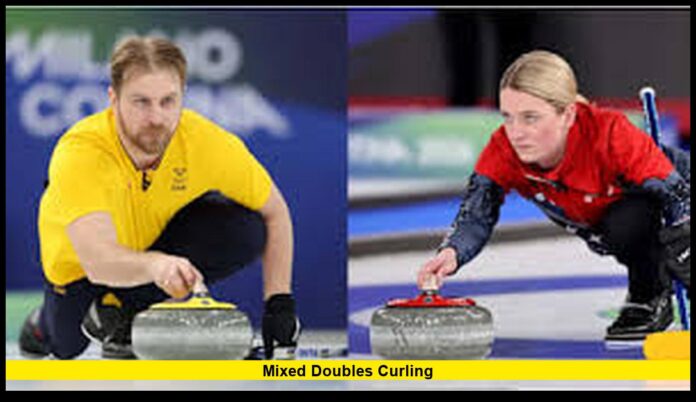
The battle for Olympic gold in mixed doubles curling has reached its dramatic conclusion at the 2026 Winter Olympics in Milan-Cortina, where the United States and Sweden are set to meet in a high-stakes final that promises intensity, precision, and history. After days of gripping round-robin matchups and emotional semifinal showdowns, two of the tournament’s most composed and strategic teams now stand one win away from the top of the podium.
This year’s competition has delivered everything fans hoped for: razor-thin margins, tactical brilliance, and milestone achievements. For American curling supporters, the tournament already represents a breakthrough. For Sweden, it offers another opportunity to showcase a program long respected for its consistency and technical excellence.
Below is a detailed look at how both nations earned their place in the championship match, what has defined the competition so far, and why this final carries lasting significance for the future of the sport.
Table of Contents
Team USA Breaks New Ground on the Olympic Stage
The American duo of Korey Dropkin and Cory Thiesse entered the Games with confidence but without the burden of being tournament favorites. Their steady performance throughout the round-robin stage positioned them among the top contenders, but it was their semifinal victory that cemented their place in Olympic history.
Facing Italy in a tense semifinal, the U.S. team displayed resilience under pressure. The matchup featured multiple lead changes, with neither side able to create significant separation. Italy capitalized on early opportunities, using well-timed guards and strategic stone placement to generate scoring chances. But the Americans responded with patience and disciplined execution.
In the closing end, with the outcome hanging in the balance, the U.S. pair delivered one of the defining moments of the tournament. Precise sweeping and calm shot-making allowed them to secure the winning point and advance to the gold medal match. The victory guaranteed the United States its first Olympic medal in this discipline and ensured Cory Thiesse would become the first American woman to earn an Olympic curling medal.
The achievement represents a milestone for U.S. curling. While American teams have captured Olympic success in traditional four-person curling formats, mixed doubles has presented unique challenges since its introduction to the Winter Games. The 2026 performance signals a maturation of the American program in this fast-paced format.
Dropkin’s energy and communication have been central to the team’s success. Thiesse’s composure during high-pressure shots has balanced that intensity, creating a dynamic partnership capable of navigating the sport’s most demanding moments.
Sweden’s Precision and Consistency Shine Through
Sweden secured its place in the final with a commanding semifinal performance against Great Britain. The Swedish team, siblings Isabella and Rasmus Wranå, executed a near-flawless strategy from the opening end.
Sweden established early control, capitalizing on power play opportunities and limiting Britain’s scoring chances. The Wranå siblings relied on disciplined stone placement and aggressive sweeping to maintain pressure throughout the match. By the later ends, Sweden had built a comfortable advantage that proved insurmountable.
The Swedish curling program has long been regarded as one of the world’s strongest, and this tournament reinforced that reputation. The siblings’ chemistry, honed through years of competitive play together, has been evident in their seamless communication and tactical decisions.
Sweden’s path to the final reflects consistency rather than late-game heroics. Their ability to manage the scoreboard, protect narrow leads, and force opponents into difficult angles has separated them from much of the field.
A gold medal would further solidify Sweden’s standing as a global leader in curling and highlight the strength of its development system.
Italy Claims Bronze in Emotional Finish
After falling short in the semifinal, Italy responded with determination in the bronze medal game. Competing on home ice, the Italian pair delivered a disciplined performance to defeat Great Britain and secure a spot on the podium.
The bronze medal match featured controlled shot-making and careful risk management. Italy avoided unnecessary errors and capitalized when Britain left openings in the house. The victory ensured that Italian fans still had reason to celebrate and confirmed the nation’s continued prominence in mixed doubles competition.
For Great Britain, the tournament ended in frustration. Despite a strong preliminary showing and semifinal qualification, the team narrowly missed out on a medal once again. Their campaign highlighted how thin the margins have become at the Olympic level.
Round-Robin Battles Set the Stage
The round-robin portion of the tournament underscored the depth of international competition. With each team facing multiple opponents in rapid succession, consistency proved critical.
Traditional powerhouses encountered stiff resistance. Several games were decided in the final end, and tiebreaker scenarios shaped the semifinal field. Canada, often a medal contender in Olympic curling, did not advance to the medal round after dropping key matches in the preliminary stage.
Emerging programs also demonstrated growth. Nations that had never previously contended for Olympic medals in curling pushed established teams to the brink. The results reflected how widely the sport has expanded in recent years.
The format’s structure encourages aggressive strategy. With only five stones per player per game, every delivery carries weight. Teams must balance offense and defense while managing the hammer advantage and selecting the optimal moment to deploy the power play.
Understanding the Mixed Doubles Format
Mixed doubles curling differs significantly from traditional four-person play. Each team consists of one male and one female athlete. Games are shorter, and the scoring potential can shift rapidly from end to end.
One of the defining features is the power play option. Instead of beginning an end with standard pre-placed stones, a team can reposition those stones to create increased scoring opportunities. Choosing when to activate this option often determines momentum.
Sweeping intensity also plays a heightened role. With fewer stones in play, a single sweep can influence whether a stone settles perfectly behind a guard or drifts into a vulnerable position.
The speed and strategic complexity have made mixed doubles curling especially appealing to modern Olympic audiences. Matches move quickly, yet the mental chess match remains as intricate as ever.
What the Gold Medal Match Means for the United States
For the United States, the championship game represents more than a chance at gold. It symbolizes the progress of American curling on the international stage.
A victory would mark the nation’s first Olympic title in mixed doubles curling and elevate Dropkin and Thiesse into the ranks of Olympic champions. Their journey has already inspired renewed interest in curling clubs across the country.
American curling has experienced steady growth in participation since previous Olympic successes. The 2026 performance may further accelerate that trend, especially among younger athletes drawn to the mixed doubles format.
The team’s semifinal resilience demonstrated that they can thrive in close contests. Maintaining that composure against Sweden will be critical.
Sweden’s Pursuit of Another Olympic Triumph
Sweden enters the final with confidence built on consistency. The Wranå siblings have demonstrated control throughout the tournament, rarely allowing opponents to dictate tempo.
A gold medal would reinforce Sweden’s legacy in Olympic curling and validate the country’s emphasis on technical excellence and tactical preparation.
Sweden’s approach emphasizes minimizing mistakes and capitalizing on small openings. Against a U.S. team comfortable in high-pressure finishes, early scoreboard control could prove decisive.
A Tournament That Elevates the Sport
The 2026 Winter Olympics have delivered a compelling showcase for mixed doubles curling. The blend of veteran composure and emerging talent has created memorable moments that will resonate beyond this Games.
The event has demonstrated that success in curling now depends as much on adaptability and mental strength as it does on technical skill. With more nations investing in development programs, future Olympic competitions may become even more unpredictable.
As the final approaches, anticipation continues to build. The championship contest will not only decide who stands atop the podium but also shape narratives about the sport’s future direction.
Whether it is the United States capturing a historic first or Sweden extending its curling dominance, the outcome will leave a lasting imprint on Olympic history.
The ice is set and history awaits—who will seize Olympic glory when the final stones are thrown? Join the conversation and share your prediction.

