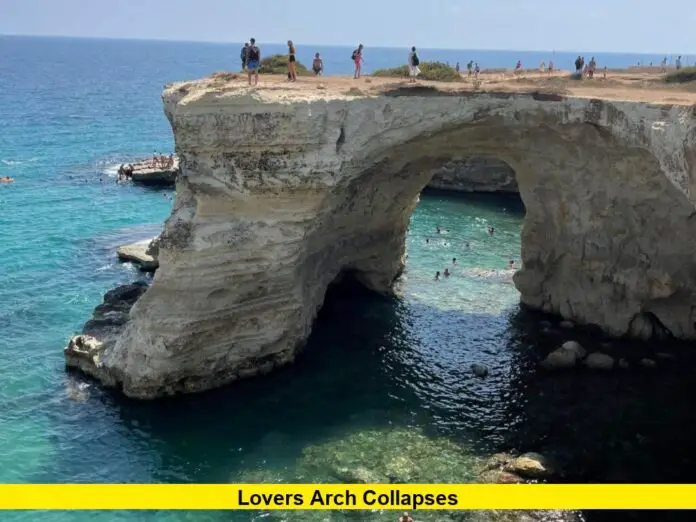
On Valentine’s Day weekend, the storied lovers arch collapses into the Adriatic Sea, marking the end of a landmark that had drawn romantics and explorers to Italy’s southeastern shores for generations. What was once a stunning limestone bridge rising from turquoise waters is now broken remnants, washed away by powerful coastal forces that intensified during an extended period of stormy weather.
The spectacle — both dramatic and poignant — has left local communities and the global travel world reflecting on nature’s power and the fragility of cherished places.
The loss of this natural arch is not just about a change in scenery; it reflects shifting patterns of coastal weather and erosion along the Mediterranean, and highlights challenges facing regions defined by their rugged seaside beauty.
Table of Contents
A Storied Landmark Disappears in a Weekend of Storms
For decades, the natural stone arch at Torre Sant’Andrea in the Puglia region served as a symbol of romance on Italy’s Adriatic coast. Couples picked this spot for proposals and commemorative photos, drawn by the dramatic contrast of white limestone and blue water. Its silhouette was an iconic image of love and adventure, especially during sunset.
But persistent and powerful weather systems battered the coastline in the days leading up to Valentine’s Day. Torrential rain, gusting winds, and pounding waves relentlessly hammered the rock formation, weakening it until it could no longer stand. By the morning after Valentine’s weekend, visitors found that the arch had collapsed entirely into the sea.
Officials in the nearby town of Melendugno described the scene as heartbreaking, emphasizing the emotional and symbolic weight of losing a formation so closely tied to the identity of the region. Residents and visitors alike packed the shoreline in disbelief, once again reminded that even the most enduring natural features can succumb to forces beyond human control.
Understanding How Coastal Forces Wore It Down
Natural arches such as the one at Torre Sant’Andrea are products of erosion that occurs over centuries. Waves and weather slowly carve away weaker sections of rock, leaving behind striking formations that seem timeless. Yet the very dynamics that create these arches also ensure they are temporary. Over time, the same wind and water that shaped them will cause their fall.
In this case, extended periods of rough seas and storm surges sped up that process. Multiple days of adverse weather pushed large waves higher and struck the limestone with greater force than usual, pushing erosion past a critical threshold. The result was a sudden collapse that surprised even seasoned observers who had expected erosion to occur more slowly.
Authorities have noted that other parts of the same rocky coastline show signs of structural weakness — cracks, undercut sections, and unstable surfaces — raising concerns about further losses of natural features if weather patterns remain extreme. Efforts are now underway to assess and monitor these vulnerable areas to protect visitors and preserve what remains of the dramatic seaside landscape.
The Impact on Tourism and Local Life
The arch had been one of the most photographed and visited natural attractions in Salento, drawing thousands of travelers every year. Outdoor tour guides, local vendors, and hospitality businesses all benefited from the influx of tourists seeking the perfect panoramic view or a scenic backdrop for engagement photos.
With its sudden collapse, tourism officials are reassessing future marketing strategies. Some are already promoting alternative scenic spots along the Puglia coast, while others are expanding tours to include nearby beaches, grottos, and seaside villages known for their culture and heritage.
Tour operators told local media that although the arch’s disappearance is a blow, the broader region still offers abundant beauty and experiences for travelers — from historic towns and cliffside paths to local cuisine and traditional festivals. For many visitors, memories of the arch will now be tied to treasured personal stories rather than mere sightseeing.
Residents Reflect on Loss and Legacy
In Melendugno and neighboring communities, residents voiced a mix of sadness and acceptance in the aftermath. Some recalled the arch as a backdrop to family vacations and romantic moments, while others spoke about the inevitability of natural change.
Local leaders have underscored the need to balance respect for nature with efforts to sustain the region’s economy and environment. Programs aimed at coastal preservation and sustainable tourism are being discussed to ensure that future generations can enjoy the beauty of the Salento shoreline — even if the landscape continues to evolve.
Environmental scientists point out that events like this are becoming more visible in regions where severe weather events are increasing in frequency. While no single collapse can be directly tied to broader climate trends without long-term data, the combination of storm systems and warming seas contributes to more volatile coastal conditions.
What Comes Next for Salento’s Coastline
In the days following the collapse, geologists and coastal engineers visited the site to document the change and advise on future monitoring. Visible fractures and unstable rock along the shoreline underscore that the Puglia coast could experience further changes if weather patterns remain aggressive.
There is growing interest in mapping and reinforcing sections of cliffside that attract tourists, both to protect infrastructure and ensure visitor safety. Signage warning of hazards, stabilized pathways, and observation points set back from unstable edges may be part of future coastal management plans. For now, many visitors continue to flock to the coast, drawn by its breathtaking vistas and the enduring allure of Italy’s seaside charm.
A Landmark Lost, Memories Endure
Although the stone arch itself has vanished, its legacy lives on in the stories and images cherished by those who visited it. Photographs taken beneath its curve — once symbols of love and adventure — now serve as poignant reminders of the moment before nature reclaimed the formation.
Travelers who have shared memories online often describe hearing the sound of crashing waves beneath their feet, the warmth of the sun on the limestone, and the sense of standing at the edge of something timeless. For many, that emotional connection transcends the physical loss.
Local officials hope that the community’s resilience will be reflected in how the region moves forward — celebrating the natural beauty that remains and forging new ways to welcome visitors to this corner of the Adriatic Sea.
In the end, the arch’s collapse may serve as both a cautionary tale about the forces shaping our coastlines and an inspiration to treasure the fleeting wonders of the natural world.

