Understanding the baby boomer age range has never been more important than it is right now. In 2026, the oldest members of this generation are turning 80, marking a milestone that carries enormous consequences for American healthcare, retirement systems, housing, politics, and family life. With roughly 67 million Boomers still living and representing about 20% of the U.S. population, this generation continues to shape the nation in ways that affect every American — regardless of how old you are.
If you want to understand where America is headed over the next decade, start here. The numbers, the trends, and the real-life implications are all in this article — and they will surprise you.
What Years Define the Baby Boomer Generation?
The Baby Boomer generation covers everyone born between 1946 and 1964. In 2026, that puts the age range squarely between 62 and 80 years old. The name itself comes from the dramatic and sustained surge in birth rates that swept across the United States in the years following World War II. Soldiers returned home, families reunited, prosperity grew, and Americans started having children at a rate the country had never seen before — and hasn’t seen since.
Nearly 76 million babies were born in the United States during this 18-year window. That made the Baby Boomer generation approximately 60 percent larger than the generation that came before it. At their peak in 1964, Boomers accounted for 37% of the entire U.S. population. Even today, after decades of aging and natural population decline within the cohort, they remain one of the most demographically powerful groups in the country.
Why 2026 Is a Turning Point for This Generation
The year 2026 carries significant weight in the story of the Baby Boomer age range. As of January 1, 2026, the oldest Boomers — those born in 1946 — began turning 80. That places them squarely in what demographers classify as the “oldest old” category, a demographic milestone with direct implications for long-term care, Medicare spending, and senior housing demand.
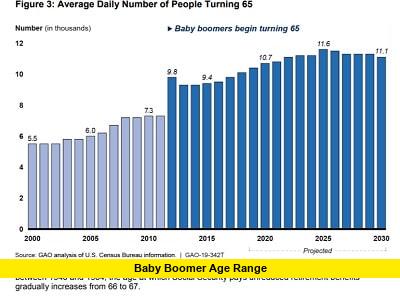
This is not a distant projection. It is happening right now. And by the end of this decade, every single Baby Boomer will be at least 65 years old. That means within just a few years, one in five Americans will be a senior citizen. The ripple effects of that shift are already being felt in hospitals, nursing facilities, congressional budget offices, and family homes across the country.
Two Distinct Groups Within the Boomer Generation
While the Baby Boomer generation is often treated as a single block, demographers have long recognized two meaningfully different sub-groups within the broader age range.
The first group, sometimes called “Leading-Edge Boomers,” were born between 1946 and 1955. They came of age during the Civil Rights Movement, the Vietnam War, and the counterculture revolution of the 1960s. They were the protesters, the marchers, the generation that reshaped American social values through direct action and cultural disruption.
The second group, often referred to as “Generation Jones,” covers those born between 1956 and 1964. These Boomers grew up watching the idealism of the 1960s give way to the economic struggles and political cynicism of the 1970s. They came of age during Watergate, oil embargos, and stagflation. Their worldview and financial trajectories differ considerably from those born a decade earlier — even though they share the same generational label.
Recognizing this internal divide matters for everything from targeted healthcare policy to marketing strategies to retirement planning product design.
The Healthcare System Is Already Feeling the Pressure
Perhaps no sector of American life is more directly affected by the aging of the baby boomer age range than healthcare. Boomers currently use health services more than any other age group in the country, and the demand is only going to intensify over the coming years.
More than 37 million Baby Boomers are expected to manage multiple chronic conditions by 2030. About 25% will live with diabetes. Nearly half will live with arthritis. Over a third will be classified as obese, bringing with it a cascade of associated health risks and care requirements.
The numbers of Americans turning 65 every single day reached approximately 12,000 in 2024, and that pace is expected to continue through at least 2029. Each one of those individuals becomes eligible for Medicare upon reaching retirement age — and the combined Medicare and Social Security expenditures are projected to climb from around 8% of gross domestic product today to 12% by 2050.
The healthcare workforce is simultaneously struggling to keep pace. There is a documented shortage of doctors willing to accept Medicare patients, a problem worsened by early retirements among medical professionals that accelerated following the COVID-19 pandemic. Nursing shortages are particularly acute, with the industry needing to fill more than a million new nursing positions in recent years just to keep up with both population growth and the demands of an aging patient base.
Senior Housing: A Demand Surge Unlike Anything Seen Before
The aging of this generation is triggering one of the largest waves of demand in the history of American senior housing. The average move-in age for senior living communities sits in the low 80s — which means the bulk of the Boomer generation is entering that demographic window right now, in 2026.
The 80-and-over population in the United States is projected to increase at a rate of 4.6% per year from 2023 through 2030. That kind of sustained growth in a single age cohort is extraordinary, and the senior housing industry is racing to respond. Communities are being redesigned around wellness, social engagement, and lifestyle rather than simply physical care — because Boomers expect more. Unlike previous generations that approached senior living with quiet acceptance, Boomers bring consumer expectations shaped by decades of market competition and personal autonomy.
The 80-plus population is projected to double, growing from approximately 14.7 million in 2025 to 29.4 million by 2045. That trajectory is locked in by demographics that cannot be reversed — these people are already born, and they are already aging.
Massive Wealth — and a Generational Transfer on the Horizon
Baby Boomers currently control an extraordinary share of American wealth. Despite representing only about 20% of the population, they hold more than half of total U.S. household wealth. This accumulated prosperity was built over decades through rising home values, sustained stock market gains, and careers that spanned some of the most economically productive years in American history.
As Boomers age and pass on, that wealth will transfer — primarily to Generation X and Millennials — in what is shaping up to be one of the largest intergenerational wealth transfers in recorded history. Estate planning, inheritance law, financial advising, and even the housing market will all feel the effects of this transfer as it unfolds over the next two decades.
At the same time, not all Boomers are financially comfortable. A meaningful segment of the generation approaches old age with limited savings, rising out-of-pocket healthcare costs, and fixed incomes that are increasingly strained by inflation. The gap between the wealthiest and least wealthy Boomers is wide — and the consequences of that gap will fall not just on individuals but on public programs designed to support those who need it most.
Political Power That Is Not Going Anywhere
It would be a mistake to assume that the aging of the baby boomer age range translates into a loss of political influence. Quite the opposite is true. Older Americans consistently vote at higher rates than any other demographic, and that advantage only grows in midterm election years when younger voter turnout drops significantly.
Estimates suggest that Baby Boomers will account for more than 30% of all voters in the 2026 midterm elections — a figure that reflects both their raw numbers and their outsized participation rates. Any political candidate or party that ignores this reality does so at serious risk. Issues like Medicare, Social Security, prescription drug pricing, and long-term care funding remain central to Boomer political priorities, and candidates across the political spectrum continue to calibrate their platforms accordingly.
Beyond voting, Boomers are represented at the highest levels of American leadership. Several of the most prominent names in national politics, entertainment, and business fall squarely within the Boomer age range — a reminder that this is not a generation that has retreated from public life.
How Boomers Are Reshaping the Meaning of Aging
One of the most underappreciated aspects of this generation is how fundamentally it is redefining what it means to grow old in America. Previous generations largely accepted aging as a process of withdrawal — from work, from public life, from physical activity. Boomers are rejecting that model outright.
Health, fitness, and longevity are central concerns for a significant portion of the generation. Many Boomers continue working well past traditional retirement age — not out of financial necessity alone, but because meaningful work remains important to their sense of identity and purpose. Pre-pandemic data showed that Boomers spent up to 50% more on travel than younger generations, reflecting a lifestyle orientation that does not slow down simply because a birthday milestone has been crossed.
This generational attitude is reshaping consumer markets, travel industries, fitness businesses, and healthcare delivery models. Brands and service providers that treat Boomers as passive recipients of care are misreading their audience. This generation expects to be heard, to have choices, and to remain active participants in their own lives for as long as possible.
What Comes Next
The full story of the Baby Boomer generation is still being written. The youngest Boomers will not reach traditional retirement age until the end of this decade. The oldest are just now crossing into their eighties. Between those two poles lies a generation in transition — one that built modern America and is now navigating the complex, often difficult terrain of aging within the systems it helped create.
The baby boomer age range spanning 62 to 80 in 2026 is not just a demographic fact. It is a lens through which to understand virtually every major challenge and opportunity facing the United States in the years ahead — from healthcare funding and workforce development to housing supply, political realignment, and the very definition of what a productive, purposeful life looks like in later years.
Whether you’re a Boomer navigating this stage of life or part of a younger generation preparing for what comes next, your perspective matters — drop a comment below and let’s keep this conversation going.

