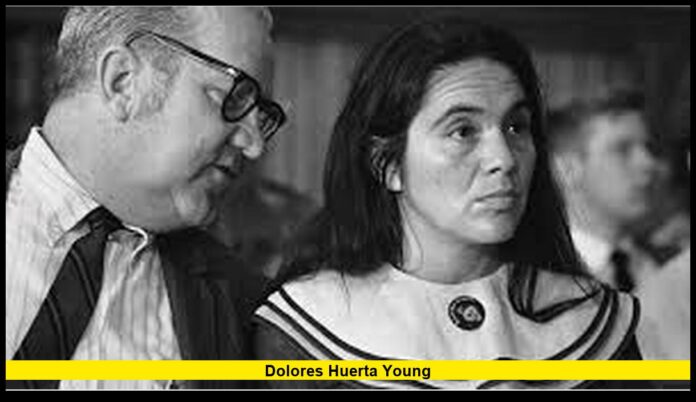
Dolores Huerta young years continue to draw attention in 2026 as renewed interest in civil rights history highlights how her early experiences shaped one of America’s most influential labor leaders.
Today, Huerta remains an active voice in social justice through the Dolores Huerta Foundation, while her legacy is widely taught in schools and recognized in national discussions about workers’ rights and Latino history. Understanding her youth offers key insight into how she became a defining figure in American activism.
Table of Contents
Early Life and Family Background
Dolores Huerta was born on April 10, 1930, in Dawson, New Mexico. Her early childhood played a crucial role in shaping her worldview.
After her parents divorced, Huerta moved with her mother, Alicia Chávez, and siblings to Stockton, California. Her mother worked tirelessly as a businesswoman and community leader, running a hotel and restaurant that often welcomed farmworkers.
This environment exposed Huerta to:
- Economic inequality
- Worker struggles
- The importance of community support
Her father, Juan Fernández, served as a coal miner and later became a state legislator in New Mexico. His involvement in public service also influenced Huerta’s understanding of civic responsibility.
Education and Early Influences
Huerta attended Stockton High School, where she showed strong academic ability. Teachers recognized her intelligence, but she also faced discrimination because of her ethnicity.
One key moment from her youth stands out. A teacher once accused her of cheating because her work seemed “too good.” This experience highlighted the bias she would later fight against throughout her life.
After high school, she attended:
- Stockton College (now San Joaquin Delta College)
- University of the Pacific’s teacher training program
She earned a teaching credential and began working as an elementary school teacher.
The Turning Point in Her Youth
While teaching in Stockton, Huerta noticed something that changed her life’s direction.
Many of her students came to school hungry or without proper clothing. Their families worked long hours in the fields but still struggled to survive.
This realization pushed her to leave teaching and pursue activism full-time.
She later explained that she couldn’t continue teaching when the root problems affecting her students remained unaddressed.
Early Activism and Organizing
Dolores Huerta’s young adult years marked the beginning of her organizing career.
In the 1950s, she co-founded the Stockton chapter of the Community Service Organization (CSO), which focused on improving economic conditions for Latino communities.
Through her work, she:
- Helped register voters
- Advocated for better public services
- Organized grassroots campaigns
During this time, she met César Chávez, another activist who shared her commitment to farmworkers’ rights.
Founding the United Farm Workers
In 1962, Huerta and Chávez co-founded what would become the United Farm Workers (UFW). This moment defined her transition from a young activist to a national leader.
Huerta played a critical role in:
- Contract negotiations
- Legislative advocacy
- Organizing strikes and boycotts
She was instrumental in the success of the Delano grape strike, one of the most significant labor movements in U.S. history.
Her slogan, “Sí, se puede” (“Yes, we can”), became a powerful rallying cry that still resonates today.
Challenges Faced in Her Youth
Huerta’s early years were not easy. She navigated both gender and racial barriers.
As a Latina woman in the 1950s and 1960s, she faced:
- Limited leadership opportunities
- Public skepticism
- Personal sacrifices, including time away from her children
Despite these challenges, she remained determined and continued to rise as a key strategist within the labor movement.
How Her Youth Shaped Her Leadership Style
Dolores Huerta young experiences influenced how she approached activism.
Her leadership style became known for:
- Strong negotiation skills
- Grassroots organizing
- Focus on nonviolent protest
Unlike many leaders of her time, Huerta often worked behind the scenes, shaping policy and strategy rather than seeking the spotlight.
Her early exposure to injustice made her both practical and persistent.
Recognition of Her Early Contributions
In recent years, there has been growing recognition of Huerta’s contributions, including her early activism.
Key honors include:
- Presidential Medal of Freedom (awarded in 2012)
- Schools and streets named after her across the United States
- Inclusion in educational curricula focusing on civil rights
In 2026, discussions about labor rights and social justice continue to highlight her foundational work during her younger years.
Why Her Youth Matters Today
Understanding Dolores Huerta’s young life helps explain broader themes in American history.
Her story reflects:
- The impact of early exposure to inequality
- The role of education in shaping leaders
- The importance of community-driven activism
Young activists today often cite her journey as inspiration. Her transition from teacher to organizer shows how personal experiences can lead to national change.
Continuing Influence in 2026
Dolores Huerta remains active well into her 90s. Through her foundation, she continues to advocate for:
- Voting rights
- Education reform
- Gender equality
Her early life lessons still guide her work today. Public appearances and campaigns continue to draw attention to the causes she first embraced as a young woman.
Timeline: Dolores Huerta’s Early Years
| Year | Event |
|---|---|
| 1930 | Born in Dawson, New Mexico |
| 1930s–40s | Raised in Stockton, California |
| 1950s | Became a teacher and later an activist |
| Late 1950s | Joined Community Service Organization |
| 1962 | Co-founded United Farm Workers |
Legacy Rooted in Youth
Dolores Huerta’s early life remains central to her legacy. The challenges she faced as a young woman shaped her into one of the most effective labor leaders in U.S. history.
Her journey highlights how determination, education, and community awareness can drive meaningful change.
What do you think about how Dolores Huerta’s early life shaped her activism? Share your thoughts and stay connected for more updates on influential figures shaping history.

