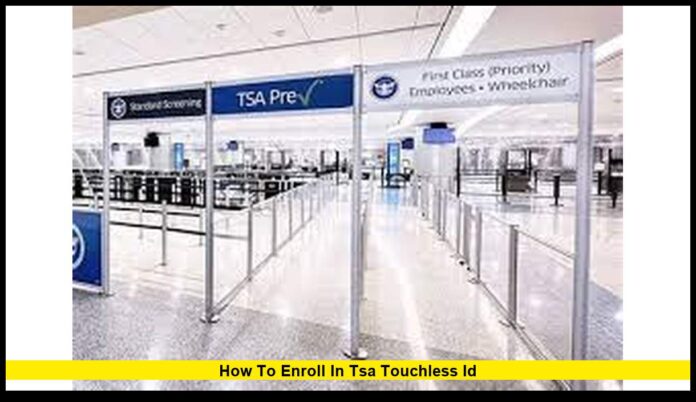
The process of how to enroll in tsa touchless id is gaining attention in 2026 as the Transportation Security Administration expands facial recognition technology at select U.S. airports to speed up identity verification.
Table of Contents
What Is TSA Touchless ID
TSA Touchless ID is a biometric identity verification system that uses facial recognition to confirm a traveler’s identity at airport security checkpoints.
Instead of handing over a physical ID, travelers can use a photo match. The system compares a live image taken at the checkpoint with a stored image from a government database or a participating travel program.
This technology aims to:
- Reduce physical contact during identity checks
- Speed up the security screening process
- Improve accuracy in identity verification
As of 2026, the program continues to expand across major U.S. airports.
Current Availability in 2026
TSA Touchless ID is not available at every airport. It operates at select locations, primarily in major cities and high-traffic hubs.
Airports where biometric screening has been introduced include:
- Atlanta (ATL)
- Los Angeles (LAX)
- New York (JFK and LaGuardia)
- Dallas/Fort Worth (DFW)
- Miami (MIA)
Availability may vary by terminal and airline.
Is TSA Touchless ID Mandatory
Participation in TSA Touchless ID remains voluntary. Travelers can choose to opt out and present a physical ID instead.
Important points:
- You can decline facial recognition at any time
- TSA officers will verify identity manually if you opt out
- No penalty applies for choosing not to participate
This ensures travelers retain control over how their identity is verified.
How TSA Touchless ID Works
The system follows a simple process at the airport.
- A camera captures your image at the checkpoint
- The system compares your face to an existing image
- TSA confirms your identity if there is a match
The process typically takes only a few seconds.
Images are not stored long-term for most domestic travelers, and the system is designed for quick verification.
Eligibility Requirements
To use TSA Touchless ID, travelers must meet certain conditions.
Basic requirements include:
- A valid U.S. government-issued ID or passport
- A boarding pass for a participating flight
- Enrollment in a participating program or airline system
Some travelers access the system automatically through airline partnerships.
Enrollment Options Explained
There is no single standalone sign-up labeled “TSA Touchless ID.” Instead, enrollment happens through programs and services that integrate with TSA’s biometric system.
Here are the main ways travelers gain access:
1. Airline Participation
Many airlines allow travelers to opt into biometric screening during the booking or check-in process.
Steps typically include:
- Opting in through the airline’s app or website
- Providing consent for biometric use
- Checking in for a participating flight
Once enrolled, the system recognizes the traveler at supported checkpoints.
2. TSA PreCheck Integration
TSA PreCheck members may encounter Touchless ID at participating airports.
While PreCheck itself does not require facial recognition, some locations offer it as an optional feature.
Benefits include:
- Faster security lines
- Reduced need to present physical ID
- Seamless checkpoint experience
3. Digital ID Programs
Some states now offer digital IDs stored in mobile wallets. TSA supports these at select airports.
Examples include:
- Mobile driver’s licenses in Apple Wallet or similar apps
- State-issued digital identification programs
These digital IDs can integrate with biometric systems for faster verification.
Step-by-Step: How to Use TSA Touchless ID at the Airport
If you are eligible, using the system is straightforward.
At the Airport
- Approach the TSA checkpoint as usual
- Look into the camera when prompted
- Wait for the system to verify your identity
If successful, you proceed without showing a physical ID.
If not, TSA will check your ID manually.
Privacy and Data Handling
Privacy remains a key concern for many travelers. TSA has outlined how biometric data is handled.
Important details:
- Images are used only for identity verification
- Most images are deleted after a short period
- Participation requires consent
Travelers can always opt out if they are uncomfortable with the process.
Benefits of TSA Touchless ID
The system offers several advantages for travelers.
Faster Processing
Biometric checks can reduce wait times at security checkpoints.
Reduced Contact
Travelers avoid handing over documents, which can improve hygiene.
Improved Accuracy
Facial recognition can enhance identity verification compared to manual checks.
These benefits make the system appealing, especially during busy travel periods.
Limitations and Considerations
Despite its advantages, the system has some limitations.
- Not available at all airports
- Requires compatible flights or airline participation
- Some travelers may prefer traditional ID checks
Understanding these factors helps set realistic expectations.
Expansion Plans and Future Outlook
TSA continues to expand biometric screening across the United States. The goal is to modernize airport security while maintaining safety standards.
Future developments may include:
- Increased airport availability
- Wider integration with digital IDs
- Enhanced system accuracy
As adoption grows, more travelers may encounter Touchless ID options.
Common Questions About Enrollment
Do I need a separate application?
No. Enrollment usually happens through airlines or existing programs.
Can I opt out after enrolling?
Yes. Participation is always optional.
Is TSA PreCheck required?
No, but it may provide access to additional features.
Will my data be stored?
Images are typically deleted quickly, and long-term storage is limited.
Key Takeaways
- TSA Touchless ID uses facial recognition for identity verification
- Enrollment happens through airlines, PreCheck, or digital ID programs
- Participation is voluntary and not required
- Availability varies by airport and airline
These points reflect the current status as of 2026.
Conclusion
TSA Touchless ID represents a shift toward faster and more efficient airport security. While not required, it offers a glimpse into the future of travel in the United States.
Have you tried TSA Touchless ID yet, or would you prefer sticking with traditional ID checks? Share your experience and thoughts below.

