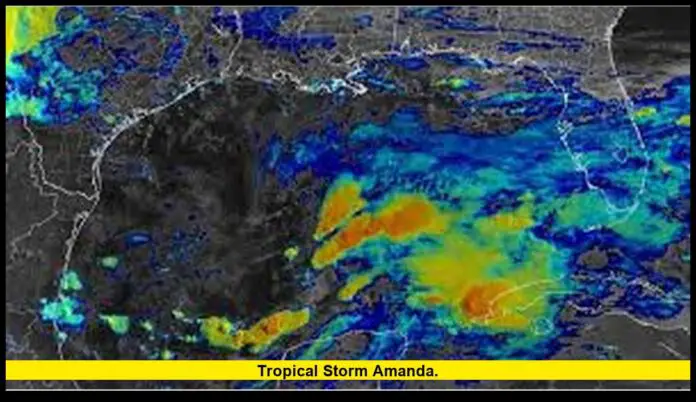
Tropical Storm Amanda has officially formed in the Eastern Pacific Ocean, becoming the first named tropical cyclone of the 2026 Pacific hurricane season. Meteorologists confirmed the storm’s development on June 3, 2026, marking the start of what forecasters expect to be another closely monitored hurricane season across the Pacific basin. Current forecasts indicate that the storm remains over open waters and poses no immediate threat to land.
The formation of Amanda is a significant milestone because it is the first named storm of the season in the Eastern Pacific. While tropical activity often begins in this basin before the Atlantic reaches peak activity, the development of Amanda serves as an early reminder that hurricane season is now underway across both regions.
Table of Contents
Amanda’s Formation Marks the Beginning of the Pacific Hurricane Season
The Eastern Pacific hurricane season officially began on May 15, 2026. Since then, meteorologists have monitored several areas of disturbed weather across the basin. One developing system eventually organized into Tropical Depression One-E before strengthening into Tropical Storm Amanda.
Weather experts noted that the environment over the central and eastern Pacific featured warm ocean temperatures and sufficient atmospheric moisture, helping the disturbance organize into a tropical cyclone. Once sustained winds reached tropical-storm strength, the system received the name Amanda, the first name on the 2026 Eastern Pacific storm list.
Unlike some early-season storms that develop near coastlines, Amanda formed far from populated areas. This location has reduced the likelihood of immediate impacts on communities along Mexico’s Pacific coast or elsewhere in the region.
Current Location and Status of Tropical Storm Amanda
As of June 3, 2026, Amanda is located over open waters in the Eastern Pacific Ocean. Forecast agencies report that the storm is expected to remain well offshore and away from major population centers. No coastal watches or warnings have been issued because the system is not expected to threaten land in the near term.
Forecasters continue to track Amanda’s movement using satellite imagery and computer forecast models. These tools provide updates on the storm’s strength, direction, and future development.
Current observations indicate:
| Storm Detail | Status |
|---|---|
| Name | Amanda |
| Basin | Eastern Pacific |
| Classification | Tropical Storm |
| Date Named | June 3, 2026 |
| Threat to Land | None at Present |
| Forecast Trend | Expected to Stay Offshore |
These details may change as new advisories are issued, but current projections remain favorable for coastal communities.
Why Amanda Developed So Early
The formation of Amanda is not unusual for the Eastern Pacific basin. Historically, the first named storm in this region often develops during late May or early June. Warm sea surface temperatures create conditions favorable for tropical cyclone formation before similar activity typically ramps up in the Atlantic.
Several atmospheric ingredients came together to support Amanda’s development:
- Warm ocean waters
- Adequate moisture in the lower atmosphere
- Relatively low wind shear
- Persistent thunderstorm activity around a developing center
When these conditions align, tropical disturbances can quickly organize into depressions and later become tropical storms. Amanda followed this familiar pattern.
Forecast Track and Future Outlook
Current forecast guidance suggests Amanda will continue moving over open ocean waters. Most projections indicate the storm will travel generally northwestward or west-northwestward without approaching significant land areas.
Meteorologists also believe environmental conditions may become less favorable later in Amanda’s life cycle. Cooler ocean waters and stronger upper-level winds could limit additional strengthening and eventually weaken the system.
Key forecast expectations include:
- Remaining over open waters
- No immediate coastal impacts
- Limited strengthening potential
- Gradual weakening later in its life cycle
Forecasts can change, especially during hurricane season, so weather officials continue monitoring Amanda around the clock.
What Amanda Means for the 2026 Hurricane Season
The naming of Amanda serves as the first official indication that tropical activity is increasing across the Pacific basin. Every hurricane season begins with a first named storm, and Amanda now holds that distinction for 2026.
While a single storm does not determine how active an entire season will become, early-season development often draws attention from forecasters and emergency managers. It provides an opportunity to remind residents in hurricane-prone regions to review preparedness plans before more significant storms emerge later in the year.
Communities along Mexico’s Pacific coastline, Central America, Hawaii, and other vulnerable areas typically use the early weeks of hurricane season to ensure emergency supplies and evacuation plans are ready if needed.
How Tropical Storms Are Named
Amanda received its name from the predetermined list maintained for Eastern Pacific tropical cyclones. Tropical storms receive names once sustained winds reach at least 39 mph.
The naming process helps meteorologists, emergency managers, media outlets, and the public communicate clearly about developing weather threats. Instead of referring to a storm by technical coordinates, everyone can track updates using a recognizable name.
Amanda became the first name used from the 2026 Eastern Pacific list after the season’s first tropical depression strengthened into a tropical storm.
Read More – Tropical Storm Jerry: Tracking the Atlantic System and Its Potential Impact on the U.S.
Eastern Pacific vs. Atlantic Hurricane Activity
The Pacific and Atlantic hurricane seasons often develop differently.
In 2026, the Eastern Pacific produced its first named storm before the Atlantic generated any tropical cyclones. This is not uncommon because the Eastern Pacific generally experiences favorable conditions earlier in the season.
Several factors contribute to this difference:
- Warmer waters often develop sooner in parts of the Eastern Pacific.
- Atmospheric conditions can become favorable earlier.
- Tropical waves moving from Central America frequently help spark Pacific development.
Although Amanda formed first, Atlantic activity can increase rapidly as summer progresses.
The Importance of Early-Season Monitoring
Even when a storm poses no direct threat to land, meteorologists pay close attention to its development. Every tropical cyclone provides valuable information about atmospheric conditions and seasonal trends.
Amanda’s evolution offers forecasters an opportunity to evaluate:
- Ocean temperature patterns
- Wind shear conditions
- Forecast model performance
- Seasonal tropical activity trends
These observations help improve future forecasts and strengthen preparedness efforts.
Lessons From Past Storms Named Amanda
The name Amanda has appeared in previous Eastern Pacific hurricane seasons.
One of the most notable examples was Hurricane Amanda in 2014, which became an exceptionally powerful Category 4 hurricane over open Pacific waters. Another Tropical Storm Amanda formed in 2020 near Central America and produced destructive flooding before its remnants later contributed to the development of Tropical Storm Cristobal.
The 2026 version of Amanda is different because it currently remains far from land and has not generated significant impacts.
Each storm named Amanda has followed a unique path, highlighting the unpredictable nature of tropical weather systems.
Preparedness Remains Essential
Even though Amanda is not expected to threaten land, hurricane preparedness remains important for residents across coastal regions.
Experts encourage families to:
- Review emergency plans
- Maintain disaster supply kits
- Monitor official forecasts
- Understand evacuation routes
- Keep communication devices charged
Preparation becomes easier before major storms appear on the horizon.
The early formation of Amanda offers a useful reminder that hurricane season is active and that conditions can change quickly.
Read More – Tropical Storm Melissa Hurricane Jamaica
Meteorologists Continue Close Monitoring
Weather agencies will continue issuing regular advisories on Amanda as long as it remains an organized tropical cyclone. Satellite monitoring, aircraft reconnaissance when necessary, and advanced computer models all contribute to forecasting efforts.
Forecasters currently emphasize that Amanda poses no immediate danger to populated areas. However, ongoing monitoring remains essential because tropical systems can change intensity and track over time.
As the 2026 Pacific hurricane season progresses, Amanda will be remembered as the storm that officially opened the year’s list of named tropical cyclones.
What are your thoughts on the start of the 2026 hurricane season? Share your comments and stay tuned for the latest tropical weather updates as the season continues.

