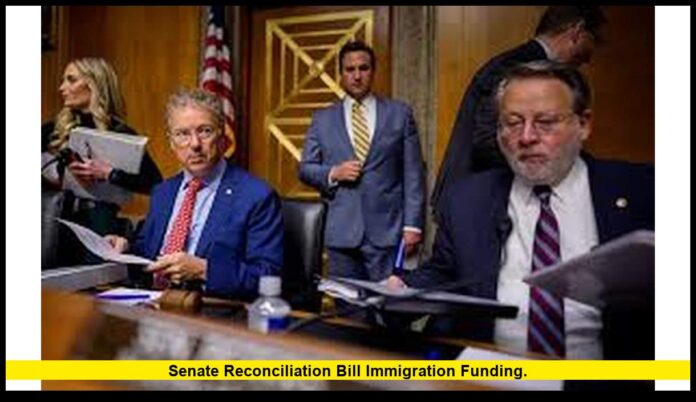
The senate reconciliation bill immigration funding debate remains one of the most closely watched issues in Washington as lawmakers continue negotiations over a package that would provide tens of billions of dollars for immigration enforcement, border security operations, and federal agencies responsible for carrying out immigration laws. As of June 3, 2026, Senate Republicans are working to advance a reconciliation measure valued at roughly $72 billion, although final passage has been delayed amid disagreements over certain provisions included in the broader package.
The legislation has become a major focus on Capitol Hill because it uses the budget reconciliation process, allowing the Senate to pass the measure with a simple majority vote instead of the 60 votes normally required to overcome a filibuster. Supporters argue that the funding is necessary to ensure federal immigration agencies have the resources needed to carry out their missions over the coming years. Critics contend that the proposal would dramatically expand enforcement activities without sufficient oversight.
Table of Contents
Why the Senate Is Using Reconciliation
Budget reconciliation is a special congressional process designed to allow legislation affecting federal spending, revenues, or the debt limit to move through the Senate with a simple majority vote.
Republican leaders chose this route after months of disputes over immigration funding and Department of Homeland Security appropriations. By using reconciliation, lawmakers can avoid the procedural hurdles that often make it difficult to pass controversial legislation in a closely divided Senate.
The Senate approved a budget resolution in April 2026 that established the framework for a narrow reconciliation package focused primarily on immigration enforcement and border security funding. The resolution instructed several committees to draft legislation that could provide up to $70 billion in additional spending for immigration-related operations.
Since then, Senate committees have developed legislative text and advanced portions of the proposal through the committee process.
How the Current Debate Developed
Immigration enforcement funding became a central issue in congressional negotiations earlier this year.
Republican lawmakers argued that Immigration and Customs Enforcement (ICE) and Customs and Border Protection (CBP) required long-term funding certainty. Democratic lawmakers pushed for policy reforms and greater oversight of immigration enforcement activities before supporting additional funding.
As negotiations stalled, Senate leaders pursued a two-track strategy:
- Fund most Department of Homeland Security operations through regular appropriations.
- Use reconciliation to provide multi-year funding for immigration enforcement agencies.
- Advance the package using a simple Senate majority.
- Secure resources extending beyond annual appropriations cycles.
This strategy ultimately led to the introduction of the current reconciliation package.
What Is Included in the Senate Reconciliation Bill?
The Senate proposal includes approximately $72 billion in immigration-related funding spread across several categories.
ICE Funding
A major share of the funding would go to ICE.
The proposal includes more than $38 billion dedicated to immigration enforcement activities. Funding would support:
- Personnel hiring and retention
- Enforcement operations
- Detention capacity
- Transportation and removal activities
- Technology upgrades
- Infrastructure improvements
- Cooperation agreements with local law enforcement
Supporters say the funding would strengthen enforcement capabilities for several years.
CBP Funding
Customs and Border Protection would also receive significant funding.
The proposal includes more than $26 billion for CBP operations, including:
- Border Patrol staffing
- Equipment purchases
- Training programs
- Surveillance technologies
- Infrastructure improvements
- Drug interdiction activities
Some committee provisions specifically allocate billions of dollars for recruitment and personnel expansion.
Border Security Technology
The package dedicates funding to advanced technologies intended to support border operations.
Potential investments include:
| Category | Purpose |
|---|---|
| Surveillance systems | Monitoring border activity |
| Artificial intelligence tools | Operational support |
| Screening technology | Entry and inspection processes |
| Communications systems | Coordination among agencies |
| Detection equipment | Contraband interdiction |
Lawmakers backing the proposal argue that technology investments can improve operational effectiveness.
Committee Action on the Legislation
Several Senate committees have already taken action on portions of the proposal.
The Senate Homeland Security and Governmental Affairs Committee approved its reconciliation recommendations in May.
Committee-approved provisions included:
- Funding for CBP personnel
- Funding for ICE operations
- Technology modernization initiatives
- Border security programs
- Support resources for enforcement activities
After committee approval, the package advanced to the Senate Budget Committee for further consideration.
These actions represented a significant step toward eventual Senate floor consideration.
Why Senate Passage Was Delayed
Although Republican leaders initially hoped to pass the legislation before the Memorial Day recess, the Senate did not meet that timeline.
Several factors contributed to the delay.
Internal Republican Concerns
Some Republican senators expressed concerns regarding provisions unrelated to core immigration funding.
Questions arose about a proposed anti-weaponization fund and other spending provisions included in the broader legislative package.
The disagreements led Senate leadership to postpone floor action.
Oversight and Accountability Questions
Some lawmakers sought additional safeguards and accountability measures.
Areas of concern included:
- Fund administration
- Congressional oversight
- Eligibility requirements
- Transparency mechanisms
- Reporting obligations
These debates complicated efforts to quickly move the bill through the Senate.
Political Considerations
Immigration remains one of the most politically sensitive issues in the country.
Lawmakers from both parties recognize that votes on immigration funding often become major campaign issues.
As a result, senators have carefully scrutinized the proposal before committing their support.
The Role of ICE in the Funding Debate
ICE remains at the center of the legislative discussion.
Supporters of the bill argue that ICE requires additional resources to:
- Investigate immigration violations
- Conduct enforcement operations
- Process removals
- Address transnational criminal activity
- Manage detention facilities
Advocates for increased funding say existing resources are insufficient to meet operational demands.
Opponents argue that any funding increase should be accompanied by stronger oversight mechanisms and policy reforms.
This disagreement has shaped much of the debate surrounding the reconciliation package.
The Role of CBP in the Proposal
CBP would also receive substantial funding under the legislation.
The agency’s responsibilities include:
- Border security operations
- Port-of-entry inspections
- Trade facilitation
- Drug interdiction efforts
- Border Patrol activities
Supporters say the funding would help CBP expand staffing and modernize operations.
Several provisions focus on technology and personnel investments designed to strengthen border security capabilities.
How the Bill Could Affect Federal Spending
The reconciliation package represents a significant spending proposal.
Congressional budget estimates indicate that the legislation would increase federal spending over the next decade.
Supporters argue that immigration enforcement and border security are core federal responsibilities deserving long-term investment.
Critics argue that Congress should evaluate spending priorities more broadly before committing additional billions of dollars.
The debate reflects broader disagreements about federal spending, immigration policy, and national security priorities.
Democratic Opposition to the Package
Democratic lawmakers have largely opposed the reconciliation strategy used for immigration funding.
Several concerns have been raised:
- Limited bipartisan negotiation
- Insufficient oversight provisions
- Expansion of detention capacity
- Increased enforcement spending
- Lack of accompanying policy reforms
Many Democrats have argued that immigration policy should be addressed through regular legislative processes rather than through a narrowly focused reconciliation bill.
They have also called for additional accountability measures before approving major funding increases.
Republican Arguments in Favor
Republican lawmakers have strongly defended the legislation.
Supporters contend that:
- Border security remains a top national priority.
- Immigration agencies need long-term funding certainty.
- Enforcement agencies require additional personnel.
- Technology investments can improve efficiency.
- Reconciliation provides a practical path to enact funding.
Republican leaders have repeatedly stated that immigration enforcement agencies should not face funding uncertainty during ongoing operational challenges.
What Happens Next in the Senate?
The next step involves continued negotiations among Senate Republicans and eventual consideration on the Senate floor.
Several developments could occur:
- Additional revisions to the bill.
- Removal of controversial provisions.
- Negotiations regarding oversight requirements.
- Senate floor debate.
- Final Senate vote.
If Senate leadership secures enough support, the legislation could move forward in the coming weeks.
Potential House Consideration
If the Senate approves the measure, the House would then need to consider the legislation.
House lawmakers may:
- Accept the Senate version.
- Modify portions of the bill.
- Seek conference negotiations.
- Propose alternative funding structures.
Any differences between House and Senate versions would need to be resolved before the legislation could reach the president’s desk.
Why This Legislation Matters
The reconciliation package represents one of the largest immigration funding debates currently underway in Congress.
The outcome could shape federal immigration enforcement operations through the remainder of the decade.
Key areas affected include:
- ICE staffing
- CBP staffing
- Border technology
- Enforcement operations
- Detention capacity
- Infrastructure modernization
The bill also serves as a test of how Congress handles major immigration funding questions in an increasingly polarized political environment.
Read More – Trump Senate Republican Relationship Tension Grows as GOP Senators Push Back on Key Agenda Items
Current Status as of June 3, 2026
As of today, Senate Republicans continue working to advance the approximately $72 billion immigration enforcement funding package through the reconciliation process.
Committee work has largely been completed, but final Senate passage has not yet occurred. Negotiations continue over specific provisions, oversight concerns, and broader political considerations.
The legislation remains active and under consideration, making it one of the most significant immigration-related measures currently before Congress.
For supporters, the bill represents a major investment in immigration enforcement and border security. For opponents, it raises questions about oversight, accountability, and spending priorities. The coming weeks will determine whether Senate leaders can assemble the votes needed to move the package forward and send it to the House for further action.
What do you think about the Senate’s immigration funding proposal? Share your thoughts and continue following the latest developments as Congress debates the future of immigration enforcement funding.

