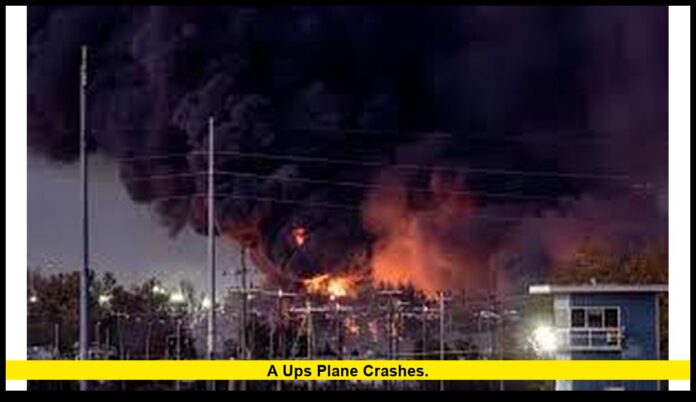
A UPS plane crashes near Louisville Muhammad Ali International Airport, leaving devastation and heartbreak in its wake. The incident occurred on Tuesday evening, November 4, 2025, when a United Parcel Service cargo jet went down shortly after takeoff from the company’s main air hub. The crash has since sparked a massive investigation and widespread concern over aviation safety and the impact on one of America’s largest logistics networks.
Table of Contents
The Moment Disaster Struck
At approximately 5:13 p.m. local time, the UPS MD-11 freighter lifted off from Louisville’s main runway, bound for Honolulu. Moments later, witnesses reported seeing flames trailing from the aircraft’s left wing before it descended rapidly and exploded upon impact. The plane crashed into an industrial area located about three miles south of the airport, igniting multiple fires and causing severe damage to several nearby buildings.
Emergency response teams rushed to the scene within minutes, battling towering flames and thick smoke that blanketed the area. Sirens could be heard across Louisville as firefighters and paramedics worked to rescue survivors and contain the blaze.
Lives Lost and Community Shaken
Officials confirmed that all three crew members aboard the UPS cargo jet were killed in the crash. Six others on the ground also lost their lives, bringing the total death toll to nine as of Wednesday morning. Eleven more people were injured, some critically, after being caught in the explosion that followed the impact.
Residents near the crash site described the explosion as “earth-shaking,” with windows shattered in nearby homes and businesses. A shelter-in-place order was issued for a five-mile radius as smoke and debris filled the air.
Louisville’s mayor expressed deep condolences, stating that “the entire city is grieving for the lives lost and those forever changed by this tragedy.”
Impact on UPS Operations
The crash hit at the heart of UPS’s global operations. Louisville is home to Worldport, the company’s largest air logistics hub, handling hundreds of flights and millions of packages daily. Following the accident, UPS temporarily suspended all outgoing and incoming flights in and out of Louisville to prioritize safety inspections and investigations.
The ripple effects were immediate.
- Several hundred flights were delayed or rerouted to alternate airports.
- Nationwide delivery schedules were disrupted, especially for overnight and international shipments.
- UPS logistics teams initiated contingency plans to redirect sorting operations to other regional hubs.
Company executives have since pledged full cooperation with federal authorities and extended heartfelt condolences to the families of the victims.
What Investigators Are Looking Into
The National Transportation Safety Board (NTSB) and Federal Aviation Administration (FAA) have taken charge of the investigation into what caused the UPS plane to crash. Key areas of focus include:
- Mechanical Failure: Preliminary reports suggest a possible engine malfunction before the crash. Investigators are examining whether a fire in the left engine or wing sparked the mid-air emergency.
- Aircraft Maintenance Records: The MD-11 model involved was reportedly over 30 years old. Officials are reviewing its maintenance logs and recent inspection reports.
- Flight Data and Cockpit Recordings: Both black boxes have been recovered and are being analyzed to determine the exact sequence of events leading to the crash.
- Weather Conditions: At the time of the crash, skies were mostly clear, and visibility was good, ruling out severe weather as a major factor.
Authorities have indicated that the full investigation could take several months to complete. However, early findings may be released sooner to address public safety concerns.
Scene of the Crash: Fires, Destruction, and Resilience
The crash site near Louisville’s industrial corridor remains heavily damaged. The impact destroyed several warehouses, including a petroleum recycling facility and an auto parts distribution center. Multiple secondary fires burned through the night, fueled by jet fuel and flammable materials stored in the buildings.
Hundreds of emergency personnel remained on-site for over 12 hours, clearing debris and searching for additional victims. Local residents volunteered to support first responders, providing food, water, and shelter for those displaced by the explosions.
“This is something our community will never forget,” one Louisville resident said. “The sound, the fire—it felt like a war zone.”
The Broader Implications for Air Cargo Safety
The tragedy has reignited conversations about cargo aviation safety across the United States. The MD-11 aircraft, widely used by carriers like UPS and FedEx, has a complex safety record, particularly during takeoff and landing phases.
Aviation experts point to several potential lessons from the crash:
- Older aircraft models require continuous monitoring and upgrades to meet evolving safety standards.
- Cargo flights, which often operate overnight and carry heavy loads, demand extra scrutiny during maintenance and takeoff procedures.
- Industrial areas surrounding airports must have enhanced safety buffers to protect nearby workers and residents in the event of accidents.
The Federal Aviation Administration has already announced an expanded inspection campaign targeting cargo fleets across multiple airlines in the coming weeks.
The Human Toll and the Path Forward
Beyond logistics and safety debates, this disaster is first and foremost a human tragedy. The three UPS crew members were experienced aviators who had each logged thousands of flight hours. Their families, along with the families of those on the ground, are now receiving support from both UPS and local relief organizations.
Community vigils are being planned throughout Louisville to honor the victims. City officials have vowed to rebuild the affected area and strengthen safety protocols for businesses located near the airport.
UPS CEO Carol Tomé released a statement expressing “deep sorrow for the loss of our team members and the individuals affected by this tragedy,” adding that the company “will not rest until we fully understand what happened and take every measure to prevent such a loss again.”
Looking Ahead
As Louisville mourns, the investigation into why a UPS plane crashes will continue to unfold. The findings could lead to significant changes in cargo aircraft safety standards and operating procedures nationwide. For now, families grieve, employees rally together, and the city stands united in recovery.
The story of this crash is one of loss, resilience, and the relentless pursuit of answers. What are your thoughts on this tragedy and its impact on aviation safety? Share your views and stay updated as more details emerge.

