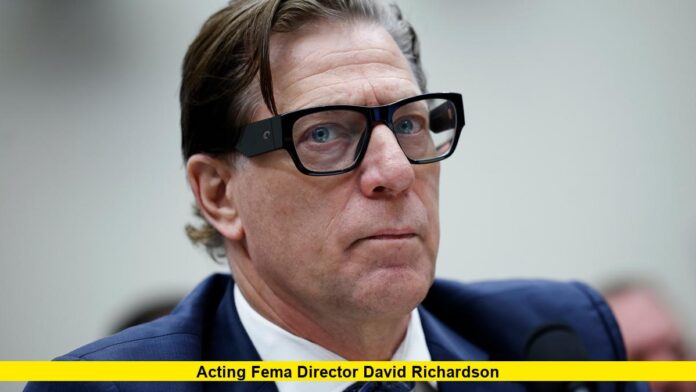
The latest update shows that acting FEMA Director David Richardson has resigned from his role at the Federal Emergency Management Agency (FEMA), effective immediately. The departure was announced on November 17, 2025, ending his approximately six-month stint as the senior official performing the duties of administrator.
Table of Contents
Background and Appointment
David Richardson took over as acting FEMA leader in May 2025 after the previous acting administrator was dismissed. Previously, Richardson served as Assistant Secretary of the Department of Homeland Security (DHS) for the Countering Weapons of Mass Destruction Office and held no prior emergency-management leadership role.
Upon stepping into the role, Richardson made clear that he would personally steer the agency’s direction: in an early all-staff meeting he reportedly told personnel “I alone in FEMA speak for FEMA… Don’t get in my way… because I will run right over you.” His selection was widely viewed as aligning with the administration’s broader goal of reducing the federal footprint of FEMA and shifting more responsibility to states.
Tenure Highlights and Controversies
During his short leadership, several key events and controversies defined Richardson’s time at FEMA:
- Hurricane-season preparedness issues: An internal review early in his tenure found FEMA was “not ready” for the 2025 hurricane season.
- Texas flooding response: A major flash-flood disaster in Central Texas killed over 130 people. Richardson faced criticism for delayed on-the-ground response and a low public profile during the crisis.
- Internal morale and staffing concerns: The agency reportedly lost thousands of staff members in 2025 amid buyouts, reshuffles, and resignations. Critics argued that the sudden leadership change and policy shifts affected disaster-response capacity.
- Policy direction shift: Under Richardson, FEMA began emphasizing cost-sharing with states, shrinking federal roles in disaster response, and redirecting agency culture toward the administration’s stated aim of reducing FEMA’s size.
Many inside the agency raised concerns that the combination of staff turnover, leadership upheaval, and changing mission focus may weaken FEMA’s ability to respond swiftly to major disasters.
Resignation and Succession
Richardson’s resignation was officially announced on November 17, 2025. DHS confirmed that his departure marks the conclusion of his time as acting head of FEMA. The resignation occurs just as the Atlantic hurricane season approaches its official end on November 30.
Starting December 1, FEMA’s Chief of Staff, Karen Evans, will assume the acting administrator role, the agency confirmed. The timing suggests this transition was planned to coincide with the agency moving out of its most active storm-response period into a less busy season of the year.
Implications for FEMA and U.S. Disaster Response
Richardson’s exit has a number of broader implications for FEMA and federal disaster-preparedness:
- Leadership turbulence: Having two acting heads in one year (Richardson following his predecessor) suggests instability at a critical time for disaster-response agencies.
- Preparedness risks: With reported staffing declines and training cuts, critics warn that FEMA’s ability to respond to future disasters could be compromised if the agency doesn’t stabilize.
- Federal vs. state roles: Richardson’s term highlighted the administration’s push toward reducing the federal role in disaster response and giving more responsibility to states—this policy stance now shifts to the next leader to implement or adjust.
- Visibility and accountability: Richardson’s low profile during major events and internal concerns about responsiveness raised questions about the agency’s leadership culture under his watch.
Timeline of Key Events
| Date | Event |
|---|---|
| May 8 2025 | Previous acting FEMA head dismissed; Richardson takes over. |
| May (mid) | Internal review indicates FEMA unprepared for hurricane season. |
| July 2025 | Deadly floods in Central Texas; FEMA response scrutinized. |
| Nov 17 2025 | Richardson resigns; successor named effective Dec 1. |
The departure of Acting FEMA Director David Richardson marks a pivotal moment at FEMA as the agency faces ongoing reform and a heavy storm-season tail-end. What are your thoughts on how FEMA is being led and the future of federal disaster response? Feel free to share in the comments below – stay tuned for further updates.

