
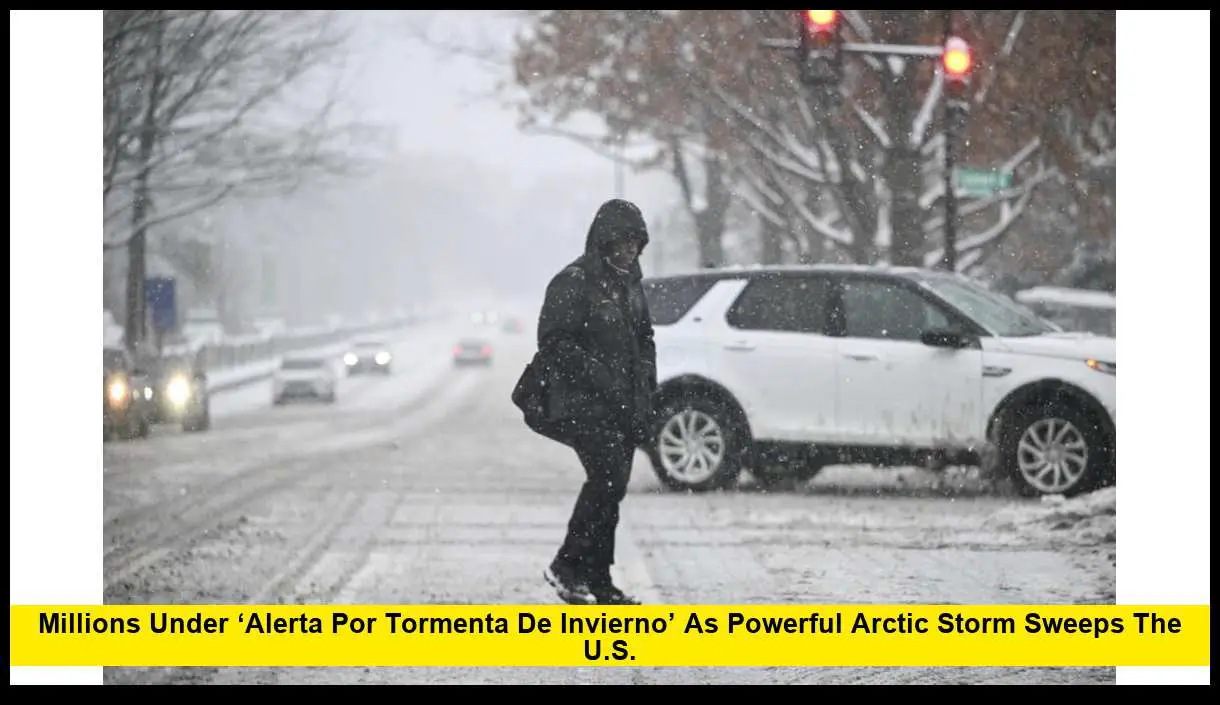
A major alerta por tormenta de invierno is in effect across large parts of the United States today, as a powerful Arctic front brings heavy snow, strong winds, and dangerously cold temperatures from the Midwest to the East Coast. The National Weather Service (NWS) says this could be the most disruptive early-November storm in years.
Table of Contents
Arctic Air and Heavy Snow Hit the Midwest
The storm began intensifying overnight in the northern Plains and upper Midwest. By Monday morning, blizzard conditions were already reported in Minnesota, North Dakota, and Wisconsin.
Snow totals are climbing quickly — with 8 to 14 inches expected in many areas and localized bands near the Great Lakes reaching up to 18 inches.
In Minneapolis and Duluth, whiteout conditions have made travel nearly impossible. Dozens of highways were partially closed by morning, and state troopers are urging drivers to stay home unless absolutely necessary.
Chicago, Detroit, and Milwaukee are next in the storm’s path. Those cities could see 6 to 10 inches of snow, paired with wind gusts up to 45 mph that will make travel treacherous through Tuesday.
Northeast Braces for Its First Big Snow of the Season
By late Tuesday, the storm will push east, spreading snow and ice across Pennsylvania, New York, and New England.
New York City and Boston may see a light wintry mix — around 1 to 3 inches — while areas farther inland, including Albany, Syracuse, and Burlington, Vermont, could pick up as much as 10 inches of snow.
The NWS warns that temperatures will plunge rapidly behind the storm. Wind chills could drop below zero degrees Fahrenheit overnight in several northern states. Residents are being urged to bring pets indoors, check on vulnerable neighbors, and prepare for potential power outages.
Power and Travel Disruptions Already Spreading
Utility crews across the Midwest are on emergency standby as heavy, wet snow and high winds threaten power lines. In Michigan, Consumers Energy has activated extra response teams ahead of what could be widespread outages.
Transportation departments are also working around the clock — deploying thousands of snowplows and salt trucks to keep major highways clear.
At airports in Chicago, Detroit, and Minneapolis, hundreds of flights have been delayed or canceled. Airlines including Delta, United, and American have issued travel waivers allowing passengers to reschedule trips without penalties.
Amtrak has also modified several Midwest and Northeast routes as tracks become covered in snow and ice.
Emergency Declarations and Local Response
Governors in Minnesota, Wisconsin, and Michigan have declared states of emergency to speed up resource deployment. Cities including Chicago and Milwaukee have opened warming centers for residents in need.
In Chicago, Mayor Brandon Johnson activated the city’s snow response plan early Monday, with road crews and emergency shelters operating 24/7.
Interstate highways I-94, I-90, and I-35 are expected to face the most severe travel impacts, with visibility dropping to near zero in blowing snow.
Cold Blast Reaches Deep into the South
Even states far from the blizzard zone will feel the effects.
Behind the storm, Arctic air will surge into the central and southern U.S., dropping temperatures 15 to 25 degrees below average.
Dallas, Nashville, and Atlanta will experience their coldest air of the season, with nighttime lows in the 20s and 30s.
Frost and freeze alerts are in place as far south as northern Florida, prompting officials to warn residents to protect exposed pipes and plants.
What to Do During an ‘Alerta por Tormenta de Invierno’
The NWS and FEMA are urging Americans to take precautions while this alerta por tormenta de invierno remains active:
- Stay informed: Follow local weather alerts on trusted apps or NOAA Weather Radio.
- Prepare for outages: Charge devices, have flashlights ready, and keep extra blankets on hand.
- Avoid unnecessary travel: If you must drive, pack emergency supplies and let others know your route.
- Check on others: Make sure older adults, people with disabilities, and pets are safe indoors.
- Prevent carbon monoxide danger: Never use outdoor generators or grills inside homes or garages.
Officials emphasize that even short exposure to freezing wind chills can cause frostbite in less than 30 minutes.
Economic and Infrastructure Impacts
The storm is also disrupting supply chains and retail operations during a key pre-holiday shopping week. Shipping companies like FedEx and UPS are rerouting deliveries around the hardest-hit zones to minimize delays.
Energy markets responded quickly Monday morning — natural gas prices rose more than 3% amid concerns about heating demand and regional power strain.
State officials in Michigan estimate snow removal and overtime costs could exceed $15 million if the storm lingers through midweek. Despite the challenges, crews remain optimistic that early preparation will help limit damage.
Another Storm May Follow Later This Week
Meteorologists are already tracking a secondary cold front forming in the Rockies that could bring additional snow to the Plains and Midwest by the weekend.
Experts say this pattern — where cold Arctic air repeatedly dips south — could dominate much of November, raising the risk for more alertas por tormenta de invierno in the coming weeks.
According to the Climate Prediction Center, much of the northern U.S. is likely to see below-average temperatures through Thanksgiving, with an increased chance of additional snow events.
Communities Come Together Amid the Storm
Despite the freezing conditions, communities across the affected regions are showing resilience. Local organizations and churches are distributing hot meals, coats, and blankets.
Online neighborhood groups are sharing live updates on road closures and offering rides for those who need help getting to shelters.
In Minneapolis, volunteers have already cleared sidewalks for seniors and helped stranded drivers dig out of snowbanks.
The first major storm of the season is testing the nation’s readiness — but it’s also highlighting the power of community support and preparation.
As millions remain under this widespread alerta por tormenta de invierno, safety officials urge everyone to stay alert, stay warm, and look out for one another as winter tightens its grip.