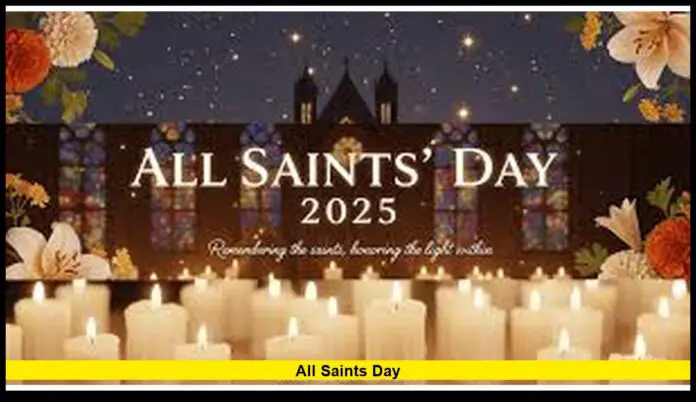
All Saints Day is one of the most meaningful Christian observances celebrated every year on November 1. Across the United States and the world, millions gather in churches and homes to honor the saints — both known and unknown — who lived lives of faith and virtue.
In 2025, All Saints Day falls on a Saturday, giving families and communities more time to attend church services, visit cemeteries, and celebrate together. The day offers a time of reflection, remembrance, and gratitude for those who set examples of holiness through love, sacrifice, and courage.
Table of Contents
What Is All Saints Day?
All Saints Day, also called the Solemnity of All Saints, is a Christian feast dedicated to celebrating all saints who have entered heaven. These include not only canonized saints but also countless others who lived righteous lives in quiet devotion.
The day emphasizes the belief in the “Communion of Saints,” the spiritual bond that connects believers on earth with those in heaven. While the observance is most prominent in the Catholic Church, many Anglican, Lutheran, and Methodist congregations also mark this day through prayer and worship.
For Catholics, All Saints Day is considered a holy day of obligation, meaning Mass attendance is expected. Other Christian communities observe it as a time for reflection, thanksgiving, and unity.
The History of All Saints Day
The roots of All Saints Day date back to the early centuries of Christianity. In those times, believers honored martyrs — individuals who died for their faith — especially during periods of persecution.
By the 4th century, the Church began dedicating special days to remember groups of martyrs. Over time, the observance expanded to include all holy men and women who had lived faithfully.
A major milestone occurred in 609 A.D., when Pope Boniface IV dedicated the Pantheon in Rome to the Virgin Mary and all Christian martyrs. This act formally recognized the collective memory of the saints.
Later, in 835 A.D., Pope Gregory IV established November 1 as the universal date of celebration for all saints in the Western Church. That tradition continues today, observed across continents and cultures.
How All Saints Day Connects to Halloween
Many Americans celebrate Halloween without realizing its link to All Saints Day. The word “Halloween” comes from “All Hallows’ Eve” — the evening before All Hallows’ Day, which means All Saints Day.
In medieval Europe, people prepared for the holy day by praying, fasting, and remembering the departed. Over time, cultural customs such as wearing costumes, lighting candles, and sharing food developed into what we now know as Halloween.
Although Halloween has become a largely secular holiday, its origins remain tied to the Christian idea of remembering and honoring the dead. Together, Halloween, All Saints Day, and All Souls Day (November 2) form a spiritual season of reflection known as Hallowtide.
How All Saints Day Will Be Observed in 2025
In 2025, churches across the United States will mark All Saints Day with special Masses, prayer services, and community events. Because it falls on a Saturday, many parishes plan extended celebrations, allowing more people to attend.
Common ways Americans observe All Saints Day include:
- Attending Mass or worship services to honor the saints.
- Lighting candles for deceased loved ones.
- Visiting cemeteries to decorate graves with flowers.
- Praying the Litany of Saints or reading Bible passages about eternal life.
- Hosting parish gatherings or concerts of sacred music.
Some Catholic schools and parishes also host “Parades of Saints,” where children dress as their favorite saints and share short stories about them. These activities help teach the next generation about faith, kindness, and perseverance.
Global Traditions and Cultural Celebrations
All Saints Day is celebrated worldwide, but each country adds its own flavor and customs.
In the Philippines:
The day is part of Undás, a major national observance when families travel to cemeteries to clean graves, light candles, and share meals. It is both a solemn and joyful time for remembering the dead.
In Mexico:
The celebration overlaps with Día de los Muertos (Day of the Dead). Families build colorful ofrendas (altars) decorated with flowers, candles, food, and photos of deceased relatives.
In France and Spain:
People bring fresh flowers, often chrysanthemums, to graves. The day is a public holiday, and families gather in cemeteries to honor their ancestors.
In Italy:
Church bells ring across cities, and families spend the day attending Mass before visiting cemeteries to leave flowers and candles.
Though customs vary, the message is universal — remembering loved ones with love and gratitude.
All Saints Day in the United States
In the U.S., All Saints Day is not a federal holiday, but it remains a deeply spiritual event for millions of Christians. Churches across the nation, from New York City to Los Angeles, will host special services this year.
Catholic dioceses will hold candlelight vigils, choir performances, and processions. Many Protestant congregations will use the weekend to honor members who have passed away in the past year.
Schools and families also participate by learning about saints who inspired others through their service, faith, and kindness. Popular modern figures highlighted include St. Mother Teresa, St. Óscar Romero, and St. Kateri Tekakwitha, the first Native American saint.
These celebrations serve as a reminder that sainthood is not limited to famous figures — it can be found in ordinary lives lived with extraordinary love.
The Spiritual Message of All Saints Day
The heart of All Saints Day lies in gratitude and hope. It encourages believers to reflect on the people who lived faithfully before them and to see their example as a path to follow.
The celebration also highlights a comforting truth — that life does not end with death. Christians believe the saints in heaven intercede for those on earth, creating an unbroken chain of faith and prayer that connects generations.
In many sermons, pastors emphasize that sainthood is not perfection but perseverance. It is about living with integrity, helping others, and choosing goodness in everyday life.
This message resonates even beyond religious boundaries, reminding everyone that compassion and moral courage have lasting power.
Modern Expressions of All Saints Day
In recent years, technology and social media have reshaped how people observe All Saints Day. Many churches now livestream services, allowing homebound members to participate virtually.
Faith organizations also use digital platforms to share prayers, reflections, and stories of modern-day saints — individuals who make a difference through service, charity, and advocacy.
Art and music remain central to the celebration. Traditional hymns like For All the Saints and Holy God, We Praise Thy Name fill churches, while contemporary artists release songs that celebrate faith and remembrance.
Community outreach programs often expand around this time. Food drives, blood donations, and charity events are held in honor of the saints’ legacy of service.
All Saints Day and All Souls Day
The day after All Saints Day, November 2, is All Souls Day. Together, these two observances form a powerful pairing of remembrance.
While All Saints Day honors those already in heaven, All Souls Day focuses on praying for souls still on their journey to eternal peace.
Many Catholics visit cemeteries on both days to pray, light candles, and offer flowers for departed loved ones. The connection between the two days reminds believers that the living and the dead share a sacred bond in faith.
Why All Saints Day Still Matters Today
In a world often filled with noise, speed, and distraction, All Saints Day invites people to slow down and reflect. It reminds everyone — regardless of religion — to appreciate those who came before and to live lives of purpose.
The values celebrated on this day — compassion, courage, and community — remain as relevant as ever. Whether one attends Mass, visits a cemetery, or simply pauses for a quiet prayer, the message endures: goodness lives on through the choices we make.
All Saints Day bridges the past and the present, showing that faith, hope, and love can transcend time.
All Saints Day reminds us that holiness is not out of reach — it begins in small, daily acts of kindness and faith. How will you honor the saints and loved ones this year? Share your thoughts below and stay informed about upcoming celebrations that inspire unity and hope.

