
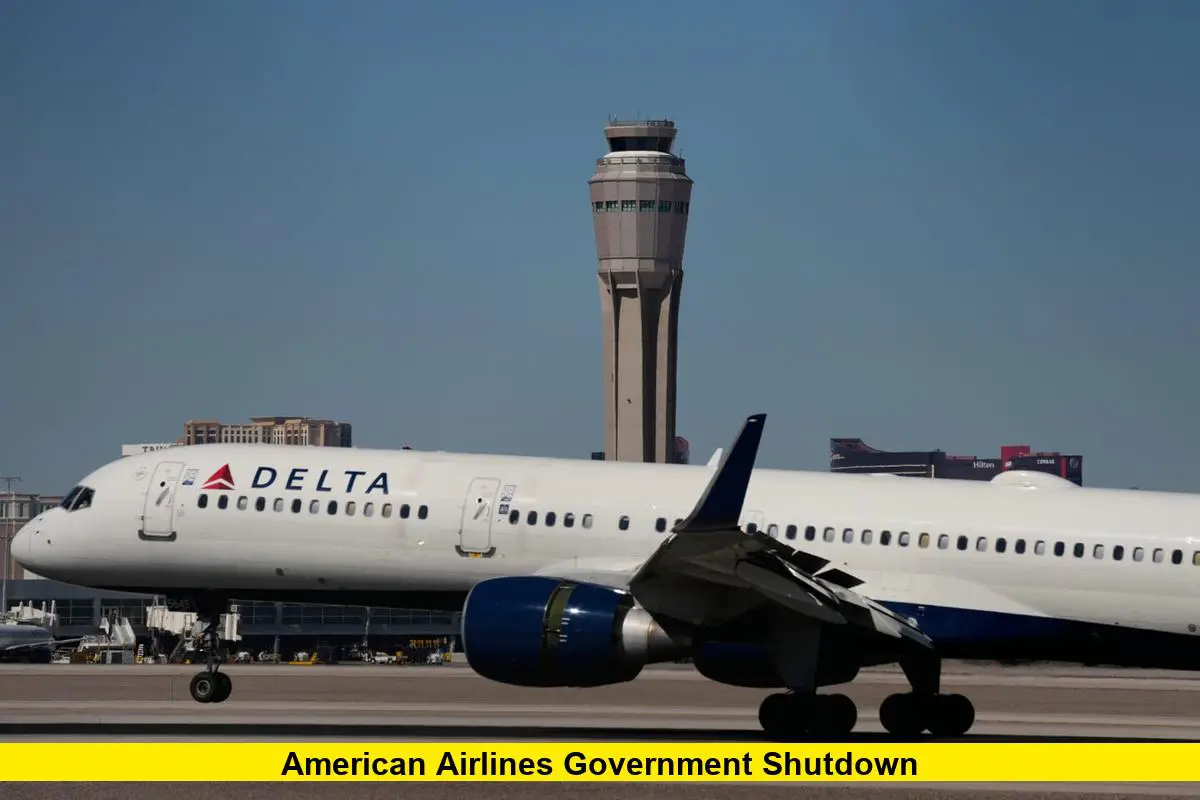
The American Airlines government shutdown is intensifying, creating ripple effects across the U.S. aviation system. Now well into its third week, the federal funding standoff has triggered mounting delays, strained air traffic control staffing, longer security lines, and widespread operational challenges for one of the country’s largest carriers.
With millions of travelers relying on American Airlines for business trips, vacations, and daily travel, the prolonged shutdown has turned routine flight operations into a logistical maze. Every day the government remains shuttered, the situation grows more complex—and the pressure on the airline, its staff, and passengers keeps building.
Table of Contents
A Prolonged Shutdown with Real Aviation Consequences
The current federal government shutdown began on October 1, 2025, after lawmakers failed to reach a budget agreement. Since then, thousands of federal employees have been furloughed, while essential personnel like air traffic controllers and TSA officers have been required to work without pay.
While some sectors of the economy can operate with minimal short-term government involvement, aviation is not one of them. Airlines depend on the continuous operation of federal agencies for air traffic control, security screening, regulatory oversight, and weather monitoring. When funding lapses, these systems don’t stop—but they do slow down, often dramatically.
For American Airlines, this has meant navigating a strained national airspace system, managing sudden schedule disruptions, and responding to passenger frustration. What began as an inconvenience has grown into a major operational and reputational challenge.
Mounting Flight Delays: The Visible Impact on Travelers
Thousands of Delays and Cancellations
In the weeks following the shutdown, American Airlines has experienced a surge in delayed and canceled flights across its domestic network. In some instances, more than a thousand flights have been disrupted in a single day, representing a significant portion of its scheduled operations.
This surge is tied closely to staffing shortages at key air traffic control centers. With controllers working without pay, attrition and absences have increased. Fewer staff means flights must be spaced farther apart for safety, reducing overall capacity and causing bottlenecks at busy airports.
Major Hubs Under Strain
American Airlines operates several large hub airports, including Dallas–Fort Worth, Charlotte, Miami, Chicago O’Hare, and Philadelphia. These hubs rely on precise timing and heavy coordination between flight crews, air traffic controllers, and ground operations.
When delays occur at one hub, they ripple outward across the network. For example:
- A ground stop in Dallas can delay flights bound for the East Coast, which in turn affects aircraft scheduled for return trips later in the day.
- A slowdown in air traffic flow into Chicago can force rerouting, leading to longer flight paths and additional fuel costs.
- Even a small reduction in throughput at Miami International can cause cascading effects on flights to Latin America and the Caribbean.
For travelers, these disruptions manifest as extended gate holds, missed connections, overnight delays, and last-minute rebookings.
Air Traffic Control Under Unprecedented Pressure
Controller Shortages
The FAA’s air traffic control system is the backbone of American commercial aviation. During a government shutdown, controllers remain on duty but do not receive pay. Over time, this strains morale and leads to staffing gaps as individuals call in sick or seek other work.
Key control centers in regions like New York, Chicago, Dallas, and Phoenix have reported reduced staffing levels. To maintain safety, controllers are forced to reduce the number of flights in the air at any given time. This means longer taxi times, extended holding patterns, and increased ground delays.
Reduced Efficiency, Higher Risk of System Strain
Unlike other industries, air traffic control cannot simply speed up operations later to “catch up.” Once delays build up in the system, they often last throughout the day. Flights scheduled for early morning are delayed into the afternoon, affecting aircraft availability and crew rotations nationwide.
This reduced efficiency impacts airlines like American disproportionately because of their size. As one of the largest carriers in the world, even a minor slowdown in the national airspace can disrupt hundreds of its flights in a single day.
TSA Staffing and Passenger Screening Challenges
While much of the focus has been on air traffic control, TSA operations are also under significant strain. TSA officers are classified as essential workers and continue working during a shutdown, but like controllers, they are not paid until funding is restored.
Over time, this leads to higher absentee rates, longer security lines, and slower passenger processing. At busy hubs such as Dallas–Fort Worth and Miami, travelers have reported significantly longer wait times during peak hours. These delays create additional stress for passengers, some of whom miss their flights despite arriving on time.
For American Airlines, these TSA bottlenecks add another layer of complexity. Flights cannot depart if passengers are stuck in security lines, and gate agents must juggle reassignments and boarding adjustments in real time.
Operational Challenges Inside American Airlines
Crew Scheduling and Aircraft Utilization
Airlines operate on tight schedules. Aircraft are often scheduled to make multiple trips in a single day, and flight crews have regulated working hours. When a morning flight is delayed due to air traffic or security slowdowns, the aircraft and crew may not make their next scheduled flight.
American Airlines has had to adjust schedules, reassign crews, and reposition aircraft constantly since the shutdown began. This leads to increased operational costs, as backup crews must be activated and flights rescheduled.
Crew scheduling software helps, but human decision-making remains essential when delays cascade across multiple hubs simultaneously.
Financial Costs of Disruption
While the full financial impact of the American Airlines government shutdown will become clear later, the short-term costs are significant. Airlines incur additional expenses for fuel during rerouting, crew overtime, hotel accommodations for stranded passengers, and compensation for delays and cancellations.
Revenue can also take a hit if frustrated travelers delay or cancel future bookings. For an airline of American’s scale, even a modest percentage drop in daily revenue can translate to tens of millions of dollars in lost income over the course of a prolonged shutdown.
Passenger Experience in a Shutdown Environment
Travelers Face Uncertainty
For passengers, the most frustrating aspect of the shutdown’s impact on American Airlines is unpredictability. Delays can occur even on routes that typically run smoothly. Flights that depart on time may still arrive late due to rerouting, and passengers with tight connections face greater risks of missing onward flights.
Customer Service Under Pressure
American Airlines has expanded its flexibility policies during this period, allowing travelers to rebook flights or change itineraries without extra fees in many cases. However, customer service systems are under strain. Long wait times for phone assistance and crowded airport service desks have become common at major hubs.
Strategic Risks for American Airlines
The longer the government shutdown continues, the greater the strategic risk to American Airlines. Key concerns include:
- Reputation Damage: Repeated delays can erode customer trust, even when the airline is not directly at fault.
- Booking Slowdowns: Uncertainty about future travel conditions may lead some passengers to postpone or cancel trips.
- Operational Fatigue: Extended disruptions place pressure on employees, from pilots and flight attendants to gate agents and call center staff.
- Competitive Positioning: If other carriers manage the disruption more effectively, American may lose market share in key routes.
These risks compound over time, underscoring why the airline and the broader industry are closely watching the progress—or lack thereof—in Washington.
How Passengers Can Navigate the Shutdown Period
While travelers cannot control the government shutdown, there are practical steps they can take to minimize disruptions when flying American Airlines during this period:
- Monitor flight status frequently, especially within 24 hours of departure.
- Arrive early to account for possible security delays.
- Opt for morning flights when possible, as delays tend to build throughout the day.
- Allow extra layover time for connecting flights, particularly at busy hubs.
- Use the airline’s mobile app for faster rebooking options if a disruption occurs.
Taking a proactive approach can help travelers stay one step ahead in an unpredictable environment.
The Road Ahead: What’s at Stake
The American Airlines government shutdown has laid bare how essential federal operations are to the smooth functioning of U.S. air travel. Every day the funding impasse continues, delays grow more entrenched, staffing becomes more strained, and passengers face greater uncertainty.
If lawmakers reach an agreement soon, the system will recover—but not overnight. It can take weeks for staffing levels, scheduling patterns, and operational rhythms to fully normalize. If the shutdown drags on, the aviation sector could face deeper disruptions, especially during upcoming holiday travel peaks.
American Airlines, like other major carriers, is pressing for a resolution, but until then, it must adapt daily to a challenging and unpredictable landscape.
The American Airlines government shutdown is reshaping the air travel experience for millions of passengers and thousands of employees. How has it affected your travel plans? Share your thoughts in the comments and stay tuned as this critical situation unfolds.