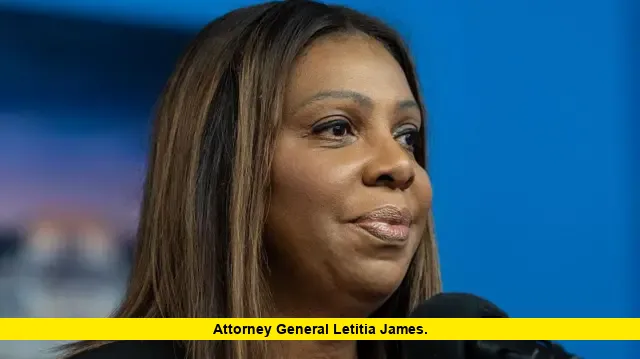
In a dramatic and highly scrutinized sequence of legal events, attorney general letitia james has once again emerged at the center of national headlines after a federal grand jury in Virginia declined for the second time this month to indict her on mortgage fraud charges connected to a 2020 property transaction. This surprising outcome marks a setback for the Department of Justice and underscores the legal and political complexities surrounding high-profile prosecutions of public officials. The repeated refusal by grand juries to bring new charges follows the dismissal of an earlier indictment, deals a significant blow to prosecutors and intensifies debates over the role of the justice system in politically charged cases.
Table of Contents
Repeated Grand Jury Rejections Highlight Legal Hurdles
Federal prosecutors, acting on allegations that Attorney General Letitia James misrepresented information on a home mortgage application to secure favorable terms, have encountered unexpected resistance from grand juries in two different Virginia jurisdictions. In both Norfolk and Alexandria, grand jurors declined to indict James when presented with evidence of alleged mortgage fraud — a highly unusual development in federal criminal proceedings. Grand juries typically approve indictments whenever presented by prosecutors, making these refusals noteworthy.
The legal process began after a federal judge dismissed the initial charges in late November on procedural grounds, ruling that the prosecutor who brought the case was unlawfully appointed. The Justice Department then attempted to revive the case by presenting it to new grand juries. Despite these efforts, jurors in Virginia twice declined to approve the indictment. Attorney General Letitia James pleaded not guilty to the original charges in October, and both refusals to indict have kept those charges from proceeding toward trial.
These grand jury decisions spotlight deep uncertainties about the prosecution’s evidence and strategy, and raise questions about whether the government can sustain its efforts to pursue criminal charges against a sitting state attorney general.
Background of the Mortgage Fraud Allegations
The case against James centers on her purchase of a residential property in Norfolk, Virginia, in 2020. Prosecutors alleged that James falsely listed the home as her second residence rather than an investment property, allegedly securing more favorable mortgage terms as a result. James has vehemently denied any wrongdoing, and her legal team has characterized the prosecution as unjustified and politically motivated.
The original indictment, returned in October 2025, charged James with one count of bank fraud and one count of making false statements to a financial institution. However, a federal judge dismissed that indictment in November after determining that the interim U.S. Attorney who oversaw the case had not been lawfully appointed. That decision crucially invalidated all prosecutorial actions taken under that attorney’s authority, forcing the Justice Department to seek a fresh presentation of the case to new grand juries.
Twice Turned Down: Grand Jury Decisions in Virginia
The first attempt to re-indict James came before a grand jury in Norfolk, Virginia. That panel declined to return charges, marking an unexpected rebuke to prosecutors. Undeterred, federal authorities then presented the case to a second grand jury in Alexandria, Virginia, this past week.
For a second time, the grand jury declined to indict the New York attorney general. This rare outcome suggests that the evidence presented did not convince a majority of citizens that probable cause existed to formally charge James with a crime — the constitutional threshold for moving forward with a prosecution. The double refusal underscores the legal fragility of the government’s case and highlights jurors’ skepticism about the strength of the allegations.
Political Context and National Implications
The legal battle involving Attorney General Letitia James has unfolded against a backdrop of broader political tensions. James, a Democrat and vocal critic of former President Donald Trump, previously pursued civil actions against Trump and his business interests, including a high-profile lawsuit alleging financial improprieties. That lawsuit led to substantial financial penalties — later scaled back on appeal — for Trump’s organization.
In Washington and Albany alike, the timing and persistence of the federal prosecution have drawn fierce commentary. Supporters of James argue that the repeated indictments stem from political motivations, asserting that the Justice Department under the Trump administration has targeted prominent critics with aggressive legal actions. Critics of the prosecution — including some legal experts — suggest that the case against James lacks strong evidence and may represent an attempt to weaponize the criminal justice system against political adversaries.
Prosecutors, for their part, maintain that their actions are grounded in legal concerns about alleged misconduct. However, the uncommon grand jury refusals have tempered claims of a strong prosecutorial foundation.
Legal and Procedural Questions Emerge
Legal analysts have weighed in on the unusual developments surrounding James’s case. Multiple grand jury rejections raise questions about the Department of Justice’s willingness to continue pursuing charges that twice failed to garner juror support. Prosecutors may still pursue additional attempts to bring the matter before another grand jury, but each successive refusal further complicates their position.
The judge’s earlier ruling that invalidated the initial indictment illustrates another layer of procedural complexity. Because the original prosecutor was deemed unlawfully appointed, the dismissal of the indictment undermined months of work and forced prosecutors to restart their efforts. This procedural flaw not only applies to James’s case, but also affected related prosecutions, including that of former FBI Director James Comey, whose case was dismissed under the same ruling.
The repeated refusals suggest that the government’s legal theory may not resonate with jurors and that prosecutors may need to reassess how they present evidence — or whether to continue their efforts at all.
Concurrent Legal Actions and Controversies
While the federal criminal case has drawn national attention, Attorney General Letitia James faces additional legal challenges closer to home. In New York, a school board president recently filed a lawsuit against James, alleging that she threatened local officials over their handling of policy discussions related to transgender students — claims that are now the subject of civil litigation. These administrative and civil disputes add another dimension to the attorney general’s current legal landscape, though they exist independently of the federal criminal proceedings.
Meanwhile, James’ press office continues to announce routine enforcement actions and initiatives undertaken by the New York State Attorney General’s office, from tenant protections to consumer-impact legal actions, illustrating that her official duties carry on amid these high-profile legal battles.
What Comes Next for Attorney General Letitia James?
As of today, attorney general letitia james stands without a pending federal indictment after two grand juries refused to charge her. Her legal team and supporters view the outcomes as vindication of her steadfast denials of criminal conduct. Still, the Department of Justice’s future plans remain uncertain. Prosecutors could seek yet another grand jury, or they could pivot their strategy after these setbacks.
On the broader political stage, the developments may influence public perceptions ahead of the 2026 New York Attorney General election, in which James is expected to seek re-election for a third term. Her ongoing legal saga has thrust her further into national prominence and made her a flashpoint in debates over the integrity of federal prosecutions, especially those involving politically connected figures.
What unfolds next in this unprecedented legal chapter will continue to capture the nation’s attention and spark discussion among legal experts, elected officials, and everyday Americans alike. Share your thoughts in the comments or check back for updates on this evolving story.

