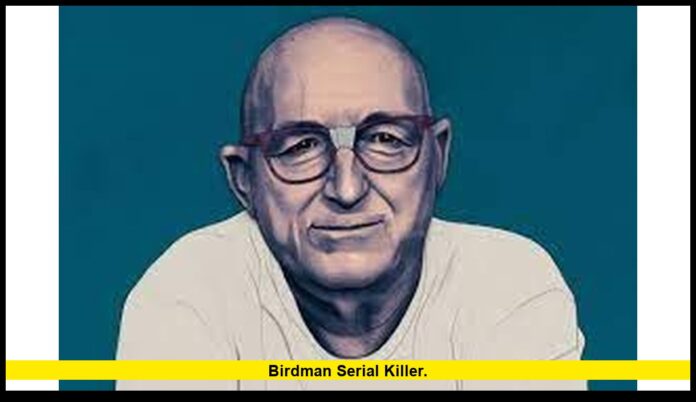
The story of the birdman serial killer continues to fascinate and horrify Americans decades after Richard Speck’s brutal crimes. Though technically classified as a mass murderer, Speck’s actions, prison behavior, and chilling nickname have cemented his place in true crime history. With renewed attention through documentaries and streaming series, his disturbing legacy has resurfaced, sparking discussions about how society remembers some of its most violent criminals.
Table of Contents
Who Was Richard Speck?
Richard Benjamin Speck was born in Illinois in 1941. His early life was marked by instability, heavy drinking, and a history of violence. After years of drifting through jobs, accumulating petty crimes, and displaying violent tendencies, Speck became infamous on a single night in July 1966 when he committed one of the most horrifying mass murders in modern American history.
Speck broke into a townhouse used as a dormitory for student nurses in Chicago. Over the course of several hours, he terrorized nine women, murdering eight of them in cold blood. His methodical brutality stunned the nation and left an indelible mark on Chicago’s history.
The Night of the Murders
On July 13, 1966, Speck gained entry to the student nurses’ residence by climbing through a window. Once inside, he systematically subdued and tied up the women. Over the next several hours, he assaulted and murdered eight women, one by one, in a calculated and methodical manner.
The women, all young nurses in training, were:
- Gloria Davy
- Patricia Matusek
- Nina Jo Schmale
- Pamela Wilkening
- Suzanne Farris
- Mary Ann Jordan
- Merlita Gargullo
- Valentina Pasion
The ninth woman, Corazon Amurao, survived by hiding under a bed and later provided a key eyewitness account that led to Speck’s identification and arrest.
Arrest and Conviction
Speck was arrested just days later after a failed suicide attempt in a nearby hospital. A nurse recognized his “Born to Raise Hell” tattoo, leading to his capture.
In 1967, he was convicted of murder and sentenced to death. However, following a U.S. Supreme Court decision that temporarily suspended capital punishment, his sentence was commuted to several consecutive prison terms totaling 400 to 1,200 years.
Speck would spend the rest of his life behind bars at Stateville Correctional Center in Illinois.
Why He Became Known as the “Birdman”
The nickname “Birdman” originated during his time in prison. Speck kept a pair of small sparrows in his cell after they flew in through the bars. Initially, the birds were tolerated by the guards, but when they later ordered him to get rid of them, Speck responded with shocking cruelty. He threw one of the birds into a fan, killing it instantly, and coldly remarked, “If I can’t have it, no one can.”
This incident earned him the grim nickname “Birdman,” a label that stuck for the remainder of his life. It also added a macabre layer to his public image, blending his violent nature with a disturbing act that symbolized his cruelty even behind bars.
Life in Prison
Richard Speck’s prison life became nearly as infamous as his crimes. Far from living a quiet life behind bars, he thrived in the underworld of prison culture.
- He smuggled drugs and openly engaged in illegal activities.
- He underwent physical changes, reportedly taking hormone treatments that gave him female-like breasts, shocking the public when footage later surfaced.
- He flaunted his notoriety, participating in videotaped interviews where he showed no remorse.
One of the most notorious moments came in 1988, when a secret prison video emerged showing Speck using drugs, engaging in sexual activity, and boasting about how much “fun” he was having. This footage caused national outrage, raising serious questions about prison oversight.
Serial Killer vs. Mass Murderer
Although many refer to him as the birdman serial killer, Richard Speck does not technically fit the FBI definition of a serial killer. Serial killers commit separate murders over time with cooling-off periods in between.
Speck murdered eight women in one night, making him a mass murderer rather than a serial killer. However, his nickname and prison persona blurred this distinction in the public imagination. Media portrayals and sensational stories over the years have often used the “serial killer” label because of its cultural impact.
Renewed Attention Through Media
Decades after his death, Richard Speck’s story continues to be retold in books, documentaries, and streaming series. His nickname “Birdman” and the horrifying details of his crimes have kept his name alive in American true crime culture.
Recent true crime adaptations have explored not only the murders but also Speck’s bizarre prison transformation and his psychological profile. His case is frequently studied in criminology courses as an example of mass murder psychology, media sensationalism, and prison corruption.
Death and Aftermath
Richard Speck died of a suspected heart attack on December 5, 1991, at the age of 49. His body went unclaimed and was cremated. Even after his death, debates continued over how his case was handled and why his story remains so prominent in the collective memory.
His crimes shocked a generation, his nickname unsettled the public, and his prison behavior redefined how notorious criminals could maintain influence behind bars.
Key Facts About the Birdman Serial Killer Case
| Detail | Information |
|---|---|
| Name | Richard Benjamin Speck |
| Date of Crime | July 13–14, 1966 |
| Victims | 8 student nurses |
| Nickname | Birdman |
| Criminal Type | Mass murderer (often misidentified as serial killer) |
| Prison Sentence | 400–1,200 years |
| Death | December 5, 1991 |
| Legacy | Infamy through media, true crime culture, and prison footage |
Cultural Impact and Legacy
The story of Richard Speck remains one of the most horrifying episodes in American criminal history. His nickname “Birdman” continues to evoke the cold, calculated cruelty that defined both his crimes and his prison life.
The case also highlights how media labels can shape public understanding. While technically not a serial killer, his name is often grouped with figures like Ted Bundy or John Wayne Gacy because of the scale of his violence and his shocking lack of remorse.
The legacy of the birdman serial killer endures because it forces society to confront uncomfortable truths about violence, media sensationalism, and the way some criminals embrace their notoriety. Speck’s story remains both a historical warning and a chilling example of human brutality.
What are your thoughts on the legacy of Richard Speck and the “Birdman” nickname? Share your views below and join the conversation.

