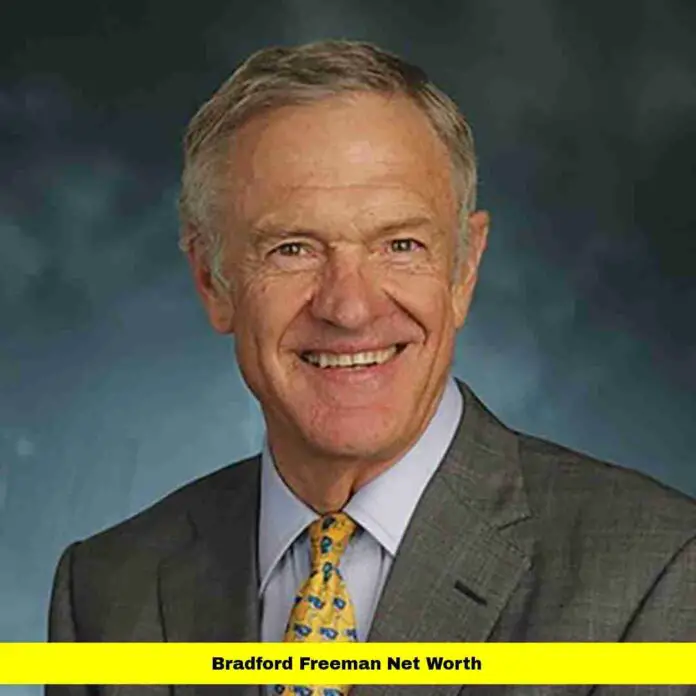
Bradford Freeman net worth has become a topic of interest, especially after his substantial $50 million donation to Stanford University’s football program in 2025. Freeman is widely recognized not only for his business acumen and investment success but also for his philanthropic efforts, which have transformed both the academic and athletic landscape at his alma mater. His career and generosity reflect a unique blend of financial expertise, strategic foresight, and a commitment to supporting the next generation of leaders and athletes.
Table of Contents
Early Life and Education
Bradford M. Freeman was born in Fargo, North Dakota, and displayed remarkable dedication from an early age. He earned a football scholarship to Stanford University, where he balanced athletic commitments with rigorous academics, graduating in 1964 with a degree in economics. Freeman continued his education by obtaining an MBA from Harvard Business School in 1966, equipping him with the tools to excel in finance and investment management. Beyond academics, he served six years in the National Guard, a period that helped cultivate leadership, discipline, and strategic thinking. These formative experiences laid the groundwork for his highly successful career in finance and his later philanthropic contributions.
Career in Investment and Private Equity
After completing his studies, Freeman initially worked in investment banking, gaining experience that would shape his financial strategies for years to come. In 1983, he co-founded Freeman Spogli & Co., a Los Angeles-based private equity firm, with Ronald P. Spogli. Under their leadership, the firm grew to manage over $900 million in assets by 2001. Freeman’s expertise in mergers, acquisitions, and investment strategy allowed him to build a significant portfolio of wealth while influencing the growth of several major companies.
Freeman’s professional accomplishments include serving on the boards of influential corporations, including CBRE Group Inc. and Edison International. His leadership roles and investment decisions reflect a disciplined, strategic approach to wealth creation, emphasizing long-term growth and stability. These ventures have been instrumental in establishing Freeman as a respected figure in the business world.
Philanthropy and Dedication to Stanford University
Bradford Freeman’s philanthropic efforts have been closely tied to his connection with Stanford University. In 1988, he became the first individual in the nation to endow a college football head coaching position, creating the Bradford M. Freeman Director of Football position. This pioneering initiative has served as a model for other universities and helped elevate the status and support of college athletics nationwide.
In 2005, Freeman, along with Ronald Spogli, donated $50 million to establish the Freeman Spogli Institute for International Studies, emphasizing research, education, and global policy initiatives. This gift highlights Freeman’s commitment not only to athletics but also to academic excellence, positioning Stanford as a leading institution for research and innovation.
Freeman’s philanthropy continued with his record-breaking $50 million donation to Stanford’s football program in 2025. The gift is dedicated to supporting football operations, creating five new scholarships, and enhancing Stanford’s Name, Image, and Likeness (NIL) infrastructure. This contribution is particularly impactful given the evolving landscape of college athletics, ensuring that Stanford remains competitive and that student-athletes have the resources to thrive both on and off the field.
Bradford Freeman Net Worth
As of 2025, Bradford Freeman’s net worth is estimated at $13 million. This figure reflects his investments and holdings in publicly traded companies, including approximately 67,856 shares in CBRE Group Inc., valued at over $10 million, and about 50,000 shares in Edison International, valued at over $3 million. Freeman’s wealth is the result of decades of strategic financial planning, disciplined investing, and leadership in private equity.
It is important to note that Freeman’s net worth is separate from his philanthropic contributions. The $50 million donation to Stanford, while substantial, represents his commitment to giving back rather than a reflection of his personal financial assets. Freeman has consistently demonstrated a belief in using wealth to create meaningful impact, whether in athletics, academics, or broader community initiatives.
Impact of the $50 Million Donation
Freeman’s $50 million contribution to Stanford’s football program is set to have a transformative effect. The donation supports operational needs, facilitates five new scholarships, and strengthens the university’s NIL infrastructure. In doing so, it provides student-athletes with critical resources in a competitive and evolving college sports landscape.
The funding will also help the program attract top talent and address the modern demands of college athletics, such as enhanced athlete compensation and transfer portal opportunities. Coaches, administrators, and players have highlighted the gift as a game-changing investment, one that secures the football program’s future competitiveness and stability. By enabling Stanford to maintain high standards of training, recruitment, and player support, Freeman’s donation ensures that the program remains a leading force in college sports for years to come.
Career Highlights and Achievements
Bradford Freeman’s career highlights include his role as a co-founder of Freeman Spogli & Co., his board memberships, and his extensive philanthropic work. Each milestone demonstrates his strategic thinking, commitment to excellence, and ability to leverage financial resources for meaningful impact. His influence extends beyond personal wealth, shaping both the companies he invests in and the institutions he supports through philanthropy.
Freeman’s investments have consistently reflected careful planning and a focus on sustainable growth. His approach emphasizes not only personal financial success but also the creation of opportunities that benefit broader communities, particularly in education and athletics.
Philanthropic Philosophy
Bradford Freeman’s philanthropic philosophy centers on making a lasting difference. His contributions to Stanford exemplify a strategic approach to giving—one that supports long-term development, enhances institutional capacity, and creates opportunities for students and athletes. Freeman’s philosophy reflects a belief that wealth carries a responsibility to foster growth, innovation, and excellence in areas that can impact future generations.
By endowing positions, funding scholarships, and supporting infrastructure improvements, Freeman ensures that his philanthropic investments have tangible, measurable outcomes. This approach demonstrates a balance between generosity and strategic impact, highlighting his thoughtful approach to giving.
Legacy and Influence
Bradford Freeman’s legacy is defined by his combined achievements in finance, philanthropy, and leadership. His net worth, while significant, is only one aspect of his influence. Freeman’s true legacy lies in the lives he has touched, the institutions he has supported, and the opportunities he has created for students, athletes, and professionals alike.
From pioneering endowments in college athletics to substantial contributions to research and international studies, Freeman has shaped the trajectory of Stanford University and influenced how wealth can be used for meaningful societal impact. His career serves as a model for combining financial success with purposeful giving, inspiring others to use resources to effect positive change.
Conclusion
Bradford Freeman net worth and philanthropic endeavors illustrate a remarkable career of financial success, vision, and dedication to giving back. With an estimated net worth of $13 million, Freeman has achieved significant success through strategic investments, leadership in private equity, and board participation in major companies. More importantly, his transformative $50 million donation to Stanford’s football program demonstrates his commitment to supporting student-athletes, advancing academic initiatives, and strengthening the university’s competitive edge. Freeman’s life and career continue to inspire, offering a blueprint for combining wealth, influence, and meaningful impact in education and athletics.

