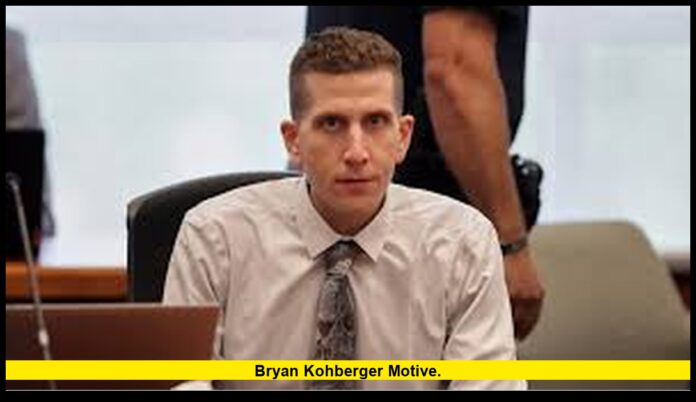
As of January 2026, no verified or official motive has been publicly identified for Bryan Kohberger’s actions in the Idaho murders.
The question of bryan kohberger motive continues to stand at the center of public interest nearly three years after the brutal killing of four University of Idaho students in Moscow, Idaho. Despite the complete resolution of the case in a legal sense — with Bryan Christopher Kohberger pleading guilty and receiving multiple life sentences — investigators have not publicly confirmed a motive. This comprehensive article presents the latest verified and factual updates, focusing solely on what is known about Kohberger’s motive as of January 2026.
Table of Contents
A Horrific Crime That Shocked the Nation
In the early morning of November 13, 2022, four University of Idaho students were found stabbed to death inside their off-campus rental home:
- Madison Mogen, 21
- Kaylee Goncalves, 21
- Xana Kernodle, 20
- Ethan Chapin, 20
The killings occurred in the early hours, between approximately 4:00 a.m. and 4:25 a.m. The violence and seeming randomness of the attack horrified the community and drew intense national attention.
Nearly two months later, on December 30, 2022, 28-year-old Bryan Christopher Kohberger was arrested in Pennsylvania and charged with four counts of first-degree murder and one count of felony burglary related to the crime. Less than three years after his arrest, Kohberger entered a guilty plea on July 2, 2025, and was formally sentenced on July 23, 2025, to four consecutive life sentences without parole, plus an additional ten years for burglary.
No Verified Motive: The Official Record
Law Enforcement and Prosecutors Have Not Identified Why Kohberger Committed the Murders
As of January 2026, no official motive has been publicly confirmed by law enforcement, prosecutors, or the judge who presided over the case. In both investigative statements and court proceedings, authorities have stated that while they could prove Kohberger’s involvement beyond a reasonable doubt, they could not definitively answer why he chose to kill those students.
Investigators have repeatedly confirmed that:
- They found no evidence of a personal relationship between Kohberger and any of the victims.
- There was no documented romantic or financial connection linking Kohberger to the four students.
- No motive tied to robbery, revenge, jealousy, or other common reasons typically seen in homicides was established.
- Kohberger himself refused to offer any explanation or insight into his reasoning during his plea agreement and sentencing.
Though authorities have been candid about the extensive nature of the investigation, they have been equally clear that the core question — why did he do it? — remains unresolved.
What Court and Investigation Records Reveal — But Don’t Explain
Physical and Digital Evidence Place Kohberger at the Scene
Official investigations revealed compelling evidence of Kohberger’s presence and actions surrounding the crime, including:
- His DNA was linked to a knife sheath found at the murder scene.
- Cell phone data placed him in the vicinity during the hours of the killing.
- Browser history showed searches for police scanner feeds shortly before the murders.
- Vehicle surveillance and travel records connected his car to the general area at critical times.
These elements helped establish how the crime occurred and confirmed Kohberger’s responsibility, yet none explain why he chose that location, those victims, or that moment.
Released Files Provide Behavioral Details, Not Motive
In mid-2025, previously sealed investigative documents became available to the public. Those filings included details that have helped build a fuller understanding of Kohberger’s actions leading up to the murders, such as:
- Records showing he searched for police scanner information on the night of the crime.
- Accounts that one victim may have noticed a suspicious individual near the house weeks before the murders.
- Documentation reflecting a deliberate attempt to hide or erase digital evidence from his devices.
Even with these insights, investigators acknowledge that while the behavior is illuminating, it does not equate to an established motive.
Family Accounts: Background, Not Cause
In early January 2026, Kohberger’s younger sister publicly shared personal details about his past that provide context but do not account for his motive in the murders.
According to his sister:
- Kohberger had a history of bullying, social awkwardness, and obesity during his youth.
- In his teenage years, he struggled with heroin addiction, a period the family says he later overcame.
- He pursued psychology and criminal justice degrees, eventually enrolling in a Ph.D. program in criminology.
- His family was shocked by his arrest and maintains they never suspected he was capable of such violence.
These family insights offer a background narrative about Kohberger’s life and struggles but fall short of explaining why he committed the killings.
Investigative Commentary: Motive Still Elusive
Law enforcement leaders and investigators who worked the case later acknowledged that official motive remains unknown.
Former Moscow Police Chief James Fry, who oversaw the investigation, noted that even after exhaustive work, investigators still lacked a clear answer regarding motive. In his view, it is possible that new information could surface in the future — but as of now, there is no verified explanation.
Authorities have also noted that Kohberger did not participate in any meaningful interview that explained his intentions, further deepening the mystery.
Public Interest: Why Motive Matters
Understanding the motive behind a violent crime like the Idaho murders serves several critical purposes, extending beyond legal accountability and into long-term social impact.
- Closure for families and the community.
For families who have lost loved ones, understanding why a crime occurred often plays a crucial role in the grieving process. While convictions can deliver justice, unanswered questions about motive can prolong emotional pain and leave families struggling to make sense of the loss. - Academic and criminal behavior research.
Motive is a key component in criminology, psychology, and behavioral science. Clear insight into why a crime occurred helps researchers identify patterns, risk factors, and warning signs that may contribute to future prevention efforts. In cases where motive remains unknown, opportunities for learning and prevention are limited. - Public safety and awareness.
Understanding what drives extreme violence can inform safety planning, policy discussions, and community awareness. When motives are clearly established, institutions and individuals are better equipped to recognize threats and implement safeguards that reduce risk.
Without a confirmed motive, many of these benefits remain out of reach. The absence of an explanation continues to leave a significant gap in the collective understanding of one of the most closely examined crimes in recent U.S. history, reinforcing why public interest in the case has endured long after its legal resolution.
Documentaries, Books, and Public Narratives
Since the murders and Bryan Kohberger’s sentencing
, the case has been examined through a growing number of documentaries, books, and long-form media projects. These works aim to reconstruct the timeline of events, explore Kohberger’s background, and document the investigation that led to his arrest, plea, and life sentences.
A major documentary series released in 2025 brought renewed attention to the case by presenting interviews with investigators, legal analysts, family members of the victims, and individuals familiar with the broader investigation. The series focused on confirmed evidence, courtroom developments, and the emotional impact on the Moscow, Idaho, community, while also addressing the unanswered question of motive.
In addition, several comprehensive books have been published that chronicle the crime from multiple perspectives. These publications examine Kohberger’s academic path, behavioral patterns noted by acquaintances, and the extensive law enforcement effort that ultimately resolved the case legally. Many also explore how the absence of a disclosed motive has shaped public perception and prolonged discussion of the crime.
It is important to emphasize that while these documentaries and books contribute to public understanding and preserve the historical record of the case, they do not establish a verified motive. None of these narratives introduce new, confirmed evidence explaining why the murders occurred, nor do they replace official findings. As such, they serve as contextual and informational resources rather than definitive answers to the central question of motive.
Rumored Encounters and Speculation: What Isn’t Known
From time to time, unconfirmed reports and online discussions suggest that Bryan Kohberger may have crossed paths with one of the surviving roommates or victims prior to the murders. One such claim circulating in recent months notes that Kohberger and a surviving roommate were present at the same retail location several days before the crime. However, available records do not confirm that the two interacted, recognized one another, or were aware of each other’s presence.
Law enforcement agencies have not verified any encounter between Kohberger and the surviving roommates, nor have investigators stated that such reports played any role in the crime. Officials have been clear that no evidence has been established linking casual or coincidental proximity to planning, targeting, or motive.
Authorities have also emphasized that shared public spaces, such as stores or restaurants, do not in themselves indicate familiarity, intent, or premeditation. As a result, these claims have not been incorporated into official timelines, charging documents, or court findings.
While such reports often generate heightened public attention and online debate, they remain unsubstantiated in relation to motive. Investigators and prosecutors have cautioned against conflating rumors or circumstantial overlap with verified evidence, reiterating that no confirmed encounter has been tied to Kohberger’s actions or intent.
The Community’s Response and Ongoing Impact
The absence of a confirmed motive continues to weigh heavily on multiple groups connected to the case, extending far beyond the courtroom and sentencing outcome.
- Families of the victims have publicly acknowledged that while the legal process delivered accountability, it did not bring complete closure. Several family members have stated that not knowing why their loved ones were targeted remains one of the most painful aspects of the tragedy, even after years of investigation and a final sentence.
- The University of Idaho community continues to honor the four students through permanent memorials, scholarship initiatives, and annual remembrance events. Campus leadership has emphasized healing, safety awareness, and student support, while acknowledging that the emotional impact of the case still lingers among students, faculty, and alumni.
- Public discourse and professional analysis remain active, with true crime audiences, criminology experts, and legal scholars continuing to examine the case. Discussions often focus on how a crime can be fully resolved in court while still leaving fundamental questions unanswered, particularly in the absence of a disclosed motive.
The lack of a confirmed motive has sustained long-term emotional and intellectual engagement with the case. Despite the legal conclusion, the unanswered “why” continues to shape public understanding, making the Idaho murders one of the most discussed examples of an unresolved motive tied to a resolved criminal conviction in modern U.S. history.
Summary: Bryan Kohberger Motive — What We Know
Here are the key confirmed facts regarding the bryan kohberger motive as of January 2026:
- No official or verified motive has been publicly identified.
Law enforcement agencies and prosecutors have stated that, despite securing convictions and life sentences, they were unable to determine why Bryan Kohberger committed the murders. No motive was established in court or released after sentencing. - Investigators confirmed no known prior relationship between Kohberger and the victims.
Extensive reviews of digital records, social media activity, and witness statements did not uncover evidence of personal contact, friendship, romantic interest, or conflict between Kohberger and any of the four victims. - Digital, forensic, and surveillance evidence firmly placed Kohberger at the scene, but did not explain intent.
DNA evidence, cell phone data, and vehicle records established how and when the crime occurred. However, none of this evidence revealed Kohberger’s reasoning or emotional motivation. - Background information and family disclosures provide personal context, not causation.
Publicly confirmed details about Kohberger’s academic path, past substance abuse recovery, and social challenges have been acknowledged, but investigators have emphasized that these factors do not explain or justify the crime. - The official stance remains that the motive is unknown, with no further disclosures planned.
Authorities have stated that unless Kohberger chooses to speak or new evidence emerges, the motive may never be fully understood. While future revelations are not ruled out, none are currently expected.
Conclusion
Nearly three years after one of the most devastating college campus crimes in U.S. history, the question of bryan kohberger motive remains unanswered, and recent updates have underscored just how persistent that uncertainty is. Despite an exhaustive multi-agency investigation, a guilty plea in 2025, and multiple life sentences without parole, authorities and investigators still have no verified explanation for why Kohberger carried out the brutal murders of the University of Idaho students. Even after the long-standing gag order was lifted, leading law enforcement officials acknowledged that no motive was determined and that families may never know the “why” behind the killings — though they have not ruled out the possibility that new information could emerge in the future. Meanwhile, newly released documents and personal accounts have shed light on Kohberger’s behavior before and after the crime, and his sister has spoken publicly about the family’s shock and emotional toll, yet neither offers a confirmed reason for his actions. With no personal connection to the victims identified and Kohberger himself offering no insight, the absence of a motive continues to leave a profound void for the victims’ families, the community in Moscow, Idaho, and the wider public still seeking closure and understanding.
Thank you for reading — feel free to share your perspective and stay informed as future developments unfold.

