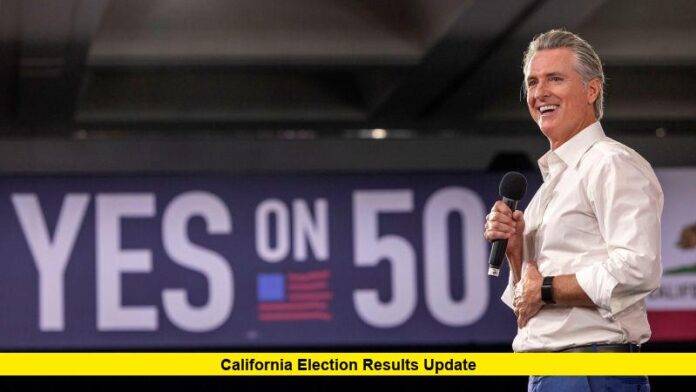
When considering the California election results, the landmark adoption of Proposition 50 stands out as a strategic pivot. Voters across the Golden State decisively approved the measure in the Nov. 4, 2025 special election, endowing the state legislature with the authority to redraw U.S. House maps for the next three cycles. With approximately 63 percent of voters saying “yes,” the outcome signals strong support in urban and suburban regions and sets the stage for major implications in 2026 and beyond.
Table of Contents
What Proposition 50 Does
Under Proposition 50, the state will temporarily replace the current boundaries for California’s congressional districts with new maps drawn by the legislature, beginning with the 2026 election and continuing through 2030. After that, the independent commission system will resume following the next U.S. Census.
- The maps will apply to the 2026, 2028 and 2030 U.S. House elections in California.
- The independent California Citizens Redistricting Commission — which had drawn maps under the prior system — will sit aside for this cycle.
- The measure includes updates to election materials and systems at the county level.
By enabling legislative map-drawing rather than commission-based, the proposition grants lawmakers direct control over how districts will be shaped ahead of crucial midterm elections.
Why the Vote Mattered — Beyond State Lines
The passage of Proposition 50 matters for three principal reasons: political leverage, national balance of power and representation dynamics.
Political Leverage
With the legislature in control of map-making, Democrats now have an opportunity to reshape several competitive districts in regions like Orange County, the Central Valley and the Inland Empire. The campaign projected that up to five Republican-held seats might shift toward Democrats under the new plan. Given that California holds 52 seats in the U.S. House, even a modest shift could reverberate nationally.
Balance of Power in Congress
Control of the U.S. House has often come down to a handful of seats. With Proposition 50’s maps taking effect in the 2026 midterms, California could become a decisive battleground. If Democrats secure more friendly districts here, it boosts their chances of retaking or retaining the House. Conversely, Republicans may see their strategic path narrowed.
Representation & Demographics
California’s population is increasingly diverse, and many voters view congressional representation as a reflection of that diversity. Advocates of the measure argued that giving elected lawmakers — who are accountable to voters — the task of drawing maps is more responsive to communities than a standalone commission. Opponents, however, raised concerns about partisan bias and loss of independence.
How the Vote Broke Down
While full county-by-county data continues to be refined, early trends reveal a clear urban-versus-rural divide, with suburban regions playing a strong role in the outcome.
- Urban coastal hubs such as Los Angeles and the Bay Area delivered commanding support — with percentages in the upper-60s or higher.
- Many suburban and inland regions, historically more moderate, leaned toward approval as well.
- Rural northern and inland counties registered higher opposition, but their turnout and population weights couldn’t offset the urban surge.
- Mail-in ballots comprised nearly 90 percent of the total, reflecting California’s entrenched vote-by-mail system and enabling extended campaign outreach.
This breakdown underscores how demographic shifts and participation methods continue to shape California’s electoral landscape — in this case, in favour of major change rather than maintaining the status quo.
What Happens Next: Timeline & Implementation
Now that Proposition 50 has passed, the real work begins. The following steps will shape how the new maps are drawn and implemented.
Timeline
- Early 2026: State legislators and relevant committees will begin framing processes for map-drawing, public input, and draft boundaries.
- Spring 2026: Public hearings and community input sessions will examine proposed lines, district shapes and demographic impact.
- Mid-2026: Preliminary maps are expected to be released, followed by revisions and legal review.
- Late 2026: Final maps are approved in time for candidate filing deadlines for the 2026 U.S. House elections.
Implementation Considerations
- County election offices will update district lines, polling-place assignments and voter guides to reflect new maps.
- Candidates and campaign strategists must adjust — incumbents may face radically altered constituencies, while challengers may see open opportunities.
- Legal challenges are likely, given that opponents have already flagged concerns about constitutionality, minority representation and process transparency.
The next two years will be critical for how effectively the new map process unfolds—and how voters respond to the changed terrain.
Broader Impacts: National, Political & Strategic
A National Redistricting Shift
California’s move is part of a larger national trend in which states push new boundary maps mid-cycle, often for partisan advantage. With Prop 50, California signals that it will not remain passive while other states shift maps in favour of one party. In effect, this election results story is not just about one state—it’s about how redistricting battles are now league-wide.
Political Strategy and Messaging
For the Democratic Party, the proposition represents a proactive strategy to protect seats, create favorable terrain and set the narrative heading into the 2026 midterms. For Republicans, it presents a target: taking back or defending the five vulnerable districts California will now likely tweak. The political messaging also plays into national themes about democracy, fairness and representation.
Impact on Voters and Representation
With map boundaries redrawn by politicians rather than an independent body, questions of fairness, accountability and transparency come to the fore. Voters in competitive districts or rapidly changing communities may see radical shifts in who represents them and how their voices fit into the new structure. The new maps will also affect campaign dynamics, fundraising flows and community organizing efforts across California.
Risks, Challenges and Points of Contention
While Proposition 50 has passed, the path ahead is not without obstacles. Key challenges include:
- Legal scrutiny: Opponents argue the measure may violate state or federal laws around redistricting, minority representation or process transparency.
- Community backlash: Some voters feel bypassed by the shift away from an independent commission; others fear their community’s voice might be diluted under new lines.
- Operational complexity: Updating maps, educating voters, realigning election infrastructure and preparing for the 2026 election on a new base will tax local and state officials.
- Political volatility: Because the new maps favour one party in the short term, opponents warn of backlash and longer-term shifts in voter sentiment.
These factors mean that while the California election results are clear today, the story will continue to evolve as map-drawing begins and elections approach.
Takeaways for Voters and Analysts
- The landslide passage of the measure underscores how serious voters in California feel about representation and national influence.
- The urban-suburban coalition was decisive — and suggests demographic trends will continue to shape state politics for years.
- For candidates, campaigns and organizations, timing is critical: 2026 will be contested under a new blueprint of districts.
- The results are a reminder that while policy often dominates headlines, structural decisions about maps and representation can have long-lasting effect.
- Observers of U.S. politics should now begin paying attention to California not just for its size but for how it may tip the balance of the House and redefine redistricting strategies for other states.
The California election results—and the passage of Proposition 50—mark a significant turning point. The next decade of congressional representation will be shaped by voters who said yes to change, and lawmakers tasked with delivering it.
If you’ve got thoughts on how Proposition 50 will reshape California’s voice in Congress or what it means for upcoming elections, feel free to comment below or keep tuned for updates.

