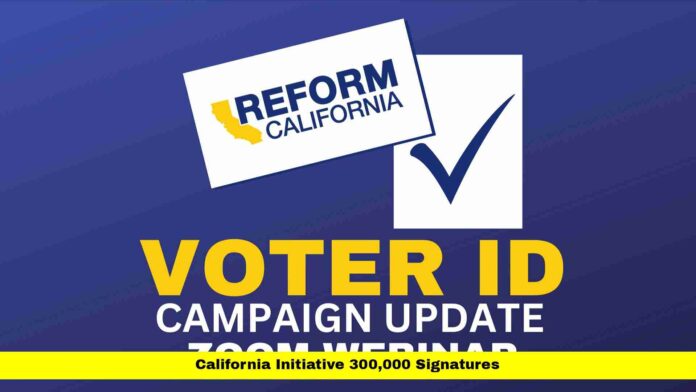
The California initiative 300,000 signatures milestone has been reached as supporters of voter ID reform advance their campaign to amend the state constitution. The measure aims to require voters to present government-issued identification at polling places or provide corresponding information when voting by mail. Collecting 300,000 signatures represents a significant achievement and brings the initiative closer to qualifying for the November 2026 ballot. The campaign has gained momentum across the state, signaling public interest in enhancing election security while also sparking debates about access and equity.
Table of Contents
Overview of the Voter ID Initiative
The California voter ID initiative proposes constitutional changes to strengthen voter verification procedures and reduce concerns about election fraud. Currently, voters provide personal information and attest to their citizenship under penalty of perjury, but no government-issued ID is required in person. The initiative would mandate that voters show a government-issued identification card when casting a ballot in person or submit the last four digits of such an ID for mail-in voting. California would also issue voter identification cards upon request and report annually on verified voter citizenship. Supporters believe these measures will modernize election procedures, improve public confidence in the electoral process, and align the state with other jurisdictions that have successfully implemented voter ID requirements.
Signature Collection and Campaign Momentum
The campaign has now surpassed 300,000 signatures, reaching roughly one-third of the 875,000 valid signatures needed to qualify for the ballot. Organizers have been conducting both in-person and mail-in signature drives, attending community events, and mobilizing volunteers to encourage residents to sign. Outreach includes public awareness campaigns, partnerships with advocacy groups, and targeted efforts in high-population areas. With several months remaining until the March 18, 2026 deadline, the campaign is well-positioned to meet its target. The strong collection rate demonstrates widespread public engagement and interest in the proposed reforms.
Supporters’ Perspective
Supporters of the initiative argue that requiring voter identification is essential for maintaining election integrity and public trust. They emphasize that voter ID laws prevent fraud and ensure that only eligible individuals participate in elections. Advocates also note that the measure could streamline the voting process by verifying voters’ information in advance and reducing discrepancies at the polls. Many supporters view the initiative as a proactive approach to modernizing California’s electoral system while aligning it with states that have successfully implemented similar reforms without limiting participation. They contend that the measure balances security with convenience by allowing the issuance of voter ID cards to those who do not already possess government-issued identification.
Opponents’ Concerns
Opponents of the initiative express concern that stricter voter ID requirements could create barriers for marginalized communities, including low-income residents, seniors, people with disabilities, and those living in rural areas with limited access to government offices. Critics argue that the measure risks disenfranchising eligible voters who face challenges in obtaining identification or providing the required documentation. Some opponents also contend that voter fraud in California is already extremely rare, and additional requirements could unnecessarily restrict access to the ballot. They advocate for alternative approaches to improve election security, such as enhanced verification technologies and mail-in ballot safeguards, without imposing additional burdens on voters.
Legal and Fiscal Implications
If approved, the initiative would amend the California Constitution, requiring state and local governments to implement voter identification procedures. This would likely involve issuing voter ID cards, verifying citizenship information, and updating election administration systems. The fiscal impact could include one-time costs for producing IDs and training staff, as well as ongoing expenses for maintaining the new procedures. Estimates suggest these costs could range from tens of millions to over a hundred million dollars annually. Election officials would need to plan for these changes carefully, balancing the goals of the initiative with available resources and ensuring accessibility for all voters. The implementation of the measure would also require clear guidelines to avoid confusion at polling places.
Timeline and Next Steps
Proponents have until March 18, 2026, to gather the remaining signatures to qualify for the November 2026 ballot. Once enough valid signatures are submitted, the Secretary of State will verify the petitions. If certified, voters will have the opportunity to approve or reject the constitutional amendment during the general election. The campaign continues to focus on outreach and education, emphasizing the importance of public participation. Organizers are strategically targeting high-population counties and communities with historically low voter turnout to maximize engagement. The coming months will be critical in achieving the signature threshold and moving the initiative forward.
Potential Impact on California Elections
If passed, the initiative could reshape how elections are conducted in California. Requiring government-issued identification may enhance voter confidence and reduce concerns about fraudulent voting. However, it could also influence participation rates among vulnerable populations who face challenges in obtaining identification. Election officials would need to implement public education campaigns, ensure widespread availability of voter ID cards, and adapt polling procedures to accommodate the new requirements. The measure could also serve as a model for other states considering voter ID reforms, impacting the broader national discussion about election security and accessibility.
Political and Social Implications
The initiative has sparked significant debate across political and social lines. Supporters frame it as a measure to protect election integrity, while opponents highlight the potential for disenfranchisement. The discussion touches on broader issues of trust in government, civic engagement, and the balance between security and accessibility. Lawmakers, advocacy groups, and community organizations are closely monitoring the campaign and preparing strategies for both support and opposition. Public opinion and grassroots mobilization will play a decisive role in determining whether the initiative ultimately qualifies for the ballot and gains voter approval.
Community Engagement and Public Awareness
A major factor in the initiative’s progress has been active community engagement. Campaign organizers are holding events, informational sessions, and voter education workshops to explain the measure’s provisions and benefits. Volunteers are reaching out to neighborhoods statewide to gather signatures and raise awareness. Social media and digital campaigns are being used to inform residents about the initiative and encourage participation. By engaging communities directly, organizers hope to foster broader public understanding and support for voter ID reforms, ensuring that citizens are informed before deciding in the 2026 election.
Conclusion
The California initiative 300,000 signatures milestone marks a significant step in the effort to reform voter ID requirements. With the campaign actively mobilizing volunteers and supporters, the initiative is on track to qualify for the November 2026 ballot. The debate around the measure highlights the balance between election security and voter accessibility, emphasizing the importance of informed civic participation. As the initiative continues to gather signatures and public attention, the outcome could have lasting effects on California’s electoral system and serve as a reference for other states considering similar reforms. Residents are encouraged to stay engaged, learn about the initiative, and participate in shaping the future of voting in California.

