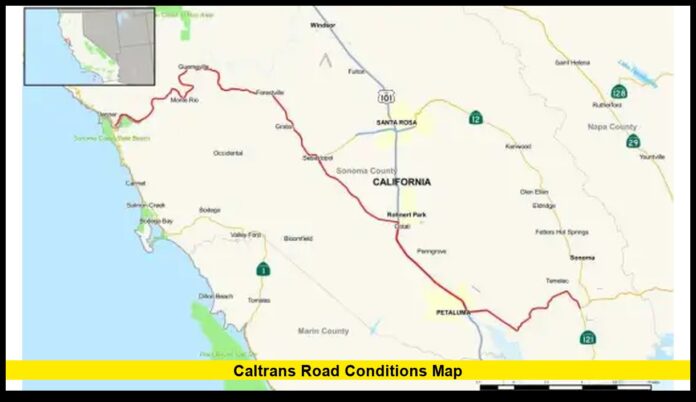
The Caltrans road conditions map remains California’s primary official tool for checking highway closures, chain controls, traffic incidents, and construction updates in 2026. Operated by the California Department of Transportation (Caltrans), the interactive online map provides real-time data covering state highways and interstates across all 12 Caltrans districts. Drivers across the United States, especially those traveling through California, rely on this system for accurate and up-to-date roadway information.
With extreme weather events, wildfire activity, and heavy commuter traffic affecting California highways year-round, access to official road condition data plays a critical role in travel planning and public safety.
Table of Contents
What Is the Caltrans Road Conditions Map?
The Caltrans road conditions map is an online, interactive platform that displays live roadway information across California’s state highway system. It integrates data from traffic management centers, highway sensors, field crews, and law enforcement reports.
The system provides updates for:
- Road closures
- Lane restrictions
- Traffic collisions
- Construction zones
- Chain controls
- Weather advisories
- Highway message signs
Caltrans maintains the platform through its official QuickMap portal, accessible via desktop and mobile devices.
QuickMap: The Official Platform
Caltrans QuickMap serves as the public-facing interface for the state’s transportation data. The map allows users to zoom into specific highways, regions, or districts.
Key features include:
- Color-coded traffic speeds
- Real-time incident icons
- CHP incident overlays
- Snow plow locations in mountain regions
- Chain control alerts
- Camera feeds from highway monitoring systems
QuickMap updates continuously as new information becomes available from traffic management centers.
California drivers frequently check the Caltrans road conditions map before traveling through mountain passes such as Donner Pass on Interstate 80 or the Grapevine section of Interstate 5.
Coverage Across All Major Highways
The Caltrans road conditions map covers the entire California State Highway System. That includes:
- Interstates such as I-5, I-80, I-15, and I-405
- U.S. Routes such as US-101 and US-395
- State Routes including SR-1 (Pacific Coast Highway) and SR-99
Each Caltrans district provides region-specific updates. California is divided into 12 districts, covering areas from the Oregon border to San Diego.
For out-of-state travelers, this centralized system offers a reliable way to track conditions before entering California.
Real-Time Traffic and Incident Reporting
One of the most used features of the Caltrans road conditions map is live traffic flow data. The map displays congestion levels using color indicators:
- Green: Free-flowing traffic
- Yellow: Moderate delays
- Red: Heavy congestion
Drivers can click incident icons to see details such as location, lane impact, and estimated clearance times.
The map also integrates California Highway Patrol (CHP) reports. This connection improves accuracy and speed of updates.
Chain Controls and Winter Travel Alerts
Winter weather significantly impacts California’s mountain highways. Snow and ice frequently affect routes in the Sierra Nevada and other high-elevation areas.
The Caltrans road conditions map displays chain control requirements in real time. It identifies:
- R1: Chains required on certain vehicles
- R2: Chains required on most vehicles except four-wheel drive with snow tires
- R3: Chains required on all vehicles
Caltrans crews post updates as conditions change. Snow plow tracking allows users to see active clearing operations in affected regions.
Travelers heading to ski destinations such as Lake Tahoe regularly rely on this information.
Construction and Maintenance Updates
Caltrans oversees thousands of miles of roadway. Ongoing maintenance and infrastructure projects can affect traffic patterns.
The map includes:
- Scheduled lane closures
- Long-term construction zones
- Emergency repair areas
- Bridge maintenance alerts
Users can filter the display to view only construction-related data. This function helps commuters avoid work zones during peak hours.
California’s investment in infrastructure has increased construction activity across major corridors. The map helps drivers navigate those changes.
Wildfire and Emergency Closures
Wildfire seasons have intensified in recent years. Smoke, active fire zones, and emergency evacuations often lead to sudden highway closures.
The Caltrans road conditions map provides immediate alerts when fires affect state highways. Closure notices include detour information when available.
During emergency situations, Caltrans coordinates with local agencies to ensure consistent public communication.
This rapid response capability makes the map a critical safety tool.
Integration With Other Caltrans Resources
In addition to QuickMap, Caltrans offers related tools:
- Road Information Hotline (1-800-427-ROAD)
- District-specific Twitter/X accounts
- Changeable Message Signs (CMS) on highways
- Highway condition phone services
QuickMap remains the most comprehensive visual resource, but these supplemental tools support drivers without internet access.
Mobile Access and User Experience
The Caltrans road conditions map works on smartphones and tablets. The interface allows pinch-to-zoom functionality and location tracking.
Drivers can enable specific overlays, including:
- Traffic speed
- Incidents
- Chain controls
- Cameras
- Lane closures
The map’s design prioritizes clarity and efficiency. Information updates dynamically without requiring page refreshes.
California residents often bookmark the QuickMap page for daily commuting needs.
Why the Map Matters for U.S. Travelers
California hosts millions of interstate travelers annually. Tourists driving along the Pacific Coast Highway or heading to national parks often cross multiple climate zones in a single day.
The Caltrans road conditions map provides a single source for official information. This consistency reduces confusion when navigating diverse terrain.
Truck drivers, delivery services, and commercial fleets also rely heavily on accurate highway data.
How Caltrans Collects Data
Caltrans gathers information through:
- Traffic sensors embedded in roadways
- Field maintenance crews
- CHP incident reporting
- Weather monitoring stations
- Traffic cameras
District traffic management centers analyze incoming data before publishing updates.
This coordinated system ensures timely and verified reporting.
Key Benefits of Using the Caltrans Road Conditions Map
| Feature | Benefit |
|---|---|
| Real-time updates | Immediate awareness of closures |
| Chain control alerts | Safer winter travel planning |
| Camera feeds | Visual confirmation of conditions |
| Traffic speed data | Efficient route selection |
| Construction notices | Reduced commute disruptions |
These features support safer decision-making for both short trips and long-distance travel.
Accessibility and Public Transparency
Caltrans provides free access to the map without requiring registration. The agency promotes transparency by publishing highway data openly.
This approach aligns with California’s broader transportation modernization goals.
Public trust in the map stems from its official status and consistent updates.
Continued Importance in 2026
As of 2026, the Caltrans road conditions map remains fully operational and central to California’s transportation information system. Increased weather variability and ongoing infrastructure projects have only strengthened its importance.
Whether navigating snow-covered passes, wildfire-prone regions, or urban congestion, drivers turn to this official tool for clarity.
The map supports public safety, efficient travel, and informed planning across the state’s vast highway network.
Have you used the Caltrans road conditions map before a road trip? Share your experience and stay informed before your next drive.

