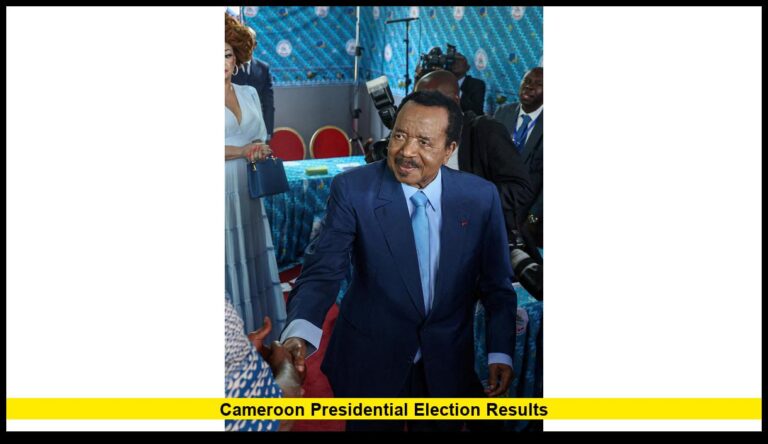
The Cameroon presidential election results were officially announced on October 27, 2025, with incumbent President Paul Biya declared the winner of the vote held on October 12. He received 53.66 % of the vote, marking the beginning of his eighth term in office.
Table of Contents
Background: The Election and Stakes
The presidential poll in Cameroon took place on Sunday, October 12, with voting conducted nationwide. Biya, who first assumed the presidency in 1982 and has led the country for more than four decades, was running for an unprecedented eighth term. His main challenger was Issa Tchiroma Bakary, a former government minister who broke ranks with Biya’s ruling party earlier in the year and built a coalition challenging the long-standing status quo.
Turnout was reported at approximately 57.7 %. The vote was watched closely by international observers, analysts and the U.S. audience because of its implications for governance, youth disenchantment and regional stability in Africa.
Key Figures & Official Results
Here are the headline numbers:
| Candidate | Official Vote % |
|---|---|
| Paul Biya | 53.66 % |
| Issa Tchiroma Bakary | 35.19 % |
The country’s highest judicial body, the Constitutional Council of Cameroon, validated the results and dismissed all legal petitions filed by opposition candidates challenging the vote.
Opposition Claims and Contestation
Despite the official outcome, Issa Tchiroma Bakary and his team rejected the results. Early after the vote, they claimed victory based on their internal tally and called on Biya to concede. They also alleged electoral fraud, irregularities in the voter list and the manipulation of results.
Meanwhile, protests erupted across cities such as the economic hub of Douala and the northern city of Garoua. At least four people were killed in clashes between security forces and opposition supporters. This unrest underscores the depth of dissatisfaction among segments of the population—and particularly among younger voters.
Why the Results Matter to U.S. Readers
- Longevity of Leadership – Biya’s re-election underscores his deeply entrenched power in Cameroon, making him one of Africa’s longest-serving heads of state.
- Youth & Reform Pressure – With more than 70% of Cameroonians under age 35, the election highlighted a generational divide. Many call for meaningful reform and better governance.
- Regional Stability – Cameroon holds strategic importance to the U.S. and its allies in West and Central Africa, especially in counter-terrorism efforts and regional logistics. Political turbulence or weak legitimacy could impact stability in a region already challenged by insurgency and governance issues.
- Democracy & Governance Signals – The questions raised about electoral transparency, opposition suppression and civil unrest send signals about governance norms that matter to U.S. foreign policy and civil-society watchers.
What’s Next?
- Domestic response – While the Constitutional Council confirmed the results, opposition parties have warned of ongoing protests and called for broader dialogue. Security forces remain deployed across major cities.
- International reaction – Some Western embassies reportedly skipped the formal results announcement; meanwhile, other countries maintained representation, highlighting global divisions over the legitimacy of the process.
- Governance and Reform – Biya begins a seven-year term which, if completed, would carry him into his late 90s. Many analysts suggest that fresh policy direction or institutional reform will remain elusive in the near term unless internal or external pressure mounts.
- Opposition Strategy – Tchiroma’s coalition is signalling that it will pursue both street mobilization and legal strategies. The next few months will test whether the opposition can convert mobilization into tangible political leverage.
- U.S. Policy Considerations – American policymakers will be tracking human rights concerns, the behaviour of security forces, and electoral credibility. Aid, partnerships and diplomatic posture may adjust depending on how the Biya administration responds to calls for transparency.
Key Takeaways for U.S. Audience
- The official Cameroon presidential election results show Paul Biya winning 53.66 % of the vote and securing another term.
- The election was contested, with the opposition rejecting the result and protests resulting in fatalities.
- The outcome matters beyond Cameroon: for youth representation, regional security, governance norms and U.S. strategic interests in the region.
- Watch for how the Biya government addresses—or fails to address—calls for reform, accountability and credible institutions.
We welcome your thoughts on what these results mean for Cameroon’s future and for U.S. engagement with Africa—feel free to share your views below.