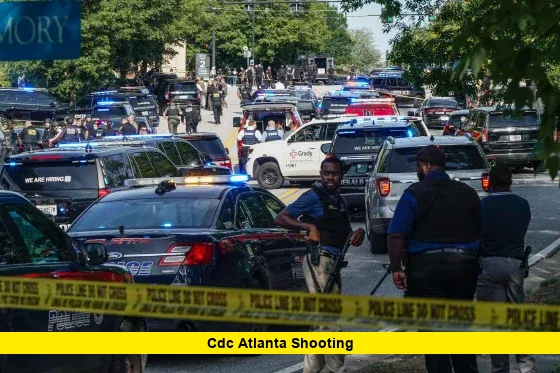
The CDC Atlanta shooting has shocked the nation, bringing to light deep concerns over public safety, mental health, and misinformation. Authorities confirmed that the suspected gunman, identified as Patrick Joseph White, 30, carried out the attack near the Centers for Disease Control and Prevention (CDC) headquarters in Georgia. White believed the COVID-19 vaccine had caused his depression and suicidal thoughts, a claim now fueling heated debate.
The incident left DeKalb County police officer David Rose dead and resulted in significant property damage to multiple CDC buildings. The tragedy has prompted an urgent response from both law enforcement and the CDC employees’ union.
Table of Contents
Shooter’s Motive and Timeline of Events
Investigators revealed that White traveled to the CDC complex with firearms, attempting to enter the premises. After being stopped by security, he began firing from nearby locations, hitting at least four CDC buildings before moving to a local pharmacy, where the confrontation ended with his death.
Key details from the investigation indicate:
- White discharged over 40 rounds from multiple weapons.
- Officer David Rose was fatally shot while responding to the threat.
- Several CDC buildings sustained visible bullet damage.
- The shooting unfolded within minutes, creating chaos and fear among staff.
Key Points Summary 📝
- Suspect: Patrick Joseph White, 30, from Kennesaw, Georgia
- Motive: Claimed COVID-19 vaccine caused depression and suicidal thoughts
- Fatalities: One police officer and the shooter
- Damage: Multiple CDC buildings hit by gunfire
- Union Response: Calls for condemnation of vaccine misinformation and improved security
Union Calls for Action and Accountability
The American Federation of Government Employees Local 2883, representing CDC staff, issued a strong statement following the shooting. The union condemned the violence and demanded that federal officials directly address and debunk misinformation about vaccines—pointing out that false claims can inspire hostility toward scientists and public health workers.
Union leaders also urged:
- Enhanced physical security measures around CDC facilities
- Psychological counseling for employees affected by the shooting
- Clear public messaging to counter harmful vaccine myths
The incident has reignited debates about how misinformation spreads and the dangers it poses when combined with personal mental health struggles.
A Workplace Under Siege
For many CDC employees, the shooting was not only a physical threat but also an emotional blow. They have faced years of intense public scrutiny and online harassment related to pandemic policies. Now, the violence at their own doorstep has intensified fears about workplace safety.
Advocates argue that addressing misinformation is as vital as enhancing security. Mistrust in public health agencies, when amplified by false narratives, can lead to real-world violence—a reality now painfully clear in Atlanta.
Moving Forward
As the investigation continues, questions remain about how White’s mental health struggles were addressed and whether intervention could have prevented the tragedy. Law enforcement, public health officials, and community leaders now face the challenge of ensuring such an event does not happen again.
This shooting stands as a grim reminder: misinformation has consequences, and protecting those who protect public health must be a top priority.
Communities will watch closely to see how leaders respond—both in safeguarding facilities like the CDC and in ensuring public discourse is grounded in truth.

