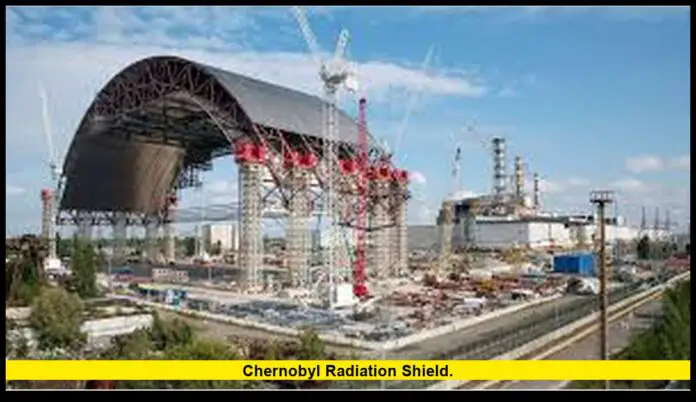
The Chernobyl radiation shield has become the focus of renewed global attention after international nuclear inspectors confirmed that the massive protective structure built to enclose the destroyed Reactor 4 is no longer performing its full containment function. The finding has intensified concerns about long-term safety at one of the world’s most closely monitored nuclear sites.
Damage to the structure earlier this year and ongoing deterioration have weakened parts of the New Safe Confinement, the giant steel arch installed to secure radioactive debris and support decades of decommissioning work. While monitoring systems remain active and no uncontrolled radiation release has been detected, experts are urging rapid repairs to prevent further degradation.
Table of Contents
Inspectors Report Significant Compromise to Containment
International inspectors recently completed a comprehensive on-site review and determined that the arch’s ability to contain radioactive materials has been reduced. Structural components remain standing, and electronic monitoring continues to function, but the outer shell and insulation layers show damage that requires immediate, large-scale restoration.
The assessment noted that temporary fixes made earlier in the year helped stabilize the structure but did not restore its core safety functions. Inspectors emphasized that maintaining strong confinement is essential to protecting workers, the surrounding environment, and the progress of ongoing decommissioning.
Why This Matters Now
The New Safe Confinement was engineered to last at least a century, serving as a barrier between the reactor’s remnants and the outside environment. It also provides the controlled space needed to dismantle the unstable 1986-era sarcophagus and manage radioactive debris safely.
With the structure’s confinement capabilities weakened, the long-term strategy for cleaning and securing the site faces new challenges. Although radiation readings remain within expected ranges, the loss of full containment raises the stakes for timely repairs.
How the Structural Damage Occurred
Investigators confirmed that the initial damage occurred earlier this year when a drone carrying an explosive device struck the outer layer of the shelter. The impact caused burning along insulation materials and left sections of the northern side compromised.
Emergency response teams applied localized repairs shortly after the incident. However, later inspection revealed that these measures were not enough to reestablish long-term stability or restore the full protective integrity of the arch. The internal containment layer was not penetrated, but the weakened external shell increases the risk of future deterioration.
Radiation Monitoring Remains Stable
Despite the structural issues, radiation monitoring systems continue to show readings within normal site expectations. On-site sensors, dosimeters, and automated monitoring networks remain operational and have not detected any sudden spikes or unusual contamination levels.
Inspectors recommended enhanced moisture control and corrosion surveillance to prevent further weakening of the arch, especially during the upcoming repair phase. Maintaining stable environmental conditions inside the shelter is critical to preventing radioactive dust from mobilizing.
Global Response and Repair Planning
International safety organizations are now working with local authorities to coordinate a detailed restoration plan. Funding discussions are underway to support a repair effort that is expected to be extensive, technically complex, and carefully staged to avoid disturbing radioactive debris.
Engineers will need to reinforce the damaged segments, replace compromised insulation, and review load-bearing components to ensure the structure regains its intended level of protection. Experts caution that rushing the process could create additional risks, making meticulous planning essential.
Impact on Decommissioning Efforts
The New Safe Confinement has allowed specialists to begin dismantling the older sarcophagus and access radioactive materials safely. A weakened shelter, however, complicates this work. Heavy equipment operations, waste removal, and structural modifications must all be reevaluated to ensure safety during the repair period.
Decommissioning timelines may need to be extended, and additional safety protocols are expected to be introduced. Although this may increase costs and slow progress, ensuring stable containment remains the overriding priority.
Environmental and Public Health Outlook
Authorities stress that there is currently no evidence of heightened radiation exposure for nearby communities or workers. Monitoring networks remain robust, and protective procedures at the site continue as normal.
Even so, the shelter’s reduced functionality underscores the importance of completing repairs quickly. Maintaining a tight seal around Reactor 4 is essential for minimizing dust movement, moisture intrusion, and potential long-term environmental impacts.
What Happens Next
Technical teams are preparing for a full restoration effort that will likely unfold in phases. The work will include structural reinforcement, new insulation systems, improved sealing, and upgrades to ensure the arch returns to its intended performance level.
International partners are expected to play a major role in financing, engineering support, and oversight. A refined repair timetable is anticipated in the coming months, with safety planning already underway.
What U.S. Readers Should Know
For audiences in the United States, the current situation presents no direct radiological threat, but it remains significant from a global nuclear-safety perspective. The New Safe Confinement is one of the most ambitious engineering projects ever undertaken to manage nuclear disaster fallout. Any compromise to its integrity warrants close attention from governments, environmental agencies, and safety organizations around the world.
Continued cooperation, transparent monitoring, and well-funded restoration efforts will determine how effectively the site’s long-term safety can be preserved.

