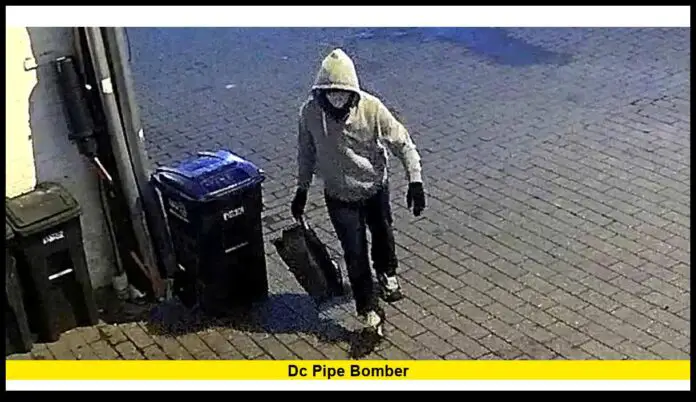
The dc pipe bomber case reached a turning point today as federal authorities announced the arrest of a suspect tied to the pipe bombs placed outside the Democratic National Committee and Republican National Committee headquarters on January 5, 2021. This major development ends nearly five years of unanswered questions surrounding one of the most alarming security threats connected to the events that unfolded around January 6. The arrest provides long-awaited progress in a case that has remained at the forefront of public concern and national security discussions.
Federal agents confirmed that a 30-year-old man from Virginia was taken into custody during a pre-dawn operation. He is expected to face charges in Washington, D.C. following his transfer to federal court. The announcement marks a significant moment for investigators who have spent years gathering video footage, conducting interviews, and analyzing evidence in what became one of the longest-running domestic terrorism investigations in modern U.S. history.
Table of Contents
A Threat That Shaped a Historic Day
The pipe bombs discovered on January 6, 2021, were found just hours after the Capitol came under attack. Both devices were planted the night before, within a tight window of time. One was placed outside the DNC headquarters, while the other was positioned near the RNC headquarters. Although neither bomb detonated, authorities repeatedly stated that both were viable and capable of causing severe harm.
The timing of the devices created immediate concerns that they may have been intended to divert law enforcement resources. The discovery forced emergency personnel to split attention on a day of unprecedented national turmoil. The evacuation of nearby buildings and the deployment of bomb technicians added pressure as violent events unfolded at the Capitol.
For years, questions persisted about motive, planning, and whether the individual acted alone. The arrest brings investigators one step closer to understanding the broader context of the threat.
Inside the Investigation That Stretched Nearly Five Years
The case surrounding the pipe bombs became one of the FBI’s top priorities. Investigators faced a series of challenges early on, including limited visibility in initial footage, the suspect’s covered face, and the absence of clear identifying features. The operation required extensive national coordination, involving multiple federal and local agencies.
Key challenges included:
- Low-quality early surveillance footage that offered limited details.
- The bomber’s use of consistent masking and gloves.
- The need to review more than 39,000 hours of video from neighborhoods, businesses, and transportation corridors.
- Over 1,000 interviews conducted across multiple states.
- More than 600 public tips that required extensive follow-up.
- Forensic testing on the bomb components, timers, powder, and steel piping.
- Nationwide outreach for information, including a large reward.
Despite the formidable amount of legwork, investigators continued to make slow but steady progress. Renewed attention came after enhanced surveillance footage was released months before the arrest. The clearer video highlighted the suspect’s route, mannerisms, and clothing details, including the shoes worn while placing both devices.
That development reinvigorated public interest and reportedly provided investigators with new pathways to explore. By late 2025, the investigation had gained momentum, culminating in the coordinated arrest operation executed in Virginia.
What Led to the Arrest?
Though authorities have not publicly detailed all the evidence leading to the suspect’s arrest, several key factors are believed to have played important roles:
- Enhanced surveillance footage released earlier this year.
- Improved clarity on the suspect’s path between the two headquarters.
- Distinctive shoes seen in the footage, which assisted in narrowing down potential suspects.
- Follow-up on renewed tips generated after the public release of video updates.
- Additional forensic and digital evidence examined during the later phase of the investigation.
The suspect’s name and specific charges will become available when documents are formally filed in federal court.
The Devices: A Clear Intent to Cause Harm
Bomb technicians later confirmed that each device contained a steel pipe, black powder, end caps, and a timed ignition system constructed with kitchen timers. Though neither bomb exploded, the components were operational. Officials stated that either device could have caused serious injury or death.
The design of the bombs showed careful preparation and deliberate construction. Analysis of the materials helped narrow down potential sources for some components, though many parts were commonly available.
Both bombs were set to trigger at roughly the same time, suggesting the placement of the devices was not random. Their proximity to political party headquarters raised immediate concerns about motive and whether a larger plot was intended.
How the Bombs Affected the January 6 Timeline
The discovery of the bombs created a significant diversion for law enforcement on a day already marked by extraordinary challenges. Officers responded to each location, evacuated buildings, and conducted controlled disarmament procedures. These incidents redirected personnel who were also responsible for monitoring the Capitol, where thousands of people were gathering.
While it remains unclear whether the bombs were explicitly designed to pull resources from the Capitol grounds, the timing undeniably amplified the danger and confusion of the day. The arrest may soon reveal whether the suspect chose the date intentionally or whether the timing coincided with larger events by chance.
Why the Arrest Is a Major Moment for Federal Investigators
This case stands out as one of the most persistent challenges faced by federal law enforcement in the aftermath of January 6. The arrest:
- Brings closure to one of the most high-stakes domestic threat cases in recent U.S. history.
- Validates years of meticulous investigative work across multiple agencies.
- Demonstrates that even well-planned attempts to conceal identity can eventually be uncovered with advancing technology and sustained effort.
- May help clarify whether any coordination existed with broader events surrounding January 6.
- Restores a measure of public confidence in long-running federal investigations.
For many Americans, the unsolved nature of the case had become a symbol of lingering vulnerability. Today’s development will reshape public discussion and may help answer unanswered questions.
Remaining Questions After the Arrest
While the arrest marks a critical moment, many questions remain:
Unresolved points include:
- The suspect’s motive for targeting political headquarters.
- Whether the actions were politically driven, personal, or connected to broader events.
- Whether the suspect acted alone or received assistance.
- The source of materials and how long the devices were in development.
- Any digital or communication evidence that links the suspect to planning activity.
- The timeline between the planting of the bombs and the suspect’s later movements.
- Whether additional evidence will emerge during the search of residences or devices.
Court documents expected later this week may begin to address many of these issues.
Impact on National Security and Public Trust
The use of explosives near major political party headquarters represents one of the most significant domestic security breaches in modern history. Even though the bombs did not detonate, their placement demonstrated vulnerabilities in urban areas with heavy security.
The arrest may influence how federal agencies evaluate threats during large political events. Enhanced surveillance strategies, technology upgrades, and community reporting protocols have already been strengthened since 2021.
Public trust, shaken by the length of the investigation, may begin to stabilize as more information emerges. The case also demonstrates the importance of public tips, technological improvements, and persistence in solving complex threats.
What Happens Next
With the suspect now in custody, several next steps are expected:
- Formal charges will likely be filed in Washington, D.C., detailing the specific counts related to possession and placement of explosive devices.
- A detention hearing will determine whether the suspect remains in custody during trial.
- Additional evidence, including new surveillance footage, may be released publicly.
- Investigators may continue searching for any accomplices or persons of interest.
- Legal proceedings will move forward, providing a clearer picture of the lead-up to the incident.
The coming weeks will be crucial as prosecutors outline the full case and additional documents become available.
Conclusion
The arrest in the nearly five-year investigation into the dc pipe bomber marks a defining moment in resolving one of the most unsettling threats linked to January 6. The development not only offers long-awaited answers but also renews public trust in the persistence and dedication of investigators. As charges are filed and more details emerge, Americans will continue watching for clarity on motive, planning, and accountability surrounding this critical case.
If you have thoughts on today’s major development or questions you hope the investigation will answer next, feel free to share your perspective below.

