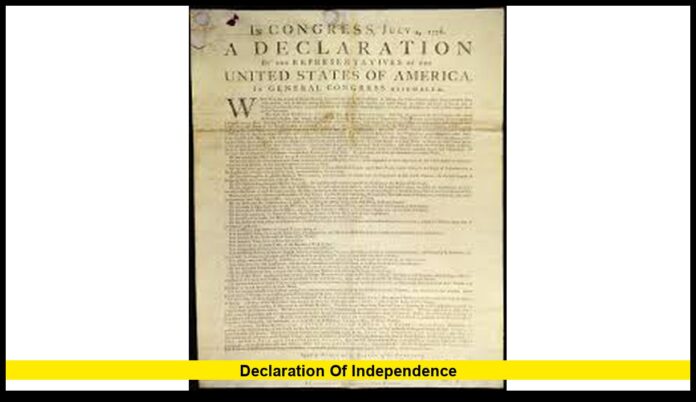
The declaration of independence stands as one of the most influential documents in American history, continuing to shape national identity, civic values, and public debate in the United States today. Nearly two and a half centuries after its adoption, the document remains central to how Americans understand freedom, equality, and the purpose of government.
In the present day, the declaration is not only preserved as a historical artifact but also actively referenced in education, public ceremonies, political rhetoric, and cultural discussions. Its language, ideals, and legacy continue to inform conversations about rights and responsibilities in modern American society.
Table of Contents
Historical Context Behind the Declaration of Independence
The declaration of independence emerged from a period of deep political conflict between the American colonies and British rule. Tensions had escalated over taxation, representation, and governance, leading to widespread dissatisfaction among colonial leaders and citizens.
By the mid-1770s, efforts to resolve these disputes had failed. Armed conflict had already begun, and many colonial leaders believed separation was the only viable path forward. The declaration formalized that decision and communicated it to both domestic and international audiences.
This document was not written impulsively. It reflected years of political thought, philosophical debate, and lived experience under imperial authority. The ideas within it drew heavily from Enlightenment principles that emphasized natural rights and the consent of the governed.
Drafting and Approval Process
The drafting of the declaration of independence involved careful deliberation and collaboration. A committee was tasked with producing a clear and persuasive document that would justify the colonies’ decision to separate from British rule.
The initial draft went through multiple revisions. Language was refined to ensure clarity, strength, and unity. Some passages were removed or altered to maintain consensus among the colonies, each of which had distinct political and economic interests.
Once finalized, the document was formally approved by representatives of the colonies. This approval marked a decisive and irreversible step toward the creation of an independent nation.
Core Principles Expressed in the Declaration
At its heart, the declaration of independence articulates a set of principles that define the American political tradition. These ideas continue to resonate today.
Key concepts include:
- The belief that all people are born with inherent rights
- The idea that governments exist to protect those rights
- The assertion that political authority comes from the consent of the people
- The right of the people to alter or abolish unjust government
These principles established a moral framework that extended far beyond the immediate political crisis of the eighteenth century.
Structure and Purpose of the Document
The declaration of independence is carefully structured to support its purpose. It opens with a statement explaining why the colonies are compelled to declare independence. This introduction sets the tone for the arguments that follow.
The document then outlines fundamental political principles. These ideas serve as the philosophical foundation for the decision to separate.
Next, it presents a detailed list of grievances. These grievances describe actions taken by the British government that the colonies viewed as abuses of power.
The declaration concludes with a formal assertion of independence, stating that the colonies are free and independent states with full authority to govern themselves.
Public Reaction at the Time of Adoption
When the declaration of independence was first made public, reactions varied widely. In many areas, public readings were met with celebration, bell ringing, and expressions of support.
However, the decision also carried significant risks. Declaring independence was an act of treason under British law. Those who signed the document faced the possibility of severe punishment if the effort failed.
Despite these dangers, the declaration helped unify the colonies around a shared purpose. It provided a clear statement of intent and a rallying point for continued resistance.
Role During the Revolutionary War
Throughout the Revolutionary War, the declaration of independence served as a powerful symbol. It reminded soldiers and civilians alike of the principles for which they were fighting.
The document also played a diplomatic role. By declaring independence, the colonies positioned themselves as a sovereign entity capable of forming alliances. This status proved critical in securing international support.
The declaration reinforced morale during difficult periods of the war. Its language emphasized sacrifice, perseverance, and commitment to a greater cause.
Preservation of the Original Document
Today, the original declaration of independence is carefully preserved to protect it from environmental damage. Conservation techniques have evolved significantly, allowing the document to remain stable despite its age.
Protective measures include controlled lighting, regulated temperature, and limited physical handling. These steps ensure that the document can be displayed while minimizing deterioration.
Preservation is not merely about safeguarding paper and ink. It represents a commitment to maintaining access to a foundational piece of national history.
The Declaration’s Influence on American Government
While the declaration of independence is not a governing law, it has profoundly influenced the development of American political institutions. Its ideas helped shape later foundational texts and guided early leaders as they formed new systems of government.
The declaration established expectations about accountability and legitimacy. It set standards by which government actions could be judged, even though it did not provide specific legal mechanisms.
Over time, its principles have been invoked to support arguments for expanded rights and reforms within the political system.
Impact on Civil Rights Movements
Throughout American history, the declaration of independence has played a central role in civil rights advocacy. Activists have repeatedly pointed to its assertion of equality to highlight contradictions between national ideals and lived realities.
Movements seeking the abolition of slavery, the expansion of voting rights, and equal treatment under the law have all drawn upon the declaration’s language. Its universal claims provided a moral foundation for demands for justice.
These efforts demonstrate how the declaration’s meaning has evolved as different groups have sought inclusion within its promises.
Educational Importance in the United States
The declaration of independence remains a cornerstone of American education. Students encounter the document at multiple stages of their academic journey, from elementary school through higher education.
Educators emphasize both its historical context and its enduring relevance. Lessons often explore the tension between ideals and practice, encouraging critical thinking about democracy.
Modern educational approaches also highlight voices and perspectives that were excluded at the time of the declaration’s adoption, providing a more complete understanding of its impact.
Public Ceremonies and National Traditions
Every year, the declaration of independence is celebrated through public ceremonies, particularly on Independence Day. Readings, reenactments, and educational programs bring the document to life for new generations.
These traditions reinforce a shared sense of national identity. They also provide opportunities for reflection on how well the nation has lived up to the declaration’s principles.
Public engagement ensures that the document remains relevant rather than confined to history books.
Language and Rhetorical Power
One reason the declaration of independence has endured is its language. The writing is direct, persuasive, and emotionally resonant.
Its phrasing balances philosophical abstraction with concrete accusations. This combination makes the document both intellectually compelling and accessible to a broad audience.
The rhetorical power of the declaration has influenced countless speeches, essays, and political writings throughout American history.
Common Misunderstandings
Despite its prominence, the declaration of independence is often misunderstood. Some assume it created the federal government, which it did not. Others believe it immediately granted rights to all people, which was not the case.
Clarifying these misconceptions is essential for informed civic understanding. The declaration expressed ideals and intentions, but implementation required ongoing struggle and reform.
Recognizing its limitations does not diminish its importance. Instead, it highlights the work required to realize its promises.
Cultural Representation and Popular Media
The declaration of independence appears frequently in popular culture. Films, literature, and visual art often reference its symbolism to convey themes of freedom and resistance.
These portrayals vary in tone, ranging from reverent to critical. Together, they demonstrate how deeply embedded the document is in the national imagination.
Cultural representation helps keep the declaration relevant, even as interpretations continue to evolve.
Modern Political Discourse
In contemporary politics, the declaration of independence is often cited to support arguments across the ideological spectrum. Its broad language allows for multiple interpretations.
Politicians and commentators reference its principles when discussing government authority, individual rights, and national values. These references underscore the document’s continued influence.
Debate over its meaning reflects the dynamic nature of democracy itself.
International Significance
The declaration of independence also holds global importance. Its ideas influenced independence movements and constitutional developments in other countries.
By asserting the right of people to govern themselves, the document contributed to broader conversations about sovereignty and human rights.
Its international legacy demonstrates the power of ideas to cross borders and shape history.
Digital Access and Public Engagement Today
Advances in technology have expanded access to the declaration of independence. Digital reproductions allow people to study the text in detail from anywhere in the country.
Interactive platforms and virtual exhibits have increased public engagement. These tools help connect historical content with modern audiences.
Digital access ensures that the declaration remains part of everyday civic life rather than a distant artifact.
Why the Declaration Still Matters
The declaration of independence matters because it articulates values that remain central to the American experiment. Its principles continue to challenge citizens and leaders alike.
The document asks enduring questions about power, justice, and responsibility. Each generation must grapple with how to apply its ideals to contemporary circumstances.
Its relevance lies not in perfection but in aspiration.
Ongoing Debates About Interpretation
Interpretation of the declaration of independence is not fixed. Scholars, educators, and citizens continue to debate its meaning and implications.
Some emphasize its universal language, while others focus on its historical limitations. These debates enrich public understanding and keep the document alive in civic discourse.
Engaging with differing interpretations reflects a healthy democratic culture.
The Declaration and National Identity
For many Americans, the declaration of independence is deeply tied to national identity. It represents the moment when the country asserted its right to self-determination.
The document serves as a reference point for what the nation strives to be. It offers a vision that transcends specific policies or political eras.
This symbolic power contributes to its lasting significance.
Future Relevance
As the United States continues to evolve, the declaration of independence will remain a touchstone. Its principles will continue to be invoked in debates about rights, governance, and equality.
Future generations will interpret the document through their own experiences and challenges. That ongoing engagement ensures its continued relevance.
The declaration endures because it invites participation, reflection, and accountability.
The declaration of independence continues to shape the American story—how do you see its principles reflected in today’s United States? Join the conversation and stay connected as this historic document continues to inspire debate and reflection.

