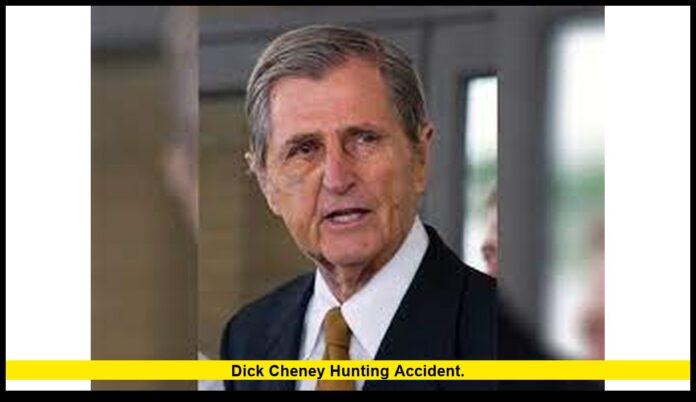
The Dick Cheney hunting accident remains one of the most infamous and unforgettable moments in modern American political history. What began as a quiet quail-hunting trip in South Texas turned into a national controversy involving one of the most powerful vice presidents in U.S. history. Nearly two decades later, the story still resonates—not only for the shocking event itself but for what it revealed about accountability, privilege, and how public figures navigate personal mistakes.
Table of Contents
The Day Everything Changed: February 11, 2006
On February 11, 2006, then–Vice President Dick Cheney was on a private quail-hunting trip at the Armstrong Ranch, located in Kenedy County, Texas. The ranch belonged to a prominent Republican donor family and had hosted political figures for years. Cheney, an experienced hunter, joined several companions for the outing, including Texas attorney Harry Whittington, who was then 78 years old.
As the group tracked a covey of quail, Whittington stepped out of formation to retrieve a downed bird. Moments later, Cheney turned and fired his shotgun toward a rising quail, unaware that Whittington had moved into his line of fire. The blast struck Whittington in the face, neck, and upper torso, embedding dozens of birdshot pellets into his body.
Cheney and others rushed to Whittington’s aid as Secret Service agents and medical personnel called for emergency evacuation. Whittington was airlifted to a nearby hospital in Corpus Christi, where doctors removed pellets and monitored him for cardiac complications caused by one fragment lodged near his heart.
Immediate Aftermath and Public Reaction
Though hunting accidents are not uncommon in Texas, this one involved the sitting Vice President of the United States—and that made it a national event. What followed became a masterclass in political crisis management and media scrutiny.
Cheney did not immediately report the incident to national media. Instead, the story broke more than 12 hours later when the ranch’s owner, Katharine Armstrong, called a local newspaper, the Corpus Christi Caller-Times, to inform them of the shooting.
By the time the national press learned of the incident, speculation had exploded. Why the delay? Was Whittington’s condition being concealed? The White House Press Corps demanded answers, and late-night comedians seized on the moment, turning it into one of the most parodied political stories of the decade.
For many Americans, the Cheney hunting accident became symbolic of the administration’s reputation for secrecy and control.
Harry Whittington’s Recovery and Response
Despite the severity of his injuries, Harry Whittington survived and was released from the hospital several days later. In a remarkable display of grace, he publicly apologized to Cheney, saying he was sorry the accident had caused the Vice President such distress.
Whittington’s response surprised many and effectively diffused immediate political fallout. However, he lived with the aftereffects of the shooting for years. In 2006, he suffered a minor heart attack linked to a birdshot pellet lodged near his heart. He carried fragments in his body for the rest of his life.
Whittington continued his career as a lawyer and civic leader in Texas until his passing in 2023 at age 95.
Why the Cheney Hunting Accident Became a Cultural Flashpoint
The Dick Cheney hunting accident was not just a freak accident—it became a defining media event because of the personalities involved and the way it was handled.
Several factors amplified public attention:
- A Vice President at the center of controversy: Cheney was already a divisive figure due to his influence over Iraq War policy and his reputation for political secrecy.
- Delayed public acknowledgment: The delay in informing the media fueled suspicion that officials were attempting to manage or downplay the story.
- The unusual nature of the event: A vice president accidentally shooting someone during a leisure activity was unprecedented in U.S. political history.
What could have been an unfortunate but private incident instead evolved into a moment of national introspection about transparency, responsibility, and the power dynamics of government officials.
Cheney’s Response: A Rare Public Apology
Dick Cheney eventually took full responsibility for the accident. In a televised interview days later, he told Americans, “It was one of the worst days of my life.” He described feeling immense guilt and sadness over what had happened.
The Vice President also made a point of clarifying that alcohol was not involved—reports later confirmed he had a single beer several hours before the hunt began, which was within legal limits for hunting safety.
Cheney’s acknowledgment of fault and remorse helped temper political fallout, but the incident nonetheless followed him for the remainder of his vice presidency and beyond. It became shorthand for human error at the highest level of power.
Legal and Investigative Outcome
Following the shooting, local authorities launched an investigation. Law enforcement officials interviewed Cheney, Whittington, and other witnesses, concluding that the incident was a “hunting accident” with no criminal intent. Cheney was not charged but received a warning citation for failing to purchase the proper hunting stamp required for bird hunting in Texas.
Despite the official ruling, many critics felt that an ordinary citizen in similar circumstances would have faced harsher consequences. Others pointed out that Whittington’s forgiving attitude and the political connections surrounding the event likely helped limit further legal complications.
A Legacy That Outlived the Headlines
Nearly two decades later, the Dick Cheney hunting accident remains one of the most memorable moments of the Bush-Cheney administration. For some, it stands as a reminder of how fragile human judgment can be, even among those in the highest offices. For others, it symbolizes a rare moment of humility from one of the most powerful figures in American politics.
In interviews after leaving office, Cheney reflected on the event as one of his deepest personal regrets, though he also noted his gratitude that Whittington survived. In 2023, when Whittington passed away, Cheney released a statement expressing lasting sorrow and admiration for his resilience and friendship.
Lessons from the Accident: Safety and Accountability
Beyond politics, the Cheney hunting accident reignited discussions about gun safety, particularly among hunters and public figures. The incident became a real-world reminder of why strict attention to safety protocols is vital:
- Always identify targets clearly and be aware of surroundings.
- Communicate constantly with fellow hunters before firing.
- Maintain visibility of all group members at all times.
- Follow immediate reporting and medical procedures after any accident.
In the years since, hunting organizations have cited the Cheney incident in safety seminars as an example of how even experienced hunters can make fatal mistakes if momentary attention lapses.
The Cheney Legacy: More Than One Moment
Today, Dick Cheney is remembered for his pivotal role in shaping early 21st-century U.S. politics—from the War on Terror to energy policy and global diplomacy. Yet the hunting accident remains an indelible part of his story, one that humanized an otherwise stoic political figure.
As retrospectives on Cheney’s career continue following his death in 2025, this event often reappears as a reminder of how personal moments can define public legacies. For better or worse, the “hunting accident” will always accompany discussions of his time in office—an extraordinary episode that merged politics, tragedy, and the unpredictability of life.
The Dick Cheney hunting accident continues to echo as a cautionary tale of human error, responsibility, and humility at the highest levels of government. Share your thoughts below—do you think this incident changed how Americans view accountability in leadership?

