Opening Paragraph:
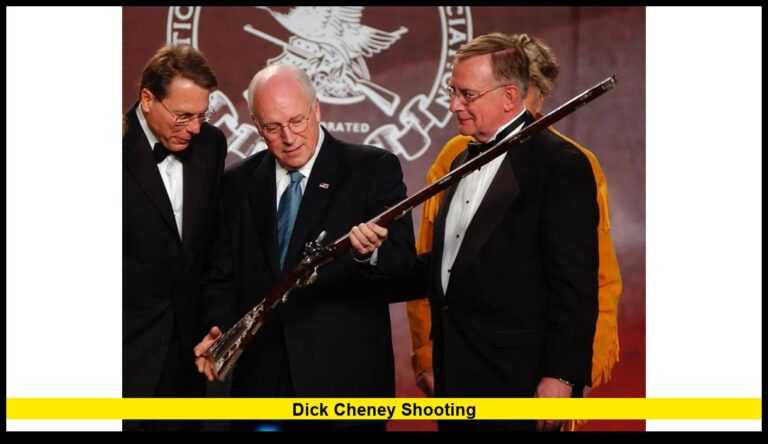
The infamous Dick Cheney shooting made headlines on February 11, 2006, when then-Vice President Dick Cheney accidentally shot Texas attorney Harry Whittington during a quail-hunting trip. Recent reflections on the case have resurfaced following Cheney’s death at age 84, prompting renewed discussion about one of the most talked-about political accidents in modern U.S. history.
Background of the Incident
On the afternoon of February 11, 2006, at the Armstrong Ranch in Riviera, Texas, Cheney joined a quail hunt with several other participants, including Whittington.
As birds flushed from cover, Cheney fired his 28-gauge Perazzi shotgun. One of his shots struck Whittington—who was 78 years old at the time—in the face, neck, and upper torso.
The pellets lodged in several parts of Whittington’s body. Doctors left roughly 30 pellets in place, as removing them posed more risk than benefit. Days later, Whittington suffered a minor heart attack caused by a pellet that had migrated close to his heart.
Immediate Aftermath
The incident wasn’t immediately made public. While it happened on February 11, news didn’t surface until the next day. The delay drew significant criticism from journalists who questioned why such a major event involving the Vice President wasn’t promptly disclosed.
When the story broke, it quickly became front-page news across the country. The local sheriff’s office investigated and found no evidence of criminal wrongdoing, determining the event was a hunting accident caused by miscommunication among the party members.
Impact and Media Reaction
The Dick Cheney shooting dominated both political coverage and late-night television for weeks. Many Americans saw it as symbolic of the secrecy and authority associated with Cheney’s tenure as Vice President.
Polls showed a temporary decline in his public approval ratings, and political commentators debated whether the delayed response had worsened the public’s reaction.
Despite the intense scrutiny, Harry Whittington later appeared before cameras to express forgiveness and to emphasize that he viewed the shooting as an accident. Cheney also spoke publicly, describing it as one of the worst days of his life.
Key Facts at a Glance
| Item | Detail |
|---|---|
| Date of incident | February 11, 2006 |
| Location | Armstrong Ranch, Riviera, Texas |
| Shooter | Dick Cheney (then Vice President of the United States) |
| Victim | Harry Whittington, age 78 |
| Weapon used | 28-gauge Perazzi shotgun |
| Injuries | Birdshot in face, neck, and chest; minor heart attack due to pellet near the heart |
| Legal outcome | No charges filed; classified as accidental shooting |
Why the Incident Still Resonates
Although nearly two decades old, the Dick Cheney shooting continues to be referenced in discussions about political responsibility, transparency, and gun safety.
The event serves as a reminder that even experienced hunters can make grave mistakes, especially in situations involving multiple shooters and fast-moving game.
For the public, the shooting became a metaphor for the perceived secrecy of Cheney’s vice presidency and his broader influence during the Bush administration.
Lessons and Considerations
- Hunting safety: Even skilled hunters must always be aware of the positions of others before firing. This accident underscored how a split-second decision can have lasting consequences.
- Transparency in leadership: The delay in reporting the incident raised broader questions about transparency from those in power and the communication protocols for high-level officials.
- Public perception: The event demonstrated how personal missteps can deeply affect public trust, even when no laws are broken.
- Legacy impact: Despite Cheney’s extensive political achievements, the shooting remains one of the defining public moments of his career.
Current Status and Reflection
As of November 2025, the Dick Cheney shooting remains a closed chapter legally but continues to be revisited in media retrospectives about his life. Cheney’s recent passing renewed public attention on this episode, prompting a new wave of commentary about its long-term impact on his image and political legacy.
Harry Whittington, the victim of the accident, passed away in February 2023 at age 95, having long forgiven Cheney and maintained that the shooting was purely accidental.
Public Memory and Legacy
The shooting stands as one of the most memorable non-political moments in U.S. political history. It reflected both the human side of leadership and the challenges of public accountability. For Cheney, who was widely regarded as one of the most powerful vice presidents in American history, it became a footnote that the public never forgot.
Years later, the story continues to appear in books, documentaries, and retrospectives examining Cheney’s career, showing just how deeply it embedded itself in American culture.
Conclusion
The Dick Cheney shooting remains a cautionary tale—an accident that forever changed how the public views personal responsibility among political leaders. It is both a reminder of the fragility of safety and the enduring power of public memory.
In bold:
Even decades later, Americans continue to revisit the Dick Cheney shooting as one of the most striking moments in modern political history—share your thoughts and stay informed about future updates.