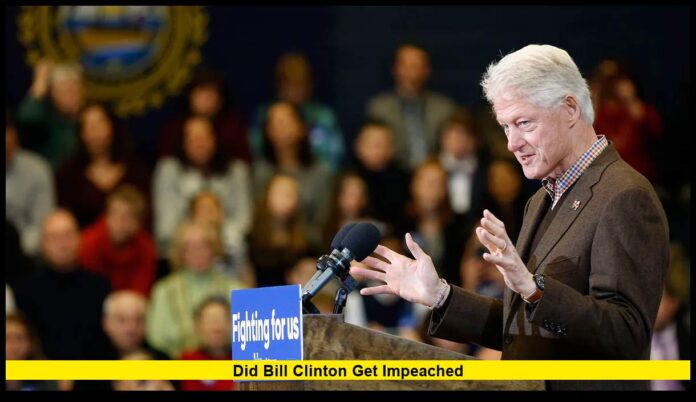
The question did Bill Clinton get impeached continues to generate interest decades after one of the most consequential events in modern American political history. The answer is yes—President Bill Clinton was impeached by the U.S. House of Representatives on December 19, 1998, on charges of perjury and obstruction of justice. However, he was not removed from office, as the U.S. Senate acquitted him on February 12, 1999.
As of December 20, 2025, the Clinton impeachment remains one of the most discussed episodes in American politics. It continues to shape conversations about presidential accountability, political partisanship, and the balance of power between the executive and legislative branches.
Table of Contents
What Led to Bill Clinton’s Impeachment?
The impeachment of Bill Clinton stemmed from a series of events that began during an investigation originally unrelated to his presidency.
In 1994, an independent counsel, Kenneth Starr, was appointed to investigate the Whitewater real estate controversy, a failed Arkansas land deal involving Clinton and his wife, Hillary Rodham Clinton. While the Whitewater probe uncovered no evidence of criminal wrongdoing by the Clintons, it later expanded to include other matters, including Clinton’s relationship with a White House intern named Monica Lewinsky.
The investigation took a dramatic turn when allegations surfaced that Clinton had lied under oath during a deposition in a civil lawsuit filed by former Arkansas state employee Paula Jones, and that he attempted to obstruct justice by concealing his relationship with Lewinsky.
These allegations would become the foundation of the impeachment case.
The Monica Lewinsky Scandal and National Reaction
The scandal broke publicly in January 1998 when reports revealed Clinton’s relationship with Lewinsky, then a 22-year-old White House intern. Initially, Clinton denied the allegations, famously stating during a press conference, “I did not have sexual relations with that woman, Miss Lewinsky.”
However, in August 1998, Clinton admitted before a grand jury that he had engaged in an “inappropriate relationship” with Lewinsky. This admission marked a turning point in both the investigation and his presidency.
The revelation deeply divided the nation. While many Americans disapproved of Clinton’s personal behavior, public opinion polls showed that a majority did not support his removal from office.
Timeline of Key Events
| Date | Event |
|---|---|
| January 17, 1998 | Clinton testifies in the Paula Jones case, denying any relationship with Monica Lewinsky. |
| January 21, 1998 | News of the alleged affair breaks publicly. |
| August 17, 1998 | Clinton testifies before a grand jury and admits to an inappropriate relationship. |
| September 9, 1998 | The Starr Report is delivered to Congress, outlining evidence against Clinton. |
| December 19, 1998 | The House of Representatives votes to impeach Clinton. |
| January 7, 1999 | Senate impeachment trial begins. |
| February 12, 1999 | Senate acquits Clinton on both charges. |
Charges Against President Clinton
The House of Representatives voted to impeach Bill Clinton on two articles of impeachment:
- Perjury before a grand jury – for lying under oath about his relationship with Monica Lewinsky.
- Obstruction of justice – for attempting to conceal evidence and influence witnesses in the Paula Jones case.
Two other proposed articles—abuse of power and perjury in the Paula Jones deposition—failed to pass in the House.
The final House vote was largely along party lines:
- Perjury: 228 in favor, 206 against.
- Obstruction of Justice: 221 in favor, 212 against.
The Senate Trial and Acquittal
After the House approved the impeachment articles, the case moved to the Senate for trial in January 1999. Chief Justice William Rehnquist of the U.S. Supreme Court presided over the proceedings.
The trial lasted five weeks, featuring opening statements, presentation of evidence, and closing arguments. However, no live witnesses were called to testify in person before the Senate.
On February 12, 1999, the Senate voted:
- 45 guilty / 55 not guilty on the perjury charge.
- 50 guilty / 50 not guilty on the obstruction of justice charge.
Because a two-thirds majority (67 votes) was required for conviction, Clinton was acquitted and completed the remainder of his term in office.
Public Opinion During the Impeachment
Throughout the impeachment proceedings, public support for Bill Clinton remained unexpectedly strong.
- In December 1998, Gallup polls showed 73% approval for Clinton’s job performance.
- Most Americans viewed the scandal as a personal failing rather than a threat to national governance.
This disconnect between public opinion and congressional action highlighted a growing divide between Washington politics and voter sentiment—a theme that has resurfaced in later impeachment proceedings involving other presidents.
Impact on the Democratic and Republican Parties
The impeachment deeply affected both major political parties.
For Republicans, who controlled Congress at the time, the impeachment was intended to hold the president accountable. However, it backfired politically. In the 1998 midterm elections, Democrats gained seats in the House—a rare outcome for a president’s party during a second term.
For Democrats, the ordeal strengthened party unity and bolstered Clinton’s popularity. Many viewed the impeachment as a partisan attack, arguing that the charges were politically motivated.
The long-term political fallout reshaped congressional strategy and public perception of impeachment as a political tool.
Bill Clinton’s Post-Impeachment Presidency
Despite the scandal, Clinton maintained a strong economy and low unemployment throughout his final two years in office. His presidency concluded with one of the longest periods of economic expansion in U.S. history.
By the time he left office in January 2001, Clinton’s approval rating was 66%, one of the highest for any departing U.S. president.
After leaving the White House, he remained active in global philanthropy through the Clinton Foundation, focusing on issues such as global health, economic development, and climate change.
Historical Context: How Clinton’s Impeachment Compares
Bill Clinton was the second U.S. president to be impeached.
| President | Year | Charges | Outcome |
|---|---|---|---|
| Andrew Johnson | 1868 | Violation of the Tenure of Office Act | Acquitted |
| Bill Clinton | 1998 | Perjury, Obstruction of Justice | Acquitted |
| Donald Trump | 2019, 2021 | Abuse of Power, Incitement of Insurrection | Acquitted both times |
Each impeachment reflects a unique political and social climate. Clinton’s case focused on personal misconduct and honesty, while later impeachments would center on issues of power and governance.
Legal and Constitutional Significance
The Clinton impeachment raised important questions about the scope of “high crimes and misdemeanors.”
While perjury and obstruction of justice are serious charges, many legal scholars argued they did not meet the constitutional threshold for removing a president from office. The debate over what constitutes impeachable conduct continues to influence how Congress approaches presidential accountability today.
The proceedings also demonstrated that impeachment is both a legal and political process, heavily influenced by partisan dynamics rather than purely by judicial standards.
Where Are They Now: Key Figures from the Impeachment Era
- Bill Clinton (79) – Continues to speak publicly on politics and humanitarian issues through the Clinton Foundation.
- Hillary Clinton (78) – Former U.S. Senator, Secretary of State, and 2016 Democratic presidential nominee.
- Monica Lewinsky (52) – Now an activist, writer, and producer advocating against cyberbullying and public shaming.
- Kenneth Starr (1946–2022) – The independent counsel whose investigation led to impeachment; passed away in 2022.
- Newt Gingrich – Then-Speaker of the House, who led the Republican push for impeachment; remains a prominent political commentator.
Their roles during the Clinton era continue to shape their legacies within American political history.
How the Clinton Impeachment Influenced Future Presidencies
The precedent set by Clinton’s impeachment reshaped how future presidents approached both political scandal and congressional oversight.
Subsequent administrations—both Democratic and Republican—faced increased scrutiny over honesty, transparency, and executive privilege. The episode also set the tone for the hyper-partisan environment that defines much of modern U.S. politics.
In retrospect, many historians describe the Clinton impeachment as a turning point in American governance, one that revealed deep cultural divides and changing public standards for presidential conduct.
Conclusion
So, did Bill Clinton get impeached? Yes—he became the second president in U.S. history to be impeached by the House of Representatives. However, he was acquitted by the Senate and served out his full term, leaving office in 2001 with high approval ratings.
More than 25 years later, the impeachment of Bill Clinton remains a defining moment in American history—one that continues to influence political strategy, public opinion, and the enduring debate over presidential accountability.
The legacy of that moment still echoes through every modern discussion about power, truth, and the presidency itself.

