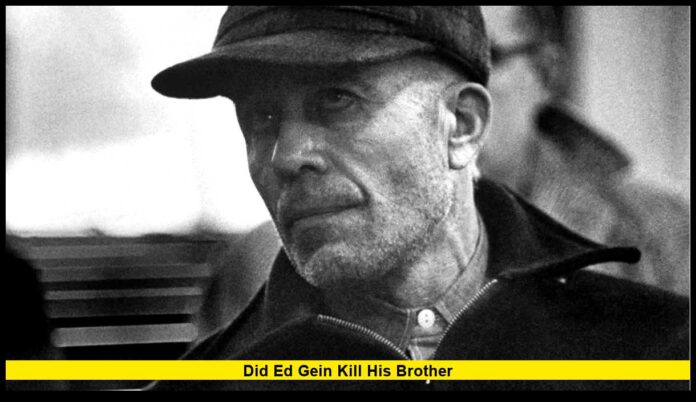
The question “did Ed Gein kill his brother” has lingered for decades, surrounded by speculation, inconsistencies, and eerie details that align with the infamy of one of America’s most disturbing criminals. While Ed Gein’s gruesome crimes in the 1950s made him a household name, the death of his brother Henry remains one of the earliest and most mysterious chapters in his dark history.
Table of Contents
The Gein Family: A Troubled Background
Before examining Henry’s death, it’s essential to understand the family dynamic that shaped Ed Gein’s life. Ed was born in 1906 in La Crosse County, Wisconsin, to George and Augusta Gein. The family later moved to a farm in Plainfield, a small, isolated rural town.
Augusta Gein was a domineering, fanatically religious woman who raised Ed and his older brother Henry in an environment of strict moral codes and isolation from the outside world. She frequently condemned what she saw as the sins of society, instilling deep shame and fear in both sons. Their father, George, was a violent alcoholic who failed to provide stability.
By the 1940s, Augusta’s influence dominated the household. Ed was deeply devoted to his mother, while Henry began to resist her control, worrying about his younger brother’s unhealthy attachment to her.
The Fire That Changed Everything
On May 16, 1944, a fire broke out on the Gein family property. Ed and Henry were burning brush on the farm when the flames spread unexpectedly. Local firefighters were eventually called to control the blaze.
What happened next is where the mystery deepens. According to Ed’s later account, he lost track of Henry during the fire. After the flames died down, Ed went to the police and reported his brother missing. Remarkably, he then led authorities directly to Henry’s body in a marshy area near the property.
Henry was found lying face down, with bruises on his head. The fire had not burned him. This discovery immediately raised questions among investigators.
The Official Ruling
Despite the suspicious circumstances, Henry’s death was officially ruled accidental, with asphyxiation from smoke listed as the cause. No autopsy was performed. Authorities accepted Ed’s explanation without pursuing further investigation.
At the time, Ed Gein was known in the community as a quiet, somewhat odd but seemingly harmless man. There was no evidence linking him to any crimes, and his reputation as a shy, soft-spoken neighbor may have influenced the decision to close the case quickly.
Why People Suspect Ed Gein May Have Killed His Brother
Years later, after Ed’s arrest for multiple murders and grave robberies, investigators and journalists revisited Henry’s death with renewed scrutiny. Several details have fueled the ongoing speculation:
- Location of the Body: Ed claimed he didn’t know where Henry was during the fire but led authorities straight to him. This raised doubts about his story.
- Head Injuries: Reports at the time indicated that Henry had unexplained bruises on his head. No official investigation followed.
- Motive: Henry had increasingly challenged Augusta’s control over the family and criticized Ed’s attachment to their mother. Some believe this caused tension between the brothers.
- Pattern of Behavior: Ed’s later crimes revealed a capacity for violence and concealment, suggesting Henry’s death might have been an early act.
Although no definitive evidence proves foul play, these factors have led many criminologists to view Henry’s death as suspicious.
Ed Gein’s Psychological Profile and Family Obsession
Ed’s relationship with his family played a central role in shaping his violent tendencies. His intense devotion to his mother was pathological. After Augusta’s death in 1945, Ed became increasingly isolated, spending time reading anatomy books, experimenting with human remains, and developing fantasies that blurred reality.
Psychologists later described Ed as a man with a rigid, childlike mindset shaped by trauma, abuse, and emotional dependence. Henry’s resistance to their mother’s control may have been perceived by Ed as betrayal—a possible emotional trigger.
The Aftermath: A Forgotten Case Until His Arrest
For more than a decade after Henry’s death, no one questioned the official ruling. Ed lived alone on the family farm, maintaining a quiet façade.
That changed in November 1957, when the disappearance of a local woman led authorities to Gein’s property. What they found shocked the world: human body parts, furniture made from bones and skin, and evidence linking Ed to multiple grave robberies and two confirmed murders.
Once his crimes came to light, journalists began digging into his past. Henry’s suspicious death resurfaced as one of the earliest possible signs that Ed’s violent behavior began long before his arrest.
Modern Perspectives on Henry’s Death
Today, criminologists and historians still debate the question: did Ed Gein kill his brother? While there is no physical evidence, several modern analyses lean toward the possibility of foul play.
Key factors considered today include:
- Lack of autopsy or thorough investigation at the time
- The bruises found on Henry’s head
- Ed’s uncanny ability to locate the body
- The brothers’ strained relationship in their final years
- Ed’s later proven capacity for extreme violence
Some experts suggest Henry’s death may have been unintentional, perhaps during an argument that escalated, followed by Ed’s inability or unwillingness to report what truly happened. Others believe it may have been a deliberate act tied to Ed’s attachment to his mother and fear of losing her approval.
Why the Case Was Never Reopened
One of the reasons the case was never formally revisited is the lack of surviving evidence. By the time Ed’s crimes were exposed, Henry’s remains were long buried, and any forensic investigation would have been challenging with the technology available in the 1950s.
Additionally, Ed Gein was declared legally insane and committed to a mental institution for life. Authorities prioritized prosecuting him for the murders he confessed to and the evidence they could prove, rather than reopening an old accidental death case with limited evidence.
Cultural Legacy of the Mystery
The mystery of Henry’s death has become a footnote in the larger, infamous story of Ed Gein. His crimes inspired some of the most famous horror characters in American pop culture, including Norman Bates from Psycho, Leatherface from The Texas Chainsaw Massacre, and Buffalo Bill from The Silence of the Lambs.
Yet for true crime historians, Henry’s death represents a critical turning point—a moment that may reveal when Ed’s violent impulses first emerged.
Final Thoughts
So, did Ed Gein kill his brother? The honest answer is that we may never know for sure. The circumstances surrounding Henry Gein’s death remain deeply suspicious, but the lack of forensic investigation at the time leaves the case shrouded in uncertainty.
For many experts, it’s a chilling possibility that the first person Ed Gein may have killed was his own brother, years before his later atrocities shocked the world.
What’s your take on this mysterious case? Share your thoughts and theories below.

