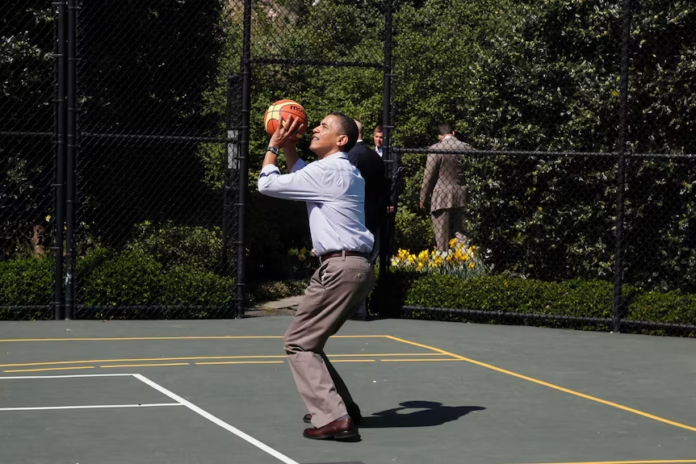
When people ask did Obama add a basketball court to the White House, they are usually referring to a well-known and often discussed change made during Barack Obama’s presidency. The answer is both clear and nuanced. President Obama did not construct a completely new, separate basketball facility from the ground up. However, he did convert an existing space on the White House grounds so that full-court basketball could be played. This change reflected his personal love of the sport and became a memorable part of his White House legacy.
Table of Contents
Understanding the Space That Already Existed
Before President Obama’s time in office, the White House already had a tennis court located on the South Lawn. The court had long been used for athletic events, family recreation, and even friendly matches involving past presidents and their guests. The space was not outdated or unused, but it was not designed for basketball before the Obama administration.
When President Obama moved in, he brought with him a well-known enthusiasm for basketball. Basketball was more than a hobby for him. It was a way to exercise, unwind, bond with colleagues, and connect with young people. He had played basketball regularly since his youth, continued during college, and even used pick-up games as a way to build personal rapport with staff members. Because of this, it was natural that he wanted a place to play while living at the White House.
The Transformation: Tennis Court to Dual-Use Court
Instead of commissioning a brand-new construction project, Obama authorized a renovation of the existing tennis court so it could also function as a basketball court. This process involved:
- Adjusting the surface to allow basketball play.
- Lining the court for full-court basketball games.
- Installing removable basketball hoops.
- Ensuring that tennis could still be played on the same surface.
This approach allowed the court to remain flexible. When someone wanted to play tennis, the area still served its original purpose. When basketball was the activity of choice, the court easily transitioned into a full-court basketball space.
In practical terms, this change meant that the White House now had a dual-use athletic court—a single space that supported two sports without compromising either one.
Why the Change Mattered
This adaptation was meaningful for several reasons.
1. It Reflected Obama’s Personality
Many presidents personalize the White House in small ways. Obama’s adaptation of the court reflected who he was. Basketball was part of his identity, and the court symbolized the importance of personal balance, exercise, and connection.
2. It Encouraged Physical Activity
Obama often encouraged sports, healthy habits, and active living. Having a basketball-friendly court at the White House allowed him and those around him to take breaks, ease stress, and stay healthy.
3. It Created a Space for Relationship-Building
One of the lesser-known aspects of the change was how Obama used the court to build relationships. He occasionally invited friends, staff members, and visitors to play. Pick-up games became an informal way to connect with others and engage in light-hearted competition. Some of these moments became stories in their own right, remembered by those who played alongside him.
4. It Became Part of White House Tradition
Over time, the court became more than a personal recreational space. It hosted events, athletic demonstrations, and youth programs. This helped make the court a place not just for the president but also for community engagement.
Public Reaction to the Court Conversion
When news spread that the tennis court had been adapted for basketball play, reactions varied:
- Sports fans were enthusiastic. Many admired a President who enjoyed and participated in a popular American sport.
- Critics attempted to portray the adaptation as unnecessary. However, because the court was not completely rebuilt and remained dual-use, criticisms did not hold strong footing.
- Everyday Americans mostly reacted positively, seeing the court as a relatable and humanizing feature of the White House.
The general public found something refreshing about seeing the President shoot hoops in a simple athletic setting. It made the role of President feel a little bit closer to everyday life.
Did Obama Really “Add” a Court? Breaking Down the Key Phrase
The phrase did Obama add a basketball court to the White House is widely used because it captures the essence of the story. However, the details help clarify what actually occurred.
- He did add basketball functionality.
The court was not equipped for full-court basketball before his presidency. - He did not build a brand-new court from scratch.
The foundation and layout already existed as a tennis court. - The change was intentional and lasting.
The adapted court became part of the White House grounds during his time in office.
So in plain terms:
Yes, Obama added a basketball court to the White House — by transforming an existing tennis court into a dual-use space.
A Symbol of Leadership Style
The basketball court adaptation also became a quiet representation of Obama’s leadership style. Basketball is a game that rewards communication, movement, teamwork, and strategy. Those who played with Obama often described him as calm, competitive, and cooperative. The court became a setting where hierarchy faded and teamwork took center stage.
While policy decisions and legislation shape history, it is often personal moments like these that illustrate the character of a presidency.
Where the Court Stands Today
The court remains a recognized feature of the White House grounds. In later years, additional improvements and renovations to the area have taken place, but the legacy of Obama’s basketball-ready court remains part of the story of the modern White House landscape.
Whether currently marked for basketball use at all times or switched between tennis and basketball configurations, the space continues to reflect the flexibility and personal touch brought during Obama’s presidency.
Final Thoughts
The adaptation of the White House tennis court to include full-court basketball capability is a meaningful part of Barack Obama’s time in office. It showed that even in one of the most formal and structured settings in the world, there is room for recreation, connection, and personal expression. The court didn’t just provide a place to play—it became a space where memories were made, friendships strengthened, and a president stayed grounded through movement and joy.
If you found this topic interesting, feel free to share your thoughts or let us know if you’d like to learn about other unique features of the White House.

