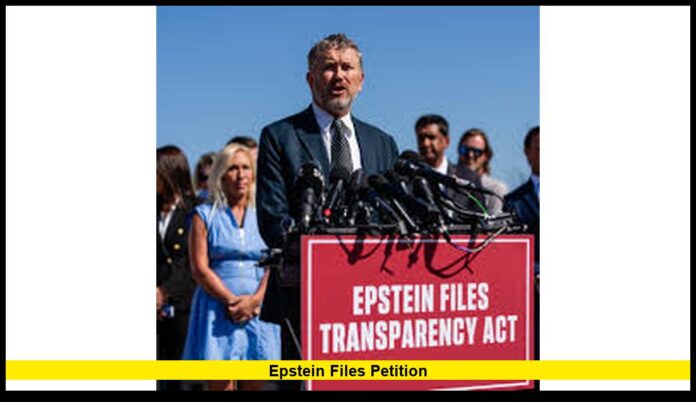
The Epstein files petition is on the verge of reaching a historic milestone in the U.S. House of Representatives, as lawmakers from both parties rally for full transparency in the ongoing effort to release all remaining government records tied to Jeffrey Epstein. With the petition reportedly at or near the crucial 218-signature threshold, it could soon trigger a rare floor vote forcing congressional action on the issue.
What the Epstein Files Petition Is About
The Epstein files petition is a formal discharge petition—a seldom-used congressional procedure allowing a bill to bypass leadership control and go directly to the House floor. If 218 members of the House sign, the petition compels a vote, regardless of committee stalling or leadership reluctance.
The measure linked to this petition would mandate the Department of Justice (DOJ) to publicly release all unclassified records connected to Epstein, including investigative files, internal communications, and potentially correspondence involving high-profile individuals. Lawmakers backing the effort argue that Americans deserve full transparency surrounding Epstein’s activities and his connections to powerful figures.
Timeline and Current Progress
- The bipartisan initiative is led by Representative Thomas Massie (R-KY) and Representative Ro Khanna (D-CA).
- The petition recently reached approximately 217 signatures, awaiting the final endorsement of a newly sworn-in member, expected to bring the total to 218.
- Once that threshold is achieved, a “ripening period” of seven legislative days must pass before a motion to bring the matter to the House floor can be made.
- Afterward, the Speaker of the House will have up to two legislative days to schedule the official vote.
- The earliest possible date for a floor vote is projected for early December, barring any procedural delays or schedule changes.
This development represents one of the few instances in modern congressional history where members could successfully use a discharge petition to force leadership’s hand.
Why the Petition Matters
The Epstein files petition reflects deep bipartisan frustration with what many lawmakers and advocates view as incomplete government transparency surrounding Epstein’s activities. Despite prior releases of flight logs, calendars, and financial ledgers, significant portions of the investigation remain sealed or redacted.
Epstein’s 2019 death in federal custody while awaiting trial on sex-trafficking charges continues to spark public mistrust and speculation about whether influential individuals have been shielded from accountability. The petition’s supporters argue that a comprehensive release of all documents is essential to restoring confidence in both the justice system and federal oversight institutions.
If successful, the petition would:
- Force a public House vote on the release bill.
- Increase pressure on the Department of Justice to disclose all Epstein-related files.
- Create a public record of which lawmakers support or oppose full transparency.
- Potentially trigger further disclosures by other branches of government.
Political Dynamics and Challenges
House Speaker Mike Johnson has acknowledged that if the petition reaches 218 signatures, it will indeed trigger a vote. However, he has downplayed its significance, calling it “a redundant move” given that the House Oversight Committee has already made substantial document releases related to Epstein’s case.
Still, advocates argue that previously released documents only represent a fraction of what exists. Many of those materials—such as financial statements, court filings, and witness depositions—had already been made public through lawsuits or media reports. The new bill would ensure a systematic, government-verified release directly to the American public.
Even if the House passes the measure, the process does not end there. The Senate would need to take up the companion legislation, and the President would ultimately decide whether to sign it into law. Political observers caution that those steps may prove far more difficult amid competing legislative priorities and partisanship.
Public and Victim Advocacy Groups Push for Accountability
Survivors of Epstein’s trafficking network and their advocates continue to push for transparency, expressing frustration that the government has yet to reveal all names and communications linked to the case. Several victim advocacy groups have publicly endorsed the petition, saying that releasing the full set of Epstein files would serve both justice and deterrence by exposing how powerful networks operated without scrutiny.
Grassroots momentum has also been growing on social media, where hashtags calling for the “Epstein files” to be made public have trended repeatedly. Activists argue that without legislative pressure, the issue will continue to languish within bureaucratic secrecy.
Next Steps: What Happens After 218 Signatures
If the Epstein files petition officially crosses the 218-signature mark, here’s the process expected to follow:
| Step | Action | Estimated Timeline |
|---|---|---|
| Petition reaches 218 signatures | Final lawmaker signs | Within days |
| Ripening period begins | Seven legislative days required before motion | Late November |
| Speaker’s scheduling window | Up to two legislative days to set floor vote | Early December |
| Floor vote in the House | Full debate and recorded vote | First week of December (projected) |
| Senate consideration | Companion bill or new introduction needed | TBD |
| Presidential review | Required for enactment | TBD |
This schedule could shift depending on the House calendar or ongoing negotiations, but supporters insist the momentum is now too strong to ignore.
Transparency and Broader Implications
The Epstein files petition has evolved into a broader referendum on government transparency and the limits of congressional leadership power. Whether or not it ultimately leads to the release of new documents, it underscores how rare bipartisan cooperation can still emerge around issues of public accountability.
Critics of the petition worry about potential privacy or security implications if certain files are released without proper redaction. Proponents counter that sunlight is the best disinfectant, arguing that selective secrecy only fuels conspiracy theories and mistrust.
The outcome of this petition could set a lasting precedent for how Congress handles future high-profile cases involving government secrecy, criminal investigations, and politically sensitive figures.
Public Sentiment and Media Attention
Public interest in the Epstein files petition remains high across the United States. Social media discussions, news coverage, and commentary from both conservative and liberal commentators show that Americans are united in demanding answers—regardless of political alignment. The growing attention has increased pressure on House leadership to act decisively once the threshold is reached.
With bipartisan momentum and a clear procedural pathway, this petition stands as one of the most anticipated congressional developments of 2025.
Conclusion
As the Epstein files petition approaches its decisive moment, it could reshape how Congress addresses secrecy in politically charged cases. Whether it delivers groundbreaking disclosures or becomes another procedural footnote, the effort has already amplified demands for accountability, transparency, and justice. The coming weeks will reveal whether Washington truly intends to let the public see the full truth about Jeffrey Epstein’s network.
Stay engaged and share your thoughts on how this petition could redefine government transparency in the United States.

