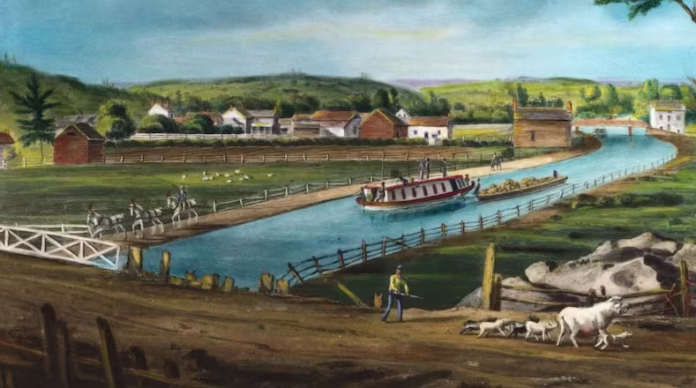
The Erie Canal stands as one of the most transformative engineering achievements in early American history, and its long-reaching influence is still strongly felt in Michigan today. Although the canal itself runs through New York, its opening in 1825 reshaped the Great Lakes region in ways that touched Michigan’s economy, population growth, land development and cultural identity. Two centuries later, its legacy continues to help define how Michigan connects to the nation and the world.
The Erie Canal linked the Atlantic Ocean to the Great Lakes, creating a direct water route that made it easier and more affordable for people, goods and ideas to move across the expanding United States. Michigan, positioned along key lake shorelines, became one of the states most deeply affected by this shift.
Table of Contents
A Gateway That Re-Positioned Michigan
Before the canal opened, Michigan was seen as distant and difficult to reach. Travel over land was slow and dangerous, and transporting goods required costly and time-consuming hauling by wagon. The canal’s water route changed everything. It provided a smooth path for boats to travel from the East Coast to the interior, dramatically lowering transportation costs and encouraging migration.
Michigan quickly transitioned from sparsely settled wilderness to a land of growing towns, farms and trade centers. Settlers arrived in greater numbers, bringing skills, capital and cultural traditions that helped shape Michigan’s early character.
This new influx had several key effects:
- Towns near lake ports grew quickly.
- Farms expanded to meet rising demand for agricultural goods.
- Michigan began to build the infrastructure needed for a thriving economy.
The canal did not simply transport goods — it transported possibility.
Population Growth and Settlement Patterns
The Erie Canal fueled a wave of movement into Michigan. Families, tradespeople, entrepreneurs and laborers traveled by boat through the canal, continuing onward via the Great Lakes. What had once been long and uncertain travel now became a more predictable journey.
New communities were established along Michigan’s rivers and lakefronts. Settlers tended to cluster where water routes offered easy access to trade and travel, shaping Michigan’s early map. Instead of expanding randomly, growth followed the flow of waterways that connected back to the canal system.
This wave of settlement helped Michigan advance more rapidly toward statehood. The population growth accelerated civic organization, local governance, road building and the establishment of schools and markets.
In short, the canal helped Michigan transform from frontier to established region.
Economic Transformation and Market Expansion
As shipping access expanded, Michigan gained entry to broader national and international markets. Farmers could ship crops more affordably. Lumber mills along Michigan’s forests gained new customers. Mining operations found expanded demand.
The canal allowed raw materials to move east and manufactured goods to move west. Michigan’s economy gradually diversified, no longer reliant solely on local exchange. It became part of a continental system of production and trade.
This new connectivity encouraged investment:
- Businesses grew near lake ports.
- Transportation networks developed inland.
- Small villages evolved into industrial towns.
The canal acted as both a literal and economic bridge between Michigan and the wider world.
How the Canal Helped Shape Michigan’s Identity
The Erie Canal didn’t just change Michigan’s economy — it influenced the culture of the region. Migrants who traveled west through the canal brought customs, architecture styles, religious traditions and community structures that blended with existing populations.
Many early Michigan towns reflect design elements characteristic of northeastern settlements — a reminder of where many early residents came from. Shared holidays, dialects and farming practices traveled the canal path as surely as boats and cargo.
This blending of regional identities helped shape the personality of Michigan as a state — independent, industrious, resilient and strongly connected to waterways.
Waterways and the Environment
While the canal produced undeniable economic benefits, it also introduced long-term environmental effects. Increased water connectivity changed natural ecosystems and reshaped Michigan’s waterways. Certain plant and aquatic species were introduced or spread through shipping routes that connected previously separate waters.
Michigan continues to address the legacy of these changes as part of its ongoing stewardship of the Great Lakes. The canal’s influence on environmental management serves as a reminder that infrastructure can have lasting consequences — both positive and challenging.
The Erie Canal’s Lasting Influence on Modern Michigan
The canal’s legacy is not limited to the past. Its impact is still visible in Michigan life today:
Trade and Transportation:
Michigan remains a major hub for shipping, manufacturing and cross-border commerce. Ports along the Great Lakes continue to play essential roles in moving materials and goods.
Tourism and Recreation:
Boating, waterfront parks, historic districts and lakefront tourism contribute significantly to Michigan’s cultural economy. The idea of the waterway as both resource and recreational space traces back to the canal era.
Regional Identity:
The feeling of Michigan being connected to larger national and global systems remains central. The canal was the first major infrastructure project to demonstrate that connection.
Why This Matters 200 Years Later
Looking at Michigan today — with its thriving shoreline communities, active ports and strong Great Lakes culture — it’s clear that the Erie Canal helped define the state’s direction. It did not simply move ships. It moved people, ideas, capital and ambition.
Understanding this connection helps us recognize:
- How transportation infrastructure shapes development.
- How regions become connected to large economic systems.
- How historical public investment can influence a state for centuries.
Michigan’s growth story is inseparable from the water routes that supported it — and the Erie Canal stands at the origin of that connection.
A Living Legacy Still Shaping the Future
As Michigan continues to plan for the future — from modern shipping strategies to climate-resilient shoreline development — the story of the Erie Canal provides valuable lessons about long-term vision.
The canal proves that infrastructure can transform a region in ways its builders might never have predicted. It shows that connecting communities leads to shared prosperity. And it reminds us that innovation in transportation is often a key to economic renewal.
The Erie Canal may be two centuries old, but its influence continues to flow through Michigan’s rivers, harbors, towns and cultural identity — a reminder that the pathways we build today will shape the generations of tomorrow.
If this history resonates with you or connects to your community’s story, feel free to share your thoughts below — your perspective adds to the ongoing conversation.

