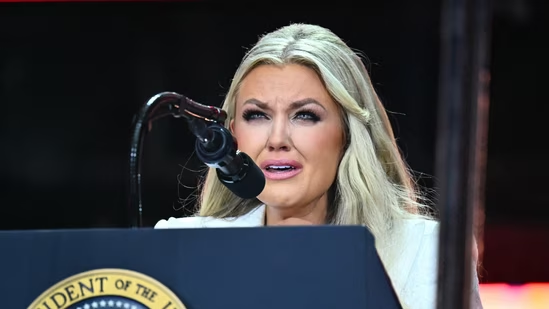
The story of Erika Kirk Romania has captured public attention, fueled by online claims linking her to controversial activities in Eastern Europe. At the center of the debate is Romanian Angels, a ministry associated with Kirk’s nonprofit work, which some critics allege was tied to child trafficking or unauthorized adoptions. Despite the noise online, no credible evidence supports these claims, and no official investigations have ever been confirmed.
This expanded look at Erika Kirk’s Romanian connection examines the origins of the allegations, what Romanian Angels was actually about, and why the rumors persist.
Table of Contents
Who Is Erika Kirk?
Before exploring Romania, it helps to understand who Erika Kirk is.
- Erika Kirk (born Erika Frantzve) is a U.S.-based conservative activist, speaker, and nonprofit leader.
- She is married to Charlie Kirk, founder of the political organization Turning Point USA.
- Beyond politics, she has worked in philanthropy, particularly faith-driven initiatives abroad.
Her ministry work in Romania came long before she stepped into a national spotlight. It was largely humanitarian, yet today it’s become the subject of intense speculation.
What Was Romanian Angels?
Romanian Angels was part of Erika Kirk’s charitable activities under the nonprofit Every Day Heroes Like You. Its purpose was to provide support for Romanian children, especially those in orphanages or impoverished areas.
The program focused on:
- Delivering Christmas and holiday gifts to children.
- Offering mentorship, faith-based support, and community engagement.
- Partnering with local churches and volunteers to organize activities for young people.
There is no evidence Romanian Angels ever processed adoptions or attempted to remove children from Romania. Its role was described as supplemental support for children who already lived in orphanages or disadvantaged communities.
The Emergence of Allegations
Years after the program’s activities, online posts began suggesting that Erika Kirk and her team were involved in something darker. Among the most common claims:
- That Romanian Angels was accused of child trafficking.
- That Erika Kirk was banned from Romania around 2011.
- That children connected with the program disappeared or were adopted without authorization.
These allegations have been repeated on forums, social media accounts, and conspiracy communities. But none have been substantiated with documentation, legal records, or credible investigations.
Romania’s Context: A History of Adoption Controversies
To understand why these claims sound believable to some, it’s important to recognize Romania’s real history with international adoption and trafficking.
- In the 1990s, after the fall of communism, Romania faced international criticism for chaotic adoption practices. Thousands of children were adopted abroad, often under questionable oversight.
- By 2004, Romania placed a near-total ban on foreign adoptions due to fears of exploitation.
- Human trafficking remains a documented issue in the country, especially concerning vulnerable populations like orphans and Roma children.
Because of this context, any foreign ministry working with Romanian children might face suspicion, even without evidence of wrongdoing.
Why “Erika Kirk Romania” Became a Viral Search
The rise of Erika Kirk as a public figure in the U.S. has fueled renewed attention to her past. When someone enters the spotlight—particularly in politics—opponents and critics often dig into their history.
Several factors contributed to the virality:
- High-profile marriage – As Charlie Kirk’s wife, Erika is tied to one of the most prominent conservative activists in the country.
- Leadership role – Her positions in nonprofit and political organizations attract both admiration and scrutiny.
- Social media echo chambers – A single allegation online can be amplified across multiple platforms, making it seem more credible than it is.
- Trafficking narratives – Online conspiracy movements often tie public figures to trafficking networks, regardless of evidence.
Read Also-Erika Kirk Speech Becomes Defining Moment in Wake of Charlie Kirk’s Assassination
Breaking Down the Key Allegations
Let’s address each major claim connected with Erika Kirk Romania:
1. Was Romanian Angels Accused of Child Trafficking?
No verifiable records suggest that the ministry faced official accusations. Allegations appear in online posts but lack court filings, government statements, or investigative reporting.
2. Was Erika Kirk Banned from Romania?
There is no documentation of a travel ban. Typically, bans are logged through immigration systems and, in high-profile cases, made public. None exist for Kirk.
3. Were Children Adopted Through Romanian Angels?
Since 2004, Romania has restricted international adoptions. No records link Romanian Angels to adoption proceedings. The program appears to have operated within the boundaries of local charity laws.
How Rumors Gain Traction
The persistence of the story of Erika Kirk Romania highlights how digital rumors evolve:
- Step 1: A claim appears online. Often, it comes from a vague anecdote or unverified source.
- Step 2: It spreads through reposting. Each repost adds slight embellishments, making the story seem richer.
- Step 3: Echo chambers form. Like-minded communities repeat the story until it appears credible.
- Step 4: Public figures amplify it. Sometimes influencers or commentators repeat the rumor without fact-checking.
This cycle can give the impression of credibility even when there’s no evidence.
Real Issues vs. Unfounded Claims
It’s important to separate real, documented concerns in Romania from the unsubstantiated allegations against Erika Kirk.
- Real: Romania struggles with child trafficking and has restricted adoptions to curb abuse.
- Real: Some ministries and NGOs in Eastern Europe have faced scrutiny for mishandling funds or aid.
- Unfounded: That Erika Kirk’s Romanian Angels was accused of trafficking.
- Unfounded: That she was legally banned from Romania.
Without evidence, the allegations remain speculative at best.
The Role of Fact-Checking
Independent fact-checkers have addressed these claims, repeatedly stating there is no evidence. While fact-checking organizations are not always immune to criticism, their findings align with the absence of legal or governmental records.
Fact-checking helps ensure that serious allegations, such as trafficking, are not accepted without proof. In this case, the burden of evidence falls on those making the claims, and so far, none has been presented.
Why the Story Matters
The association between Erika Kirk Romania and trafficking claims matters for several reasons:
- For Erika Kirk personally – Her reputation is tied to these unverified allegations.
- For Romanian charities – Rumors like these can make it harder for genuine nonprofits to operate in the region.
- For public discourse – It shows how quickly narratives can form without documentation.
Key Takeaways
To summarize the issue clearly:
- Romanian Angels was a ministry providing aid and mentorship in Romania.
- No verified evidence supports claims of trafficking or adoptions.
- No ban has been documented preventing Erika Kirk from entering Romania.
- Allegations continue to spread online despite the lack of proof.
Final Thoughts
The debate over Erika Kirk Romania reveals how modern controversies take shape in an age of instant communication and viral narratives. While trafficking and adoption issues are serious topics that deserve attention, they must be treated with evidence-based reporting rather than speculation.
At present, Erika Kirk’s Romanian Angels program appears to have been a charitable initiative, not a criminal operation. Until new facts or documentation emerge, the allegations remain unproven.
As readers, the challenge is to separate rumor from reality and demand clear evidence before drawing conclusions. What’s your perspective on how these kinds of claims spread online? Share your thoughts below.

