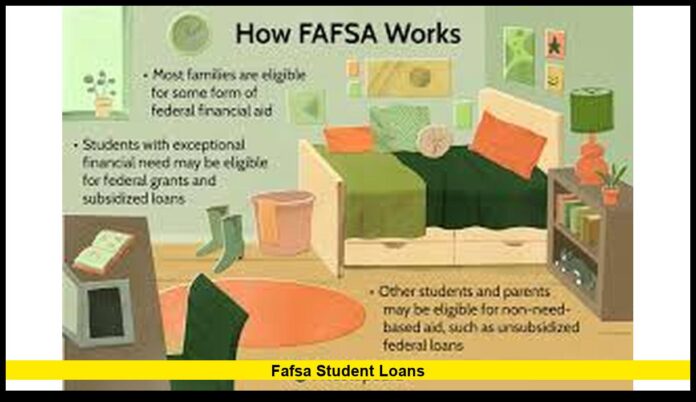
FAFSA student loans are at the center of how millions of Americans are paying for college in 2026, as federal financial aid rules, loan limits, and repayment structures undergo the most significant changes in years. With the current FAFSA cycle already open and new federal policies scheduled to take effect later this year, students and families face a very different borrowing landscape than in previous decades.
Understanding how FAFSA student loans work today is essential for anyone planning to attend college, return to school, or support a student financially. From eligibility calculations to borrowing caps and repayment expectations, every step now carries greater long-term consequences.
Table of Contents
FAFSA Student Loans and the Current Aid Landscape
The Free Application for Federal Student Aid, commonly known as the FAFSA, is the primary gateway to federal student loans in the United States. Completing this form allows students to access federal Direct Loans, need-based grants, and work-study opportunities.
For the 2026–27 academic year, the FAFSA opened earlier than in past cycles, giving families more time to prepare financial documents and submit accurate information. This earlier launch reflects federal efforts to streamline the process after several years of technical challenges and delays.
While the FAFSA itself does not issue loans, it determines eligibility for federal borrowing programs. The data collected is used to calculate a student’s financial need and establish how much aid, including loans, they can receive.
How FAFSA Student Loans Are Determined
When a student submits the FAFSA, the Department of Education evaluates household income, assets, family size, and other financial factors. These details generate a Student Aid Index, which colleges use to assemble financial aid packages.
FAFSA student loans fall into two primary categories:
- Subsidized loans, available to students with financial need
- Unsubsidized loans, available regardless of demonstrated need
Subsidized loans offer a key advantage. The federal government pays the interest while the student is enrolled at least half-time. Unsubsidized loans begin accruing interest immediately, increasing the total cost over time.
The FAFSA also determines eligibility for Parent PLUS loans, which allow parents of dependent undergraduates to borrow to help cover educational expenses.
FAFSA Changes Affecting Student Loans in 2026
Several FAFSA-related updates now affect how student loans are calculated and awarded. These changes aim to simplify the application while tightening how much families can borrow through federal programs.
One of the most impactful updates involves how assets are treated. Certain family-owned farms and small businesses are no longer counted toward financial need calculations. This change benefits rural families and small business owners who previously appeared wealthier on paper than their cash flow reflected.
At the same time, foreign income is now fully included in aid calculations. Families earning income abroad may see reduced eligibility for need-based assistance, including subsidized loans.
The revised formula also affects Pell Grant eligibility. Students whose financial index exceeds specific thresholds no longer qualify for grants, which can increase reliance on loans for college costs.
Federal Student Loan Borrowing Limits
FAFSA student loans come with strict borrowing limits, and those limits are changing for future borrowers. Beginning in mid-2026, new caps apply to students taking out federal loans for the first time.
Undergraduate Borrowing
Undergraduate students remain eligible for annual loan limits based on their year in school and dependency status. While annual limits remain similar, all borrowing now counts toward a newly enforced lifetime maximum.
Dependent undergraduates typically qualify for lower limits than independent students. These caps are designed to prevent students from graduating with unmanageable debt loads.
Graduate and Professional Students
Graduate borrowing is undergoing the most dramatic changes. New federal rules impose annual and lifetime caps on loans for graduate and professional students, limiting how much they can borrow across their entire academic career.
These limits affect students pursuing advanced degrees in fields such as education, business, law, medicine, and public policy. Programs with high tuition costs may require students to explore private financing or institutional aid options to fill funding gaps.
Parent PLUS Loans and FAFSA Student Loans
Parent PLUS loans have long allowed families to bridge the gap between college costs and federal aid limits. However, new restrictions now limit how much parents can borrow per student and over a lifetime.
These changes are designed to reduce excessive parental debt, which has grown steadily over the past decade. Families relying heavily on Parent PLUS loans may need to reconsider college choices, budgeting strategies, or alternative financing options.
The FAFSA remains the entry point for Parent PLUS eligibility, making accurate and timely filing more important than ever.
Grandfathering Rules for Existing Borrowers
Students already enrolled in college before the new rules take effect are not immediately subject to the new borrowing caps. Grandfathering provisions allow many current borrowers to continue accessing federal student loans under previous limits for a limited time.
This transitional period is designed to prevent disruptions for students who planned their education under older rules. However, the grandfathering window is finite, and students should consult their financial aid offices to understand how long current terms apply.
FAFSA Student Loans and Repayment Expectations
Borrowing is only part of the equation. Repayment rules for FAFSA student loans are also changing, particularly for loans issued after mid-2026.
Traditional income-driven repayment plans are being phased out for new borrowers. In their place, a simplified system offers fewer options but longer repayment timelines for those with lower incomes.
Borrowers with existing loans may retain access to current repayment plans if they enroll before specified deadlines. Understanding repayment eligibility now can save thousands of dollars over the life of a loan.
Interest Accrual and Long-Term Costs
Interest plays a major role in the total cost of FAFSA student loans. Even small differences in interest accrual timing can result in large repayment differences over time.
Unsubsidized loans accrue interest from the moment funds are disbursed. If unpaid, that interest is added to the principal balance, increasing future interest charges. This compounding effect makes it critical for borrowers to understand how their loans grow while they are still in school.
Subsidized loans provide relief during enrollment, but once repayment begins, interest applies in the same way as other federal loans.
Collections, Defaults, and Financial Consequences
FAFSA student loans carry serious consequences if borrowers fall behind. Federal student loans do not require court judgments for collection actions.
Borrowers who default may face:
- Wage garnishment
- Tax refund offsets
- Reduced credit scores
- Loss of eligibility for future federal aid
Collections have resumed fully following the end of pandemic-era relief measures. Borrowers in default should act quickly to explore rehabilitation or consolidation options.
Tax Implications of Loan Forgiveness
Another critical update affecting FAFSA student loans involves taxation. Certain forms of loan forgiveness may now be treated as taxable income under federal law.
Borrowers reaching forgiveness milestones through income-based repayment plans could face unexpected tax liabilities. Planning ahead for potential tax obligations is essential, especially for borrowers with large balances.
How FAFSA Student Loans Affect College Choices
The evolving federal aid system is reshaping how families choose colleges. With tighter loan limits, students may need to consider:
- Lower-cost institutions
- In-state public universities
- Shorter degree programs
- Increased use of scholarships and grants
FAFSA student loans remain a vital resource, but they no longer cover unlimited educational expenses. Financial planning must now begin earlier and involve more careful cost comparisons.
Filing FAFSA Accurately and On Time
Accuracy matters more than ever. Errors or omissions on the FAFSA can delay aid, reduce eligibility, or require corrections that slow down loan processing.
Key tips for FAFSA completion include:
- Using accurate tax information
- Reporting all required income
- Double-checking household size
- Submitting before priority deadlines
Early filing increases access to limited aid programs and allows more time to resolve issues before tuition bills are due.
FAFSA Student Loans and Financial Literacy
As borrowing rules tighten, financial literacy becomes a crucial part of college readiness. Students should understand:
- How much they are borrowing each year
- Expected monthly payments after graduation
- Total repayment amounts over time
Federal student loan disclosures provide estimates, but borrowers should review them carefully and ask questions when numbers are unclear.
The Future of FAFSA Student Loans
The changes unfolding in 2026 mark a shift toward more controlled federal lending. Policymakers aim to reduce excessive debt while encouraging responsible borrowing.
For students and families, this means FAFSA student loans remain available but require more strategic use. Education financing now demands the same careful planning as any long-term financial commitment.
How are FAFSA student loans shaping your college plans? Share your thoughts or stay connected for ongoing updates as federal student aid continues to evolve.

