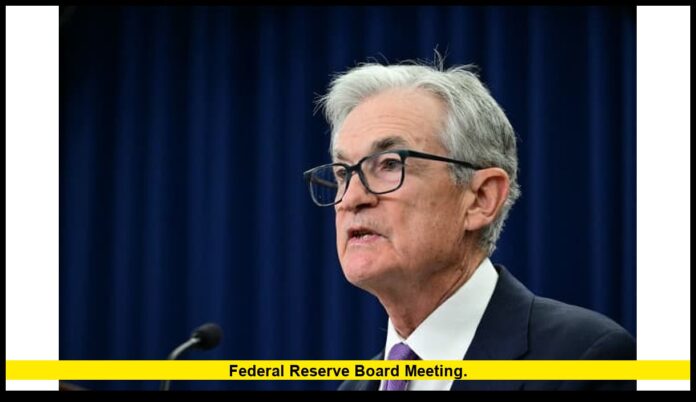
The Federal Reserve concluded its December 9–10 policy discussion by lowering the federal funds target range to 3.50%–3.75%, marking the third consecutive quarter-point rate cut this year. The decision reflects updated assessments of employment, inflation and growth, and it has positioned the federal reserve board meeting as one of the most closely watched economic events of the year.
Table of Contents
Fed announces a 25-basis-point rate cut
The committee voted to reduce the target range for the federal funds rate by 25 basis points, citing moderate economic expansion, slower job gains and inflation that remains somewhat above the long-run objective. Officials emphasized that the labor market is cooling, unemployment has edged up, and price pressures—while easing earlier in the year—have stabilized at slightly elevated levels.
The vote was not unanimous. Several policymakers supported a larger rate cut, while others preferred no change. The split vote underscored differing views about the appropriate pace of easing as the economy enters a new phase.
Why the rate cut happened
Policymakers indicated that economic risks have shifted. Slower hiring and sticky inflation prompted the committee to adjust borrowing costs in an effort to maintain progress toward both sides of the dual mandate: maximum employment and stable prices.
The Fed reiterated its commitment to reviewing incoming data before making additional moves. Policymakers stressed that decisions will depend heavily on updated labor-market trends, inflation expectations, consumer spending and business activity.
New economic projections released
Alongside the rate announcement, officials published updated economic forecasts. These projections outline expected GDP growth, inflation trends and unemployment rates over the next several years. They serve as a roadmap for policymakers’ current thinking and help guide public and market expectations.
The projections show continued but moderate economic expansion, with inflation expected to gradually return toward the 2% target if labor-market conditions remain stable.
Short-term Treasury purchases to support liquidity
In a key operational change, the Federal Reserve announced it will begin purchasing short-term Treasury securities to ensure the banking system maintains ample reserves. This step is intended to stabilize overnight funding markets and prevent the types of liquidity shortages that can cause volatility in short-term interest rates.
These purchases are not part of a broader stimulus program but instead serve as a technical tool to support smooth implementation of monetary policy.
Dissenting views highlight policy uncertainty
The rate-setting committee included members who advocated different approaches. Some supported a larger rate cut, arguing that economic softening warranted a faster response. Others felt conditions did not justify any adjustment.
This divergence underscores the uncertainty surrounding the economic outlook, especially given the mixed signals across job gains, wage trends, consumer spending and inflation pressures.
How this decision fits into the year’s policy path
This December move is the third rate cut of the year. While the Fed has steadily adjusted the policy rate downward, officials have emphasized flexibility. There is no predetermined path for future cuts, and upcoming decisions will depend on economic data, not on a fixed schedule.
The committee’s next scheduled meeting will take place early next year, where policymakers will reassess inflation progress, labor-market stability and financial-system conditions.
What this means for consumers and businesses
Borrowing costs
A lower policy rate may help ease short-term borrowing costs. Credit card rates, auto loans and some business lines of credit tend to react more quickly to federal funds rate changes.
Housing and mortgages
Mortgage rates do not move directly with Fed decisions, but changes in the broader interest-rate environment can influence lender pricing. Homebuyers and homeowners may see modest rate adjustments depending on market conditions.
Employment conditions
With job gains slowing and unemployment rising slightly, the Fed’s decision aims to support labor-market stability. Future employment trends will heavily influence the path of monetary policy.
Inflation outlook
Inflation is still above the long-run target, though it is no longer accelerating. The updated projections suggest gradual progress toward 2% as long as wage growth and supply conditions remain balanced.
Key takeaways
- The federal funds target range is now 3.50%–3.75%.
- Updated forecasts point to moderate growth and gradual inflation cooling.
- The Fed will purchase short-term Treasuries to maintain ample reserves.
- Divided votes reveal differing views on economic risks.
- Future rate moves will be fully data-dependent.
The federal reserve board meeting has made one point clear: policymakers are easing cautiously, focusing on real-time economic data and prepared to shift direction if employment or inflation trends change.

