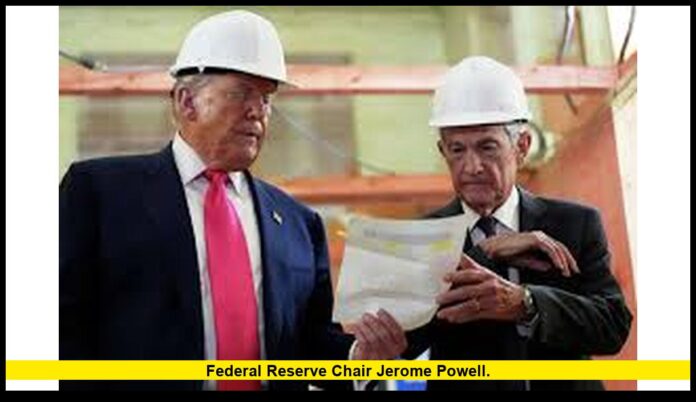
Federal Reserve Chair Jerome Powell is the head of the U.S. central bank, responsible for guiding interest-rate policy and safeguarding financial stability.
Federal Reserve Chair Jerome Powell is at the center of one of the most dramatic political and economic upheavals of the year, as the U.S. Department of Justice has opened a criminal investigation into him that has rattled markets, divided lawmakers, and thrust the independence of the Federal Reserve into intense national debate.
This extraordinary development, unfolding in early January 2026, marks an unprecedented escalation in the ongoing struggle between the Federal Reserve and the executive branch — particularly amid pressure from the Trump administration over interest-rate policy and a sprawling renovation project tied to the Fed’s headquarters.
Table of Contents
A Stunning Announcement from Powell
In a rare and carefully worded video statement released on January 11, Federal Reserve Chair Jerome Powell disclosed that federal prosecutors had issued grand jury subpoenas to the Federal Reserve and informed him that a potential criminal indictment was being considered. The investigation centers on his sworn testimony before the Senate Banking Committee in June 2025 regarding the ballooning cost and management of the Federal Reserve’s headquarters renovation, now estimated at approximately $2.5 billion. The project has become a focal point for critics in Congress and within the administration, who argue that cost overruns and planning decisions warrant closer legal scrutiny.
Powell said the legal action marked an unprecedented step against a sitting Fed chair and warned that it could set a dangerous precedent for central bank independence. He stated that while he would fully cooperate with the legal process, he strongly rejected any suggestion that he knowingly misled lawmakers. According to Powell, the information he provided to Congress reflected the best data available at the time and was consistent with internal briefings and public disclosures.
He went further by characterizing the investigation as part of a broader campaign to apply political pressure on the central bank, particularly as debates over interest-rate policy have intensified. Powell suggested that the timing of the subpoenas, coming amid repeated public calls for faster and deeper rate cuts, raised serious concerns about whether the legal process was being used as leverage to influence monetary decisions. He stressed that the Federal Reserve’s mandate requires it to act independently, guided by inflation trends, employment data, and financial stability risks—not by political calendars or electoral considerations.
Reaffirming his role, Powell said he would continue to lead the institution “with steadiness and transparency,” emphasizing that the Federal Open Market Committee would remain focused on its dual mandate of price stability and maximum employment. He underscored that safeguarding the credibility of the central bank is essential not only for U.S. markets but for global financial confidence, and he pledged to defend that independence while the investigation unfolds.
The Origins of the Probe
The criminal investigation centers on whether Powell’s public testimony about the renovation project was misleading. Prosecutors and congressional critics have questioned discrepancies between Powell’s answers and earlier internal planning documents. The core of the scrutiny is whether Powell knowingly misrepresented details to Congress — a federal offense if proven to be a willful and material false statement.
The renovation project itself has been controversial. Costs ballooned far beyond initial estimates, drawing criticism from politicians and watchdogs. The Federal Reserve has defended the expenditures, citing inflation, labor shortages, expanded security needs, and unforeseen construction challenges as major drivers of increased costs.
While grand jury subpoenas have been issued, no formal charges have yet been filed. Legal experts note that investigations and subpoenas do not guarantee indictment, especially since proving false statements requires a high bar of evidence showing intent.
Political Firestorm in Washington
The probe has ignited fierce debate across the political spectrum. Some Republican lawmakers have framed the investigation as a necessary accountability measure, while others warn it undermines the Federal Reserve’s independence. Republican Senator Thom Tillis has vowed to block confirmations of any Federal Reserve nominees until the legal issue is resolved, raising the stakes for Powell’s eventual successor.
Meanwhile, President Donald Trump has publicly criticized Powell’s leadership and performance, especially regarding interest-rate decisions. Trump claims not to have known about the DOJ’s actions, even as he continues to condemn Powell for what he describes as mishandling key economic policies. Outside advisers like Kevin Hassett have voiced support for the DOJ’s inquiry, particularly over concerns about fiscal responsibility tied to the costly renovation project.
Democrats and other critics have accused the Trump administration of weaponizing legal authorities to influence monetary policy, warning that such tactics could erode public trust in independent institutions.
Markets in Turmoil
Financial markets reacted sharply to the news. Stocks slid sharply in early trading following reports of the investigation, as investors grappled with uncertainty about the future of U.S. monetary policy. The Dow Jones Industrial Average, S&P 500, and Nasdaq all saw declines as traders adjusted positions amid heightened risk sentiment.
At the same time, safe-haven assets like gold and silver surged. Precious metals climbed to multi-year highs as investors sought protection from market volatility and political risk. Bitcoin and other digital assets also experienced increased trading activity as markets digested the implications of the probe.
Bond markets reflected uncertainty as well, with yields on Treasury securities rising as investors reassessed inflation expectations and central bank credibility. The U.S. dollar weakened against major global currencies, underscoring broader concerns about U.S. economic stability in the face of political pressure on the Federal Reserve.
The Independence Debate Intensifies
At the heart of this crisis is the principle of Federal Reserve independence — the idea that central bankers must be insulated from direct political interference so they can steer the economy based on objective data and long-term stability goals. Powell’s public defense repeatedly highlighted that this independence is fundamental to sound monetary policy.
Critics of the investigation argue that using criminal law as a tool to influence interest-rate decisions or cast doubt on the Fed’s autonomy sets a dangerous precedent. They say that politicizing the Justice Department and central bank undermines confidence in both institutions and could have long-term repercussions for economic governance.
Supporters of the investigation counter that no public official — including the Fed chair — should be immune from scrutiny, especially if there are credible concerns about misleading official testimony or mismanagement of public funds.
What Comes Next for Powell and the Fed
Powell’s term as Federal Reserve chair is set to expire in May 2026, though he is legally allowed to remain on the Board of Governors until January 2028 unless he resigns or is removed for cause. As the investigation unfolds, markets and policymakers alike will be watching closely.
If charges are eventually filed, it would mark a historic first for a sitting Federal Reserve chair. Such a development could reshape how central bank independence is understood and practiced in the United States. Even without charges, the probe has already cast a long shadow over Powell’s legacy and the institution he leads.
Financial analysts have suggested that the investigation could reinforce concerns about political interference, yet they also note that Powell is widely respected among economists for data-driven policy decisions. Some experts believe that, despite the turmoil, the Federal Reserve will remain committed to evidence-based monetary policy regardless of external pressures.
Broader Legal and Institutional Context
The investigation into Federal Reserve Chair Jerome Powell is unfolding within a much wider legal and constitutional struggle over the limits of presidential power and the protection of independent institutions. It mirrors another high-profile confrontation involving Federal Reserve Governor Lisa Cook, whose attempted removal by the Trump administration in 2025 triggered a major court battle that is now shaping how far the executive branch can go in disciplining or dismissing central bank officials.
Cook challenged her proposed dismissal in federal court, arguing that the Federal Reserve Act allows governors to be removed only “for cause” and that policy disagreements or political dissatisfaction do not meet that standard. Lower courts temporarily blocked her removal, allowing her to remain in office while the case moved through the judicial system. The dispute has since advanced toward the Supreme Court, where justices are weighing whether the president has broader authority to remove leaders of independent agencies or whether the Federal Reserve enjoys stronger constitutional protections because of its unique role in safeguarding economic stability.
Legal scholars say the outcome could redefine the balance of power between the White House and institutions designed to operate at arm’s length from politics. A ruling that weakens removal protections could open the door for future administrations to exert direct influence over monetary policy by threatening or replacing officials who resist political pressure. A decision that upholds strong independence, on the other hand, would reinforce long-standing norms that insulate the central bank from short-term political goals.
Against this backdrop, the criminal investigation involving Powell is widely seen as part of the same institutional stress test. Together, the Powell probe and the Cook removal case highlight a critical moment for the rule of law, separation of powers, and the future of independent regulation in the United States, with lasting implications for how economic policy is made and how firmly the Federal Reserve can resist political intervention.
FAQs
1. Why is Federal Reserve Chair Jerome Powell being investigated?
He is under investigation because prosecutors are reviewing whether his congressional testimony about the Fed’s $2.5 billion headquarters renovation was misleading, though Powell denies any wrongdoing and calls the probe politically motivated.
2. Has Powell been charged with a crime yet?
No. Subpoenas and an investigation have begun, but no formal charges have been filed as of this writing. An indictment would require evidence that any misstatement was intentional and material.
3. Could this investigation affect monetary policy?
Yes. The probe has already rattled markets and sparked debate about political pressure on the Federal Reserve, raising concerns that central bank independence could be compromised.
The situation continues to evolve. Share your thoughts on what this investigation means for the economy and the future of central bank governance.
Disclaimer:
This article is published for general informational and educational purposes only. While every effort has been made to ensure accuracy and timeliness, the content is based on publicly available information at the time of writing and may change as new details emerge. The publisher does not guarantee the completeness, reliability, or absolute accuracy of any facts, figures, or statements. This content should not be interpreted as financial, legal, or investment advice. Readers are encouraged to verify information independently and consult qualified professionals before making any decisions based on this material. The website and its authors are not responsible for any losses, damages, or actions taken in reliance on the information provided herein.

