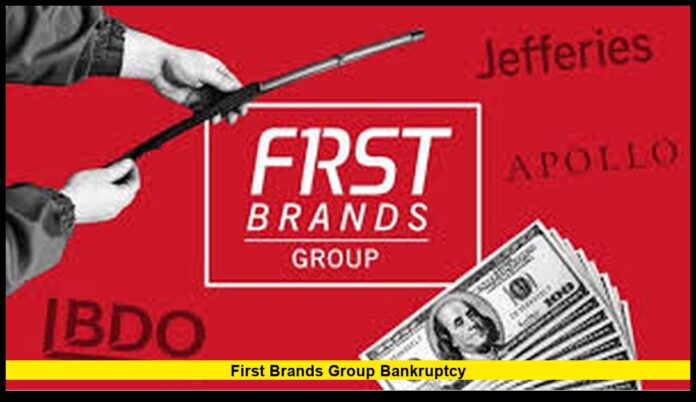
The First Brands Group bankruptcy has entered a decisive phase in 2026, as the major U.S. automotive parts supplier moves closer to liquidation after months of financial distress under Chapter 11 protection. Court proceedings, asset sales, and criminal investigations tied to former leadership have intensified scrutiny around one of the most significant supplier collapses in the American aftermarket auto industry.
Here is a complete, up-to-date breakdown of where the case stands today and what it means for workers, creditors, and the broader automotive sector.
Table of Contents
How the Bankruptcy Began
First Brands Group filed for Chapter 11 bankruptcy protection in September 2025 in the U.S. Bankruptcy Court for the Southern District of Texas. The company entered court protection after years of aggressive expansion fueled by high levels of debt.
At the time of filing, the company reported billions in liabilities, far exceeding available liquidity. Although it secured substantial debtor-in-possession financing to continue operations during restructuring, the cash cushion proved insufficient.
The company operated a wide portfolio of well-known automotive aftermarket brands, including brake systems, spark plugs, filtration systems, and remanufactured components. Many of these products are staples in American repair shops and retail auto parts stores.
Cash Crisis Deepens in 2026
By January 2026, First Brands warned that its cash reserves were nearly exhausted. Without additional lender support, operations risked halting entirely.
Major lenders reportedly resisted providing a second round of emergency financing. As a result, leadership began accelerating asset sales and exploring more drastic measures.
Several core divisions began winding down operations rather than continuing under restructuring. That shift signaled that a full reorganization may no longer be feasible.
Potential Shift From Chapter 11 to Chapter 7
A significant development in early 2026 involved discussions about moving certain business units from Chapter 11 reorganization into Chapter 7 liquidation.
Under Chapter 7, assets are sold off and the company ceases operations, rather than attempting to restructure debt and continue as a going concern.
This option is being evaluated for units that failed to attract buyers during the restructuring sale process. Liquidation could reduce ongoing legal and advisory expenses while maximizing recoveries for creditors.
No final ruling has been issued on a complete Chapter 7 conversion. However, partial liquidations are actively under consideration.
Units Winding Down Operations
Several well-known divisions have already begun shutting down facilities or reducing production.
These include:
- Spark plug and ignition component operations
- Brake manufacturing units
- Remanufactured parts divisions
- Certain distribution centers
Employee layoffs have followed these shutdowns. Hundreds of workers across North America have been impacted as facilities closed or scaled back production.
Manufacturing operations tied to the company in northern Mexico also experienced plant shutdowns, affecting approximately 1,400 workers.
Asset Sale Process Ongoing
The company launched a structured sale process to attract strategic buyers for individual brands or entire business lines.
The strategy involves:
- Selling profitable segments independently
- Auctioning intellectual property and trademarks
- Divesting manufacturing equipment
- Liquidating inventory
However, limited buyer interest and tightening credit markets have complicated negotiations.
Industry observers note that buyers are cautious when acquiring distressed suppliers due to potential supply chain and liability risks.
Criminal Charges Against Former Executives
The First Brands Group bankruptcy took a dramatic turn in January 2026 when federal prosecutors charged former CEO Patrick James and his brother Edward James with multiple financial crimes.
The charges include:
- Wire fraud
- Bank fraud
- Money laundering
- Conspiracy
Authorities allege that fraudulent financial practices contributed significantly to the company’s collapse. Court filings indicate that inflated invoices, falsified financial statements, and questionable collateral arrangements were allegedly used to secure financing.
Both former executives have pleaded not guilty. The criminal proceedings are separate from the bankruptcy case but directly influence creditor recovery efforts.
At the time of the bankruptcy filing, court records showed minimal available cash relative to billions in outstanding debt.
Impact on the U.S. Automotive Industry
The First Brands Group bankruptcy has raised concerns throughout the automotive supply chain.
Aftermarket suppliers serve a crucial role in maintaining aging vehicle fleets across the United States. Any disruption in parts availability can create ripple effects for repair shops, retailers, and consumers.
Major automakers have monitored the situation closely. Emergency supplier meetings were held to evaluate exposure to affected components.
So far, large vehicle manufacturers report no widespread production shutdowns linked directly to First Brands. However, smaller suppliers and independent repair businesses have experienced disruptions in certain product categories.
What Creditors Are Facing
The bankruptcy involves billions of dollars in secured and unsecured claims.
Creditors include:
- Institutional lenders
- Trade vendors
- Equipment financiers
- Inventory financing partners
If more divisions convert to Chapter 7, creditor recoveries will depend heavily on asset sale values.
Historically, Chapter 7 recoveries in highly leveraged industrial cases are often lower than under successful reorganizations. However, liquidation may provide faster distributions.
What Happens Next
The coming months will determine whether:
- Select divisions survive under new ownership
- Additional units enter liquidation
- A global Chapter 7 conversion occurs
- Creditors negotiate settlements
Bankruptcy court hearings remain ongoing, and asset sales continue to unfold.
For employees and suppliers, uncertainty remains high. For competitors, the collapse may create acquisition opportunities and shifts in market share.
The broader automotive aftermarket industry is watching closely, as supplier consolidation could reshape pricing and availability in 2026 and beyond.
Why This Bankruptcy Matters Nationally
The First Brands Group bankruptcy is not just another corporate restructuring. It represents one of the largest supplier failures in the U.S. automotive aftermarket in recent years.
Key factors driving its significance include:
- Size of reported liabilities
- Number of affected workers
- Breadth of brand portfolio
- Criminal investigation tied to leadership
- Potential liquidation of multiple divisions
The case highlights how leveraged expansion strategies can unravel rapidly in tightening credit environments.
It also underscores how supply chain stability depends heavily on financial transparency and sustainable debt structures.
The story is still unfolding, and developments continue to reshape the future of the company and its brands.
What are your thoughts on the First Brands Group bankruptcy and its impact on the auto industry? Share your perspective below and stay updated as new developments emerge.

