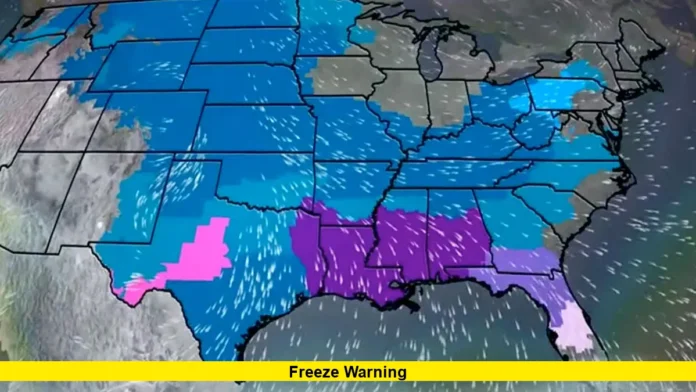
A freeze warning is currently active across large parts of the United States, signaling significant impacts from sub-freezing temperatures as a potent cold air mass grips regions from the Southeast to the Midwest and Northeast. Residents nationwide are waking up to sub-32°F lows, prompting official freeze warnings and a host of related winter impacts that include crop risk, infrastructure concerns, and public safety challenges.
Today’s widespread freeze warnings are tied to a strong winter weather pattern that includes recent bomb cyclone activity, lake-effect snow events, and an arctic front pushing colder air unusually far south. This article provides the most current, verified updates on freeze warnings, what they mean for everyday life, and how communities are responding to today’s dangerously cold conditions.
Table of Contents
What Is a Freeze Warning?
A freeze warning is a formal weather alert issued when air temperatures at or below 32°F (0°C) are expected for an extended period. This alert is specifically designed to warn the public, farmers, and city officials that freezing conditions are imminent or already happening.
Here’s why a freeze warning matters:
- Plant Damage – Sensitive crops and vegetation can be killed by sustained freezing conditions.
- Infrastructure Stress – Unprotected water pipes and outdoor plumbing can freeze and burst.
- Public Safety – Freezing temperatures increase the risk of hypothermia and frostbite.
Unlike frost advisories or cold weather advisories, a freeze warning is a higher-severity alert focused solely on actual freezing temperatures that can cause damage to property and ecosystems.
Freeze Warnings Across the U.S. Today
As of December 30, 2025, freeze warnings remain active or are being newly issued in multiple regions of the United States due to nighttime and early morning temperatures falling to or below freezing.
Southeast & Deep South
Unusual cold continues to push into the Southeast:
- Central Florida and parts of northern Florida are under freeze warnings and freeze watches overnight into New Year’s Eve morning, with temperatures expected to dip into the upper 20s in inland areas. Counties including Volusia, Lake, Sumter and Marion are included in these alerts.
- Jacksonville, Florida, is recording much colder mornings with sustained temperatures in the 30s as cold air arrives ahead of tonight’s freeze.
This level of cold is rare for many Florida communities and highlights the broad reach of today’s cold front.
Central and Eastern U.S.
Freeze warnings also span:
- Parts of Louisiana and the Gulf Coast region, where warnings remained in place through early Tuesday morning with another freezing night expected.
- Across the central and eastern U.S. from Kansas through Virginia and Maryland, freeze and frost advisories have been issued as temperatures plunge.
Texas & Southern Plains
Cold air has settled across Texas, dropping temperatures well below seasonal norms:
- Northern and western areas—including Amarillo and Midland-Odessa—are seeing temperatures in the low 20s, well into freeze territory.
- Regions in Southeast Texas such as the Brazos Valley and Piney Woods are forecasted to see freezing to sub-freezing temperatures Tuesday night into Wednesday, with lows potentially in the mid-20s.
Northern & Northeast
Freeze warnings in the North are part of a broader winter scenario following a powerful winter storm and bomb cyclone:
- The Great Lakes and Northeast are experiencing heavy snow, frigid air, and extensive freeze conditions that have left many areas below freezing throughout the day.
- Lake-effect snow and strong winds reinforce the frigid environment, ensuring continued freezing temperatures through the holiday week.
The Weather Pattern Driving Freeze Conditions
The current cold pattern stems from several closely linked meteorological events:
Recent Bomb Cyclone & Winter Storm
A powerful winter storm evolved into a bomb cyclone, bringing blizzard conditions, heavy snow, strong winds, and frigid air from the Plains into the Great Lakes and Northeast. This system amplified the cold air mass responsible for the widespread freeze warnings now in effect.
Weekend and early week impacts included:
- Accumulating snow and whiteout conditions in parts of New York and the Great Lakes region.
- Wind gusts exceeding 70–80 mph in some cities, contributing to hazardous travel and power outages.
- Frigid daytime and nighttime temperatures well below freezing across a broad swath of the country.
This deep cold air remains entrenched, making successive nights of freeze warnings likely.
Arctic Front & Cold Surge
Behind the storm, a robust arctic front plunged much colder air southward than typical for late December. Clear skies and low humidity make overnight radiational cooling more efficient, allowing surface temperatures to drop quickly into freeze territory.
This cold surge is directly linked to the issuance of freeze warnings in places that rarely see them — including parts of the Deep South and Florida.
How Freeze Warnings Affect Homes and Infrastructure
When a freeze warning is active, residents should take immediate steps to protect property and reduce risk.
Pipes & Plumbing
Freezing temperatures can expand water in pipes and cause them to burst. To protect plumbing:
- Insulate exposed pipes and hose bibs.
- Disconnect and drain outdoor hoses.
- Allow indoor faucets to drip slightly during the coldest hours.
Vehicles
Cold temperatures can sap battery power and affect tire pressure. Simple reminders include:
- Ensure batteries are strong and connections are clean.
- Check tire pressure — it can drop with falling temperatures.
- Keep an ice scraper and emergency kit in the car.
Agricultural Impacts
Freeze warnings have significant implications for agriculture:
- Sensitive Crops – Fruits, vegetables, and new plant growth can suffer irreparable damage when exposed to sustained freezing temperatures.
- Nurseries and Greenhouses – Outdoor plants may require coverings or supplemental heat.
- Farm Operations – Freeze warnings influence when growers harvest, cover fields, or make decisions about frost protection systems.
Farmers and growers in regions now under freeze warnings are actively monitoring conditions and taking steps to minimize loss.
Human Health and Safety Considerations
Freeze warnings are not just agricultural or infrastructure alerts — they are public safety alerts.
Hypothermia and Frostbite
- Temperatures below freezing increase the risk of hypothermia, especially for those exposed for long periods.
- Frostbite can occur on exposed skin when wind chill values are also low.
Outdoor Workers & Vulnerable Populations
- Outdoor workers should wear layers and limit exposure during the coldest hours.
- Communities in several states — including Connecticut — have activated cold weather protocols to assist vulnerable populations, including the unhoused, by coordinating shelters and transportation.
Cold weather deaths tied to exposure have been reported in some states this December, underscoring the severity of the current cold pattern.
Pets and Livestock
Animals can suffer during freeze conditions:
- Pets should be brought inside overnight or provided insulated shelter.
- Livestock need access to unfrozen water and shelter from wind and cold.
- Adding straw bedding or windbreaks helps protect animals in sub-freezing conditions.
Even animals adapted to cooler climates can experience stress during sudden and sustained freeze periods.
Freeze Warnings vs. Other Cold Weather Alerts
Understanding the distinctions between cold weather alerts helps clarify risk:
- Freeze Warning – Temperatures at or below freezing are expected; take action now.
- Freeze Watch – Conditions are favorable for freezing temperatures within the next 24–48 hours.
- Cold Weather Advisory – Temps will be uncomfortable and chilly but may not reach full freeze criteria.
- Winter Storm Warning – Severe winter weather is expected with snow, ice, or blowing snow.
Freeze warnings are specifically about temperatures dipping below 32°F for long enough to cause freezing impacts — a threshold with serious real-world consequences.
Seasonal Timing of Freeze Warnings
Freeze warnings can occur at various times of year:
- Fall – Signals the first hard freeze, often ending the growing season.
- Winter – Common during arctic air outbreaks and storm aftereffects.
- Spring – Late freezes threaten crops and new plant growth.
What’s notable this season is how widespread and early freeze warnings have been across some regions — especially in the Deep South and Florida — where freezing conditions remain rare and impactful.
Public Response and Preparedness
Freeze warnings prompt action at many levels:
Individual Preparedness
- Residents Nationwide are urged to cover or bring in plants.
- Citizens near rivers and lowlands may see early morning ice on exposed surfaces.
- Travel plans should account for potential frost or icy conditions on roadways.
Government & Emergency Services
- Local and state agencies are monitoring conditions and issuing guidance.
- In Connecticut, a cold weather protocol activation ensures vulnerable populations are connected with shelter and services.
Power and Utilities
In areas receiving heavy winter weather and freezing temperatures, power demand increases as heating systems work harder. Utilities continue monitoring and responding to outages caused by prior storms and wind.
What to Expect in the Coming Days
The current freeze pattern is expected to persist through the holiday week, with continued sub-freezing nights likely in many areas under today’s freeze warnings.
Forecast models show:
- Continued cold air entrenched over much of the eastern third of the U.S., with additional freeze warnings or extensions possible.
- Moderation in some regions later in the week as temperatures rise above freezing during the day.
- A possible shift toward more active weather patterns in early January that could influence precipitation and temperature trajectories.
However, for now, the freeze warnings remain the most pressing immediate concern for millions of Americans.
Final Thoughts
A freeze warning isn’t just about cold weather — it’s a call to action that can protect lives, homes, infrastructure, and agriculture. With temperatures dropping far below seasonal norms and multiple nights of freezing air expected, staying informed and prepared is essential.
Have you experienced a freeze warning in your area this season? Share how you prepared or what impacts you noticed, and stay updated as conditions continue to change.

