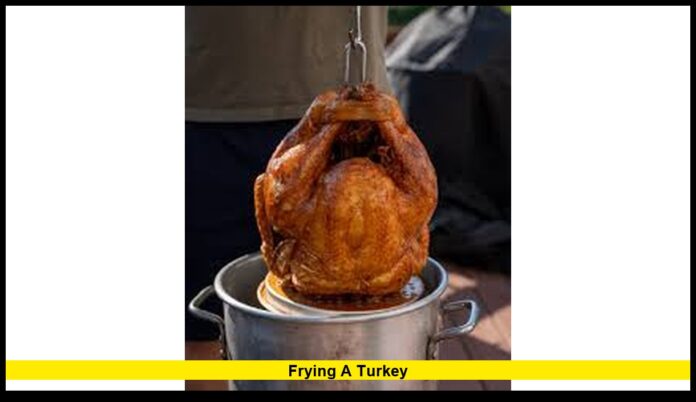
Opening Paragraph
Frying a turkey has emerged as one of the most dangerous holiday cooking practices this season. Recent fire-safety warnings from across the U.S. highlight deep-frying turkeys improperly leads to dozens of injuries and millions in property damage annually.
Table of Contents
Why “frying a turkey” is under scrutiny this year
- Thanksgiving is the single highest day for cooking-related fires in American homes, and deep-fried turkeys represent a significant share of those incidents.
- Turkey fryers — especially when used incorrectly — often contribute to home cooking fires, burn injuries, and structural fires.
- Hazards rise dramatically if the turkey is not fully thawed or dry before frying, or if oil levels or temperature are mismanaged.
What fire departments and safety experts are recommending for 2025
Multiple fire departments and safety organizations have issued fresh, strongly worded guidance as families across the country ready their turkeys for the holiday.
Key precautions now emphasized include:
- Fully thaw and dry the turkey before frying. Partially frozen or wet turkeys can cause hot oil to violently bubble and splash, resulting in burns or fireballs.
- Use the correct amount of oil. One common method is filling the pot with water (with the turkey immersed) to gauge a safe fill line, then replacing with oil up to that level. This helps prevent dangerous overflow when lowering the turkey into hot oil.
- Fry only outdoors, on a flat, stable, non-flammable surface — several feet away from homes, garages, trees or decks. Indoor frying — or placing a fryer under a porch or inside a garage — dramatically increases fire risk.
- Monitor oil temperature carefully. Oil that overheats or smokes becomes more likely to catch fire. Many experts recommend maintaining around 350 °F when frying.
- Never leave the fryer unattended. Treat the fryer like a live fire: stay alert, wear protective gear (gloves, apron, goggles), and keep children and pets well away.
- Have a grease-rated fire extinguisher nearby. In a fire, water should never be used — doing so can cause grease to splash and spread flames rapidly.
Fire chiefs from jurisdictions including Arkansas, Florida, Texas, Iowa and Georgia have all reiterated these steps in official statements and demonstration events.
Safe Frying Checklist — what you should absolutely do (or avoid)
| ✅ Do This | ❌ Don’t Do This |
|---|---|
| Thaw turkey completely, pat dry | Fry a partially frozen or damp turkey |
| Pre-measure oil using water displacement method | Fill oil above safe fill line |
| Use oil with high smoke point (peanut, canola, corn) | Use shallow pans or indoor containers |
| Fry outdoors on level, stable ground at least 10+ feet from structures | Fry inside garage, porch or near buildings |
| Monitor oil temperature around 350 °F & wear protective gear | Let oil overheat or smoke; wear loose clothes |
| Keep kids/pets away; never leave fryer unattended | Walk away while fryer is hot or turkey is cooking |
| Keep grease-rated (Class K or ABC) fire extinguisher nearby | Rely on water or garden hose to fight oil fire |
What could go wrong — and why frying a turkey remains risky
- Hot oil plus moisture equals unpredictable oil splatter. That can cause severe burns within seconds.
- Overfilled oil or turkey added too quickly ➝ boiling over ➝ fireball. Flames can shoot high enough to engulf structures or nearby foliage.
- Fryers can tip over, especially on uneven or unstable ground. Oil spills under pressure of flame easily ignite.
- Oil fires are notoriously hard to control with water — using water can make them worse. Many fire departments stress that water must never be used.
Because of these dangers, in recent years some safety authorities have discouraged home-deep-frying altogether — especially for first-time users or in climates with unpredictable weather.
What’s new this Thanksgiving season (2025)?
- Several U.S. fire departments have recently conducted live demonstrations showing how quickly a fryer fire can escalate — even with small mistakes. These demonstrations have spurred renewed media coverage around turkey fryer safety.
- Experts are again reminding people to thaw their turkey well in advance — referencing updated guidelines for thawing times (about 24 hours in the fridge per 4–5 pounds), to head off risk of frozen-turkey oil splatter.
- Multiple departments and organizations highlight that the traditional “water-level test for oil” remains the simplest — yet most crucial — step many people skip. This year, they’re urging people to do that test before lighting any fire.
Alternatives and safer approaches
If deep-frying feels too risky, experts suggest the safer route might be traditional roasting or using oil-less/infrared turkey fryers. Some fire-safety advisories note these methods greatly reduce risk of fire, burns, and property damage.
Additionally, if you do fry, consider getting a fire extinguisher and testing it ahead of time. And never attempt to use water to douse an oil fire — always call emergency services if things go wrong.
Thanksgiving dinner should bring joy — not danger. If you choose to go ahead with frying a turkey this year, make safety your top ingredient. Stay alert, plan ahead, and protect everyone who gathers around the table.
Enjoy your feast — and stay safe this holiday.

